




How to choose an eyepiece
Focal length and magnification
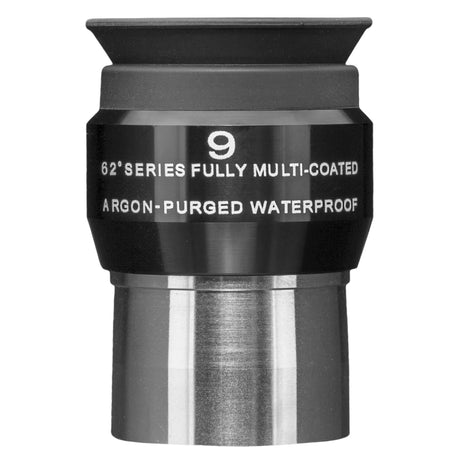
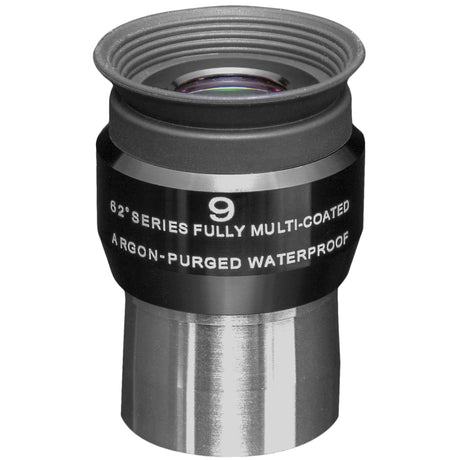
Magnification is the telescope's focal length divided by the eyepiece's: a 9 mm eyepiece gives 133x in a 1,200 mm telescope and 67x in a 600 mm one. Long focal lengths give low power and wide views for star clusters and nebulae; short ones give the high power the Moon and planets need, up to the telescope's useful limit of about 2x per millimeter of aperture.
Apparent field
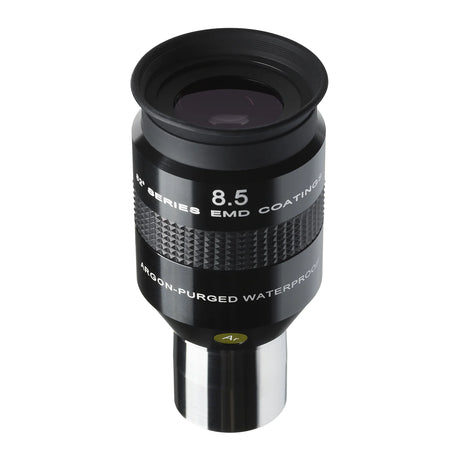
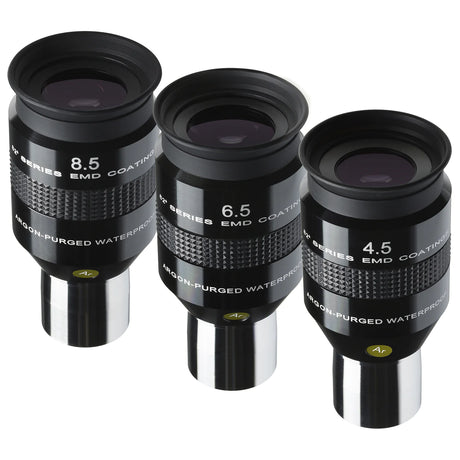
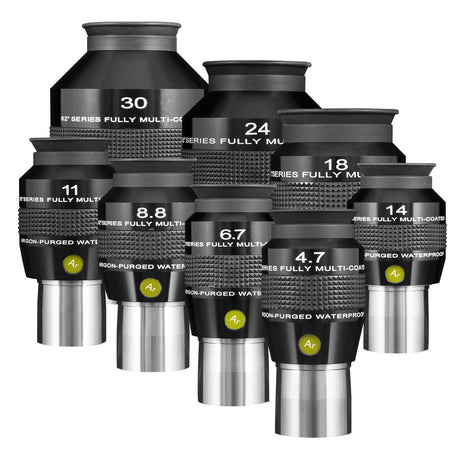
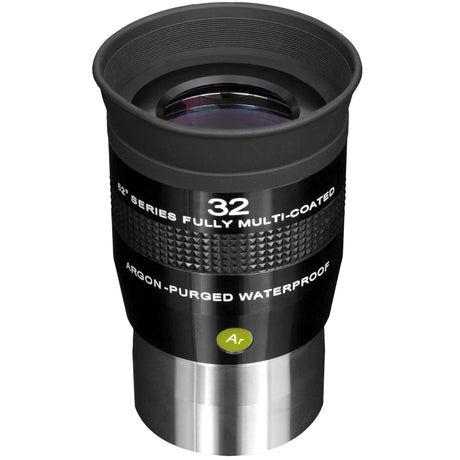
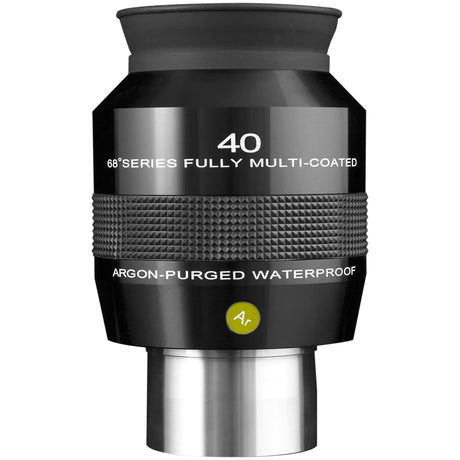
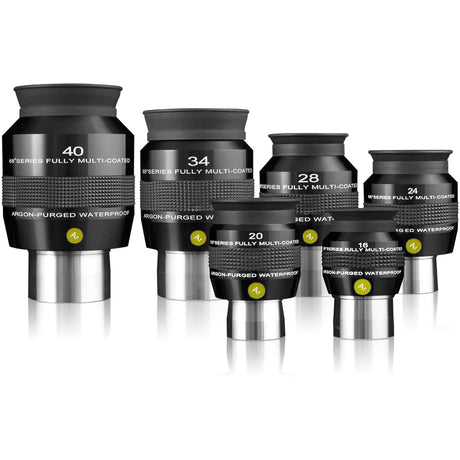
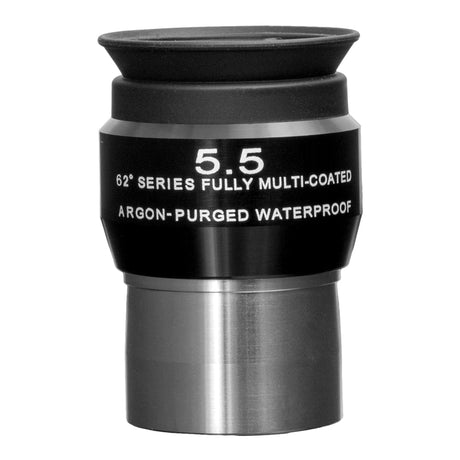
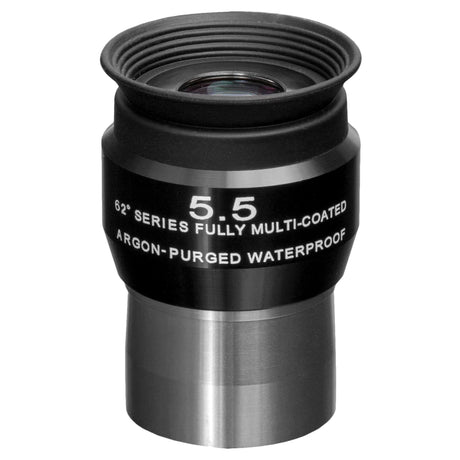
The apparent field is how wide the view looks. At 52 degrees it is like a porthole, 62 degrees keeps an object in view longer before you nudge the telescope, and at 82 degrees and wider the edge of the field disappears. Explore Scientific makes series from 52 to 120 degrees.
Barrel size and eye relief
Most eyepieces have 1.25-inch barrels, which fit almost any focuser; long, wide-field eyepieces need 2-inch barrels because their field stops are too large for a 1.25-inch barrel. If you observe with glasses, choose 15 mm or more of eye relief, as in Explore Scientific's Long Eye Relief (LER) models.
Frequently Asked Questions
How many eyepieces do I need?
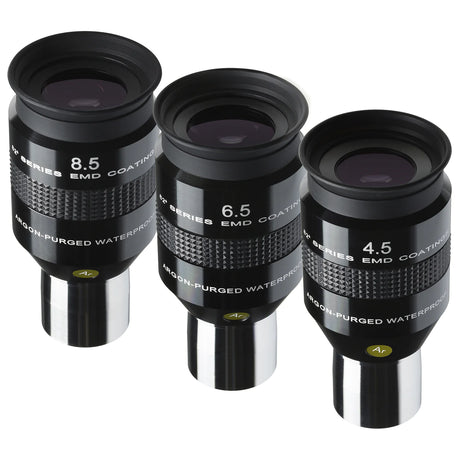
Three good ones, for low, medium and high magnification, plus a 2x focal extender cover almost everything. Resist buying a full set of a dozen focal lengths.
Are Explore Scientific eyepieces waterproof?
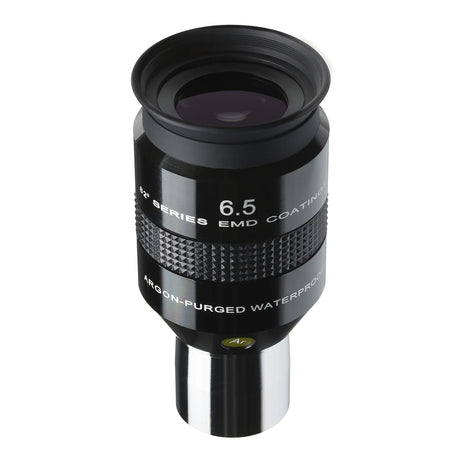
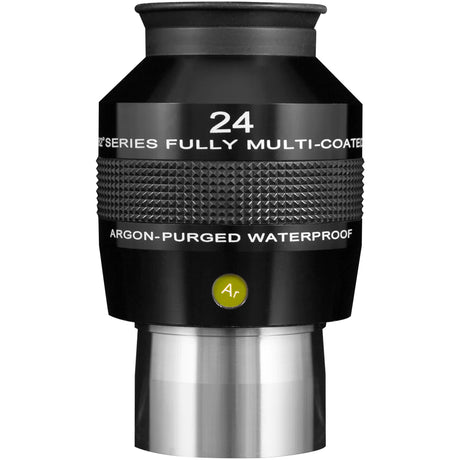
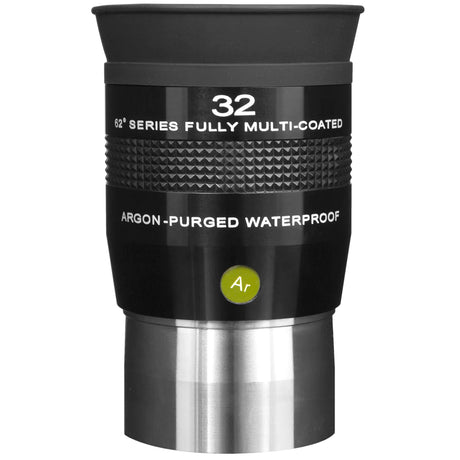
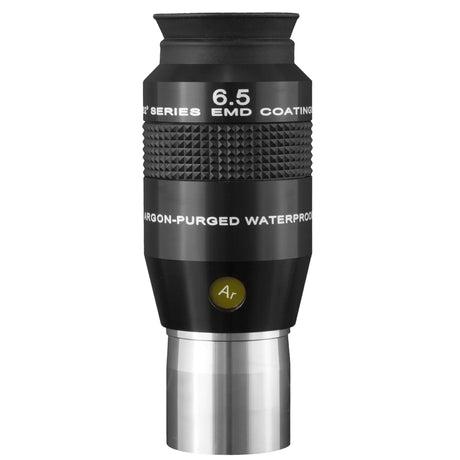
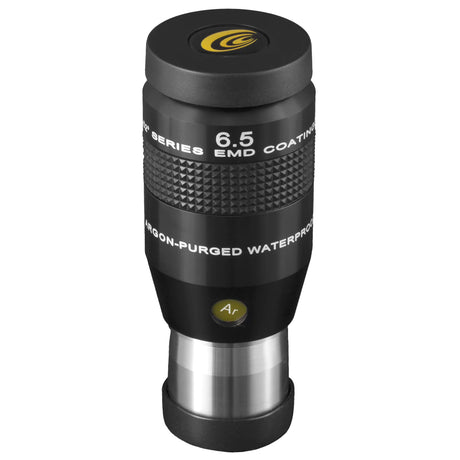
Yes. Every model is waterproof and argon-purged, which replaces the air inside with dry argon so the lenses do not fog internally.
Which eyepiece should I buy first?
Many kits come with two, such as the 25 mm and 10 mm eyepieces in every Sidara package. Adding a wide-field low-power or a sharp high-power eyepiece is one of the most noticeable upgrades you can make.
To work out what your telescope can use, read Understanding Telescope Specifications.