


Digital night vision or thermal fusion?
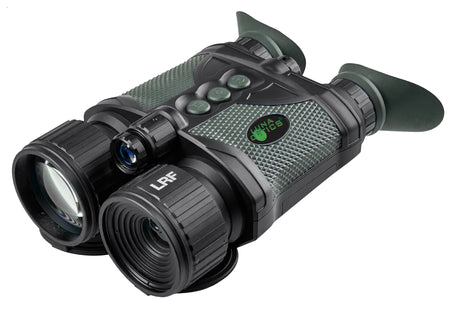
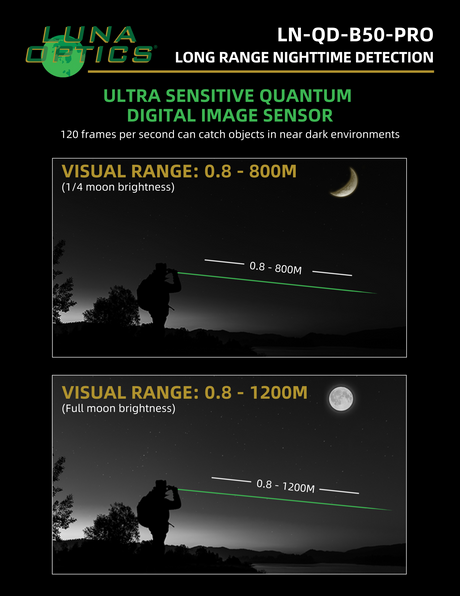
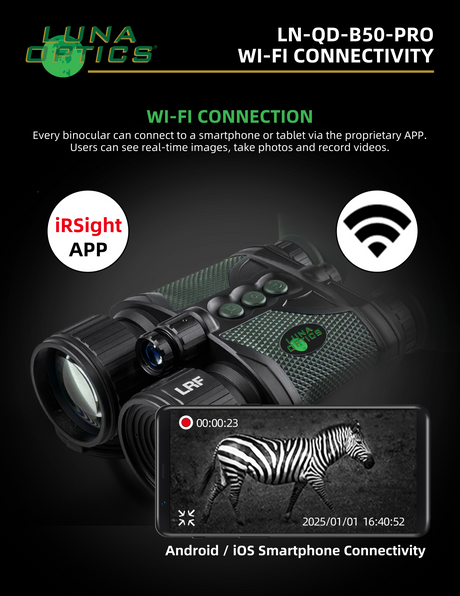
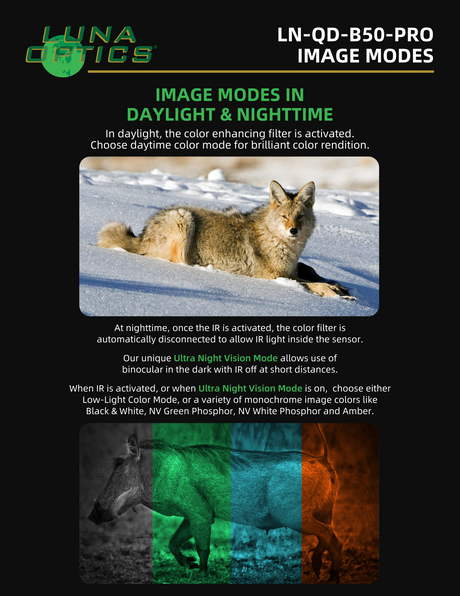
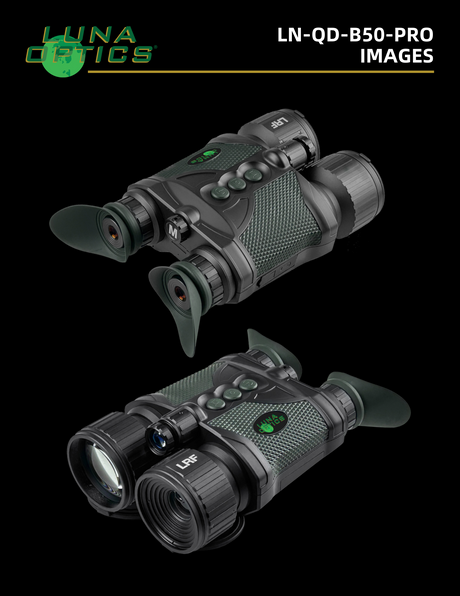
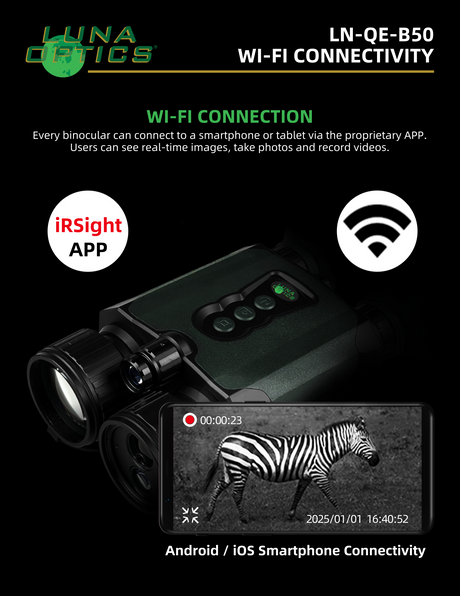
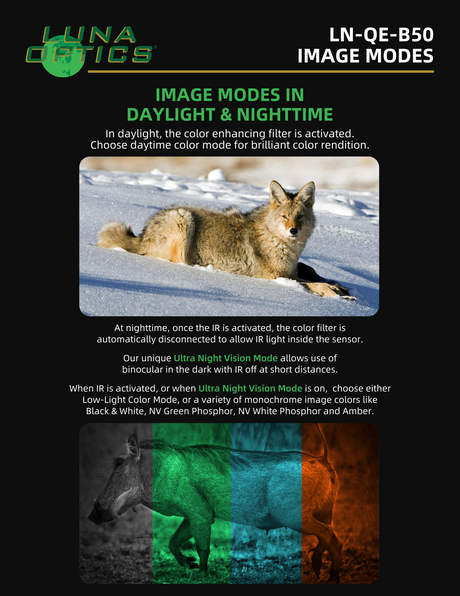
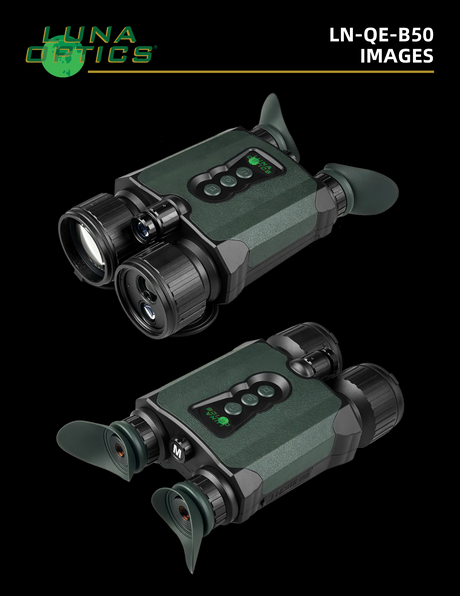
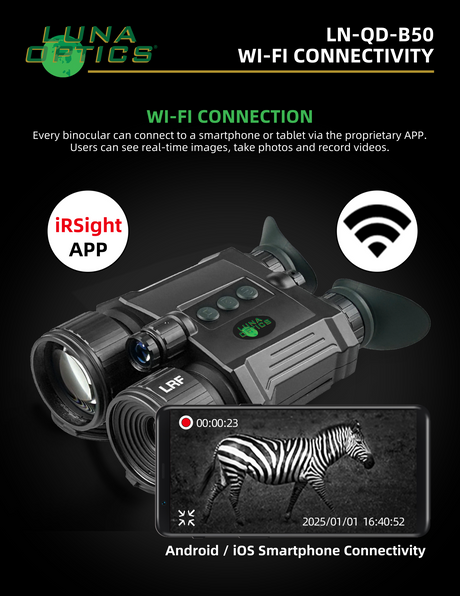
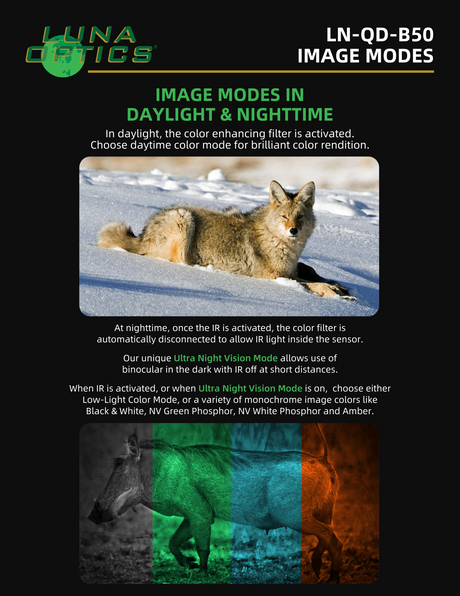
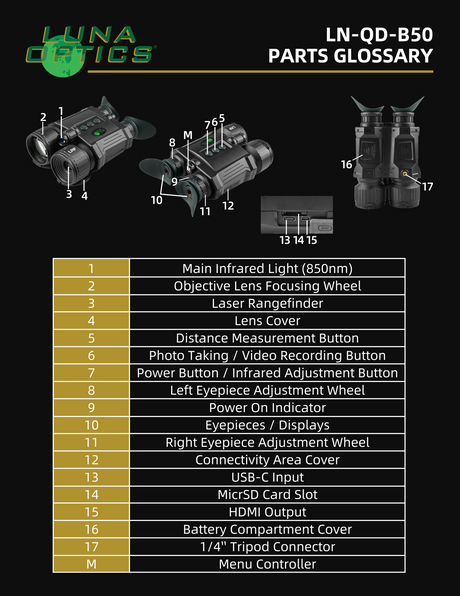
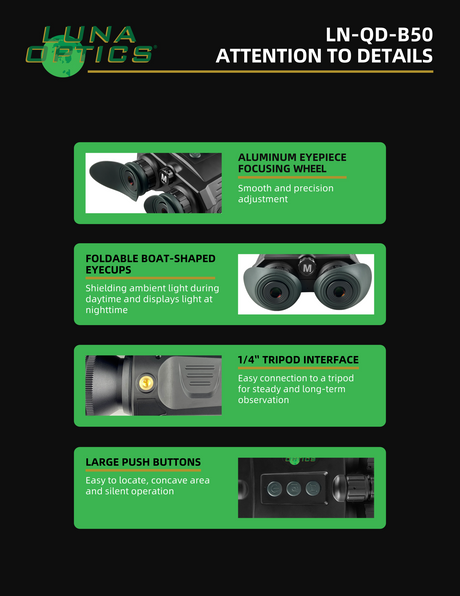
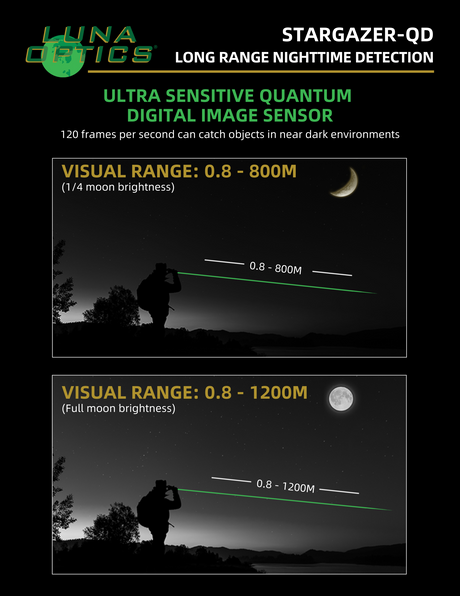
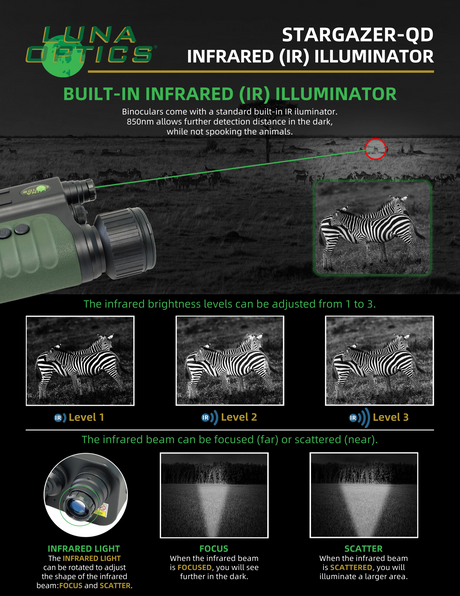
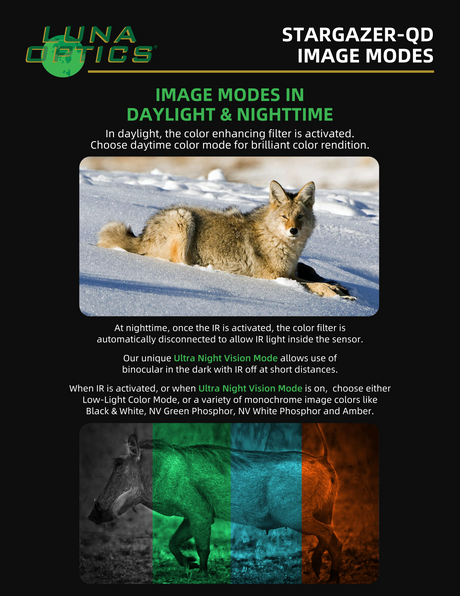
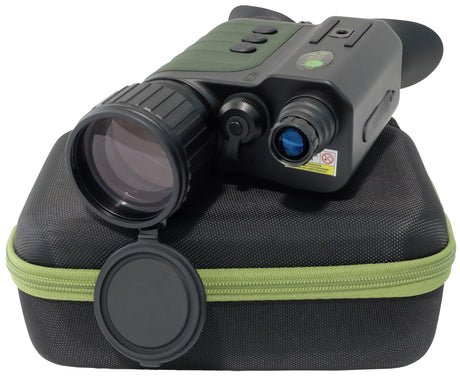
Digital night vision binoculars replace the traditional image intensifier tube with a CMOS sensor, an infrared illuminator and a high-resolution display. They show a natural, detailed scene after dark, record photos and video, and work in daylight too. Thermal reads heat instead of light, so it finds warm animals in total darkness, and Guide's fusion binoculars combine a thermal channel with 4K night vision and a laser rangefinder in one body.
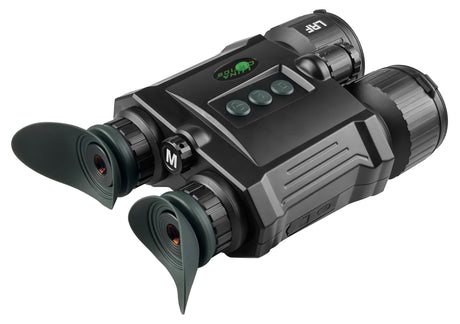
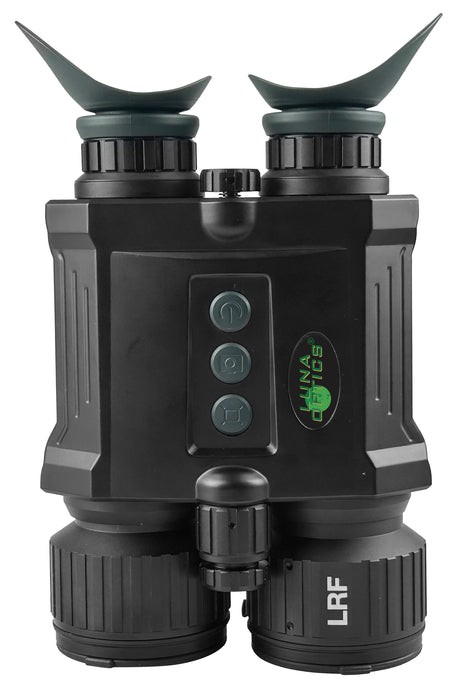
The Luna Quantum line
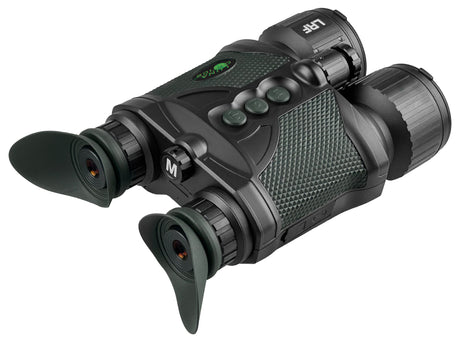
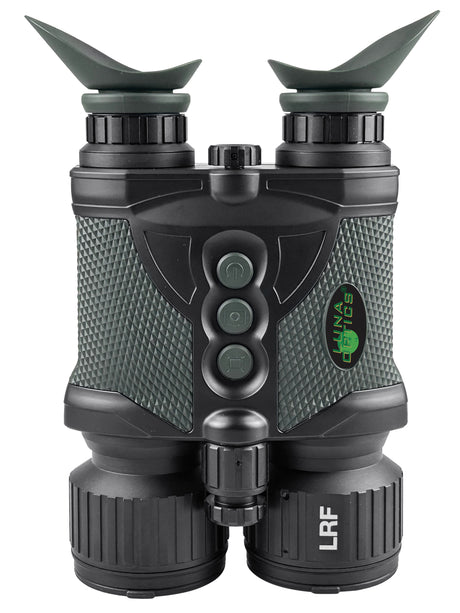
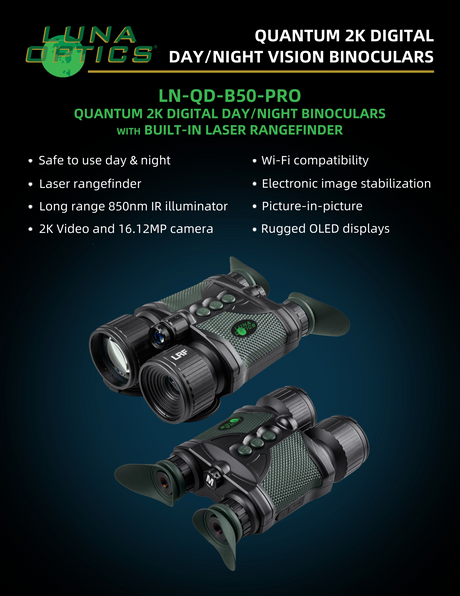
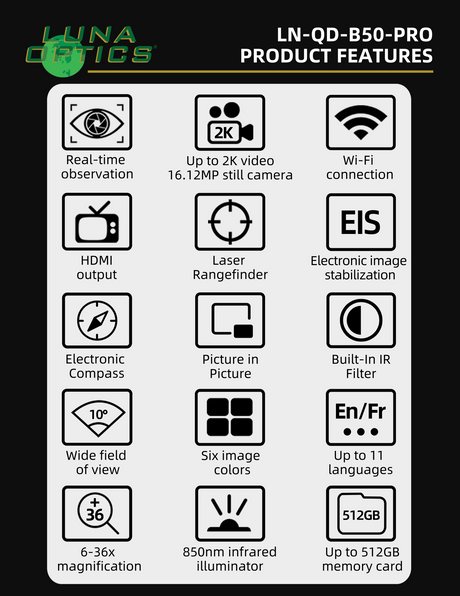
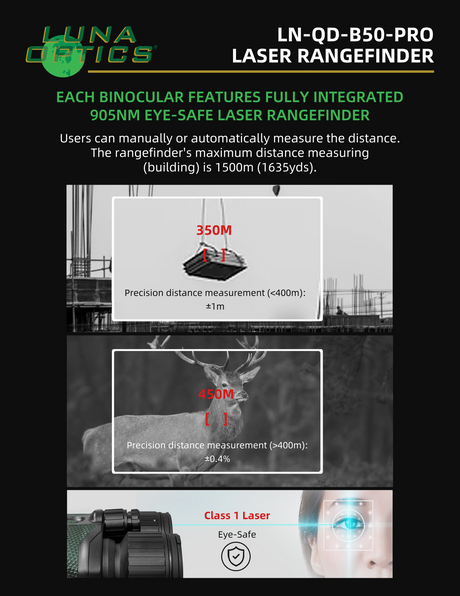
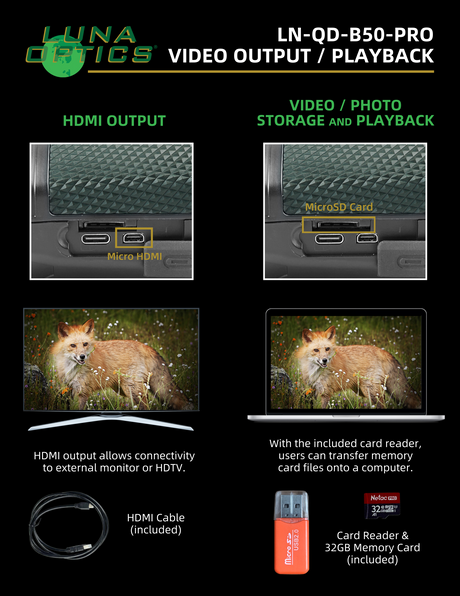
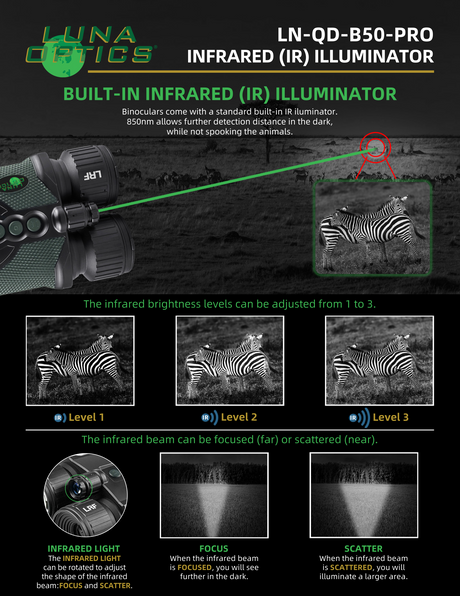
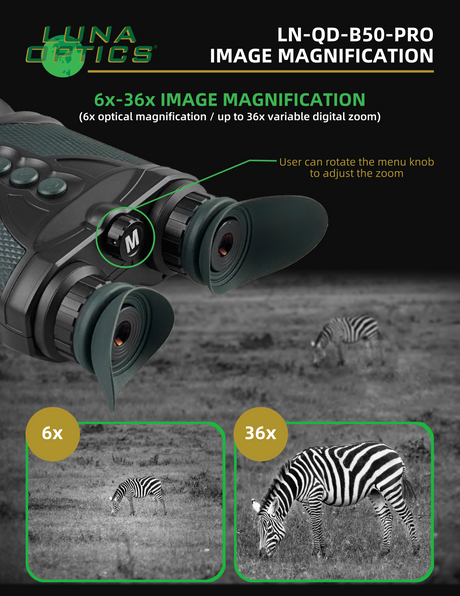
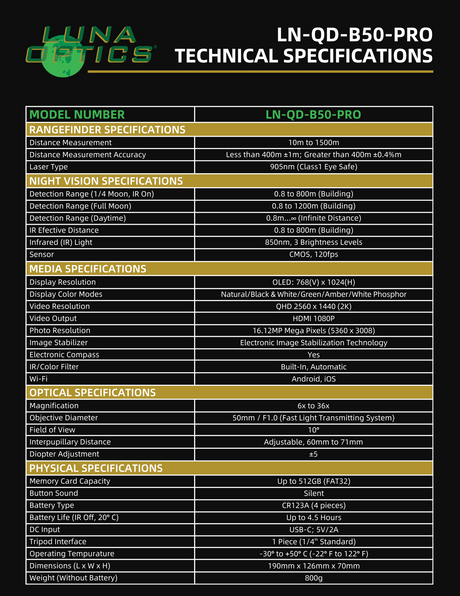
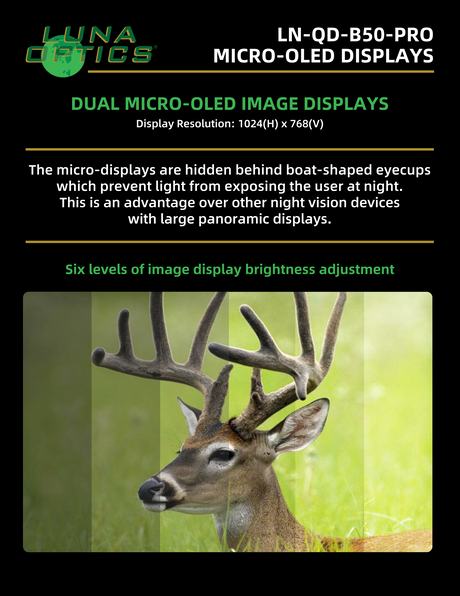
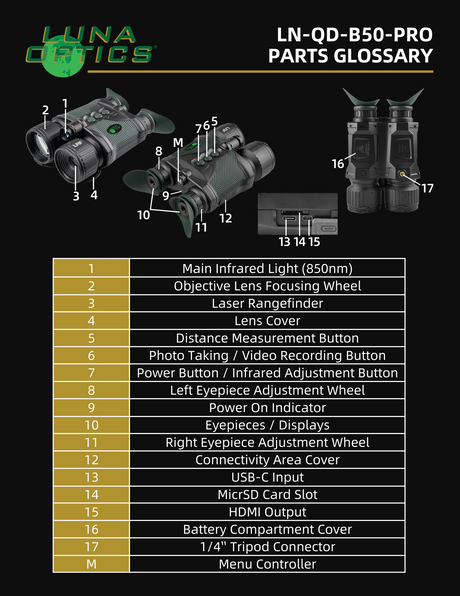
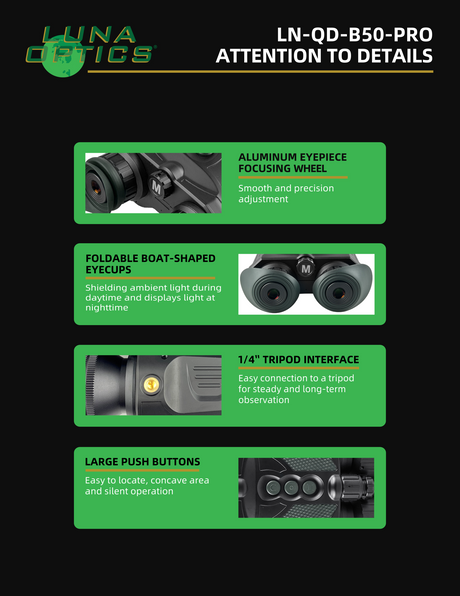
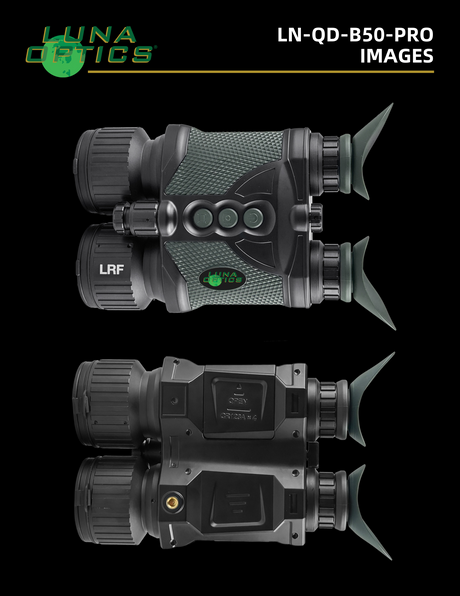
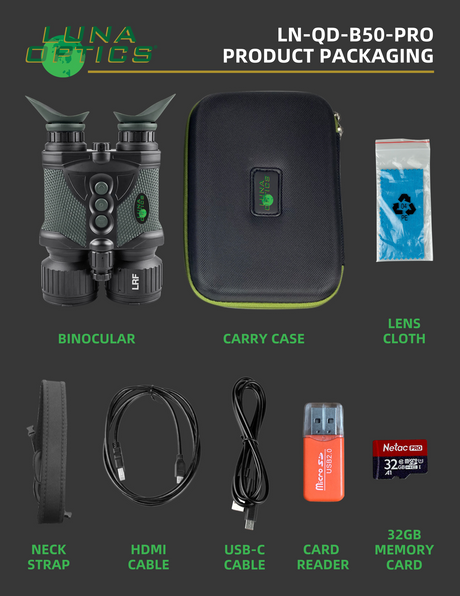
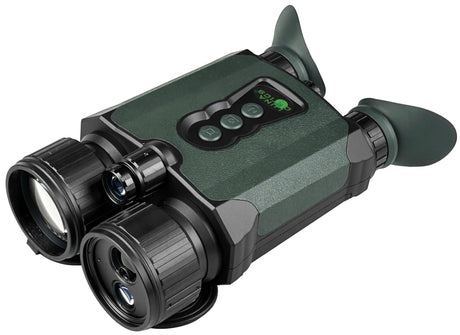
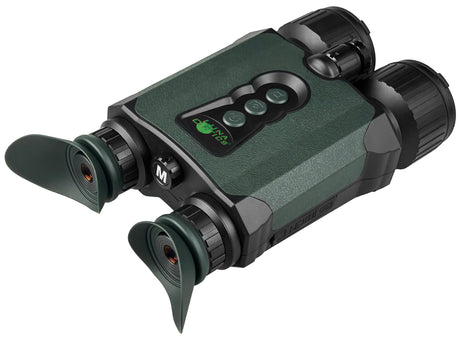
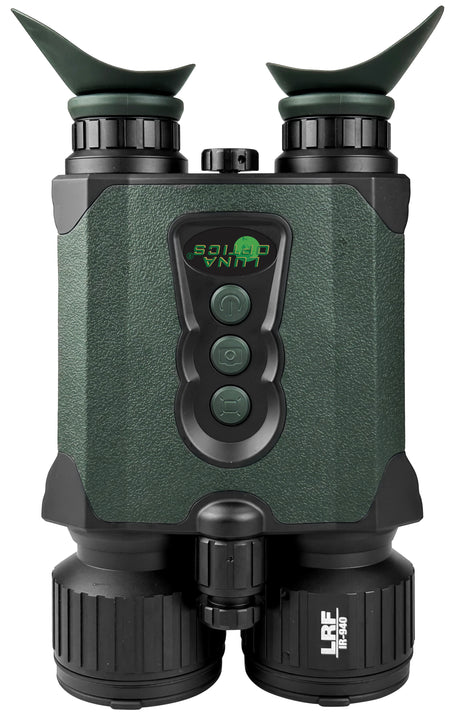
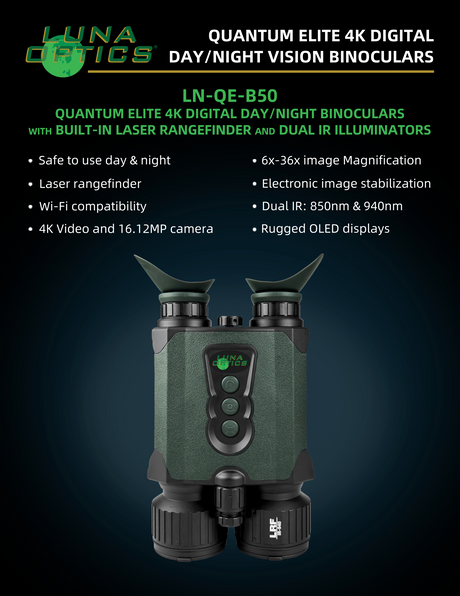
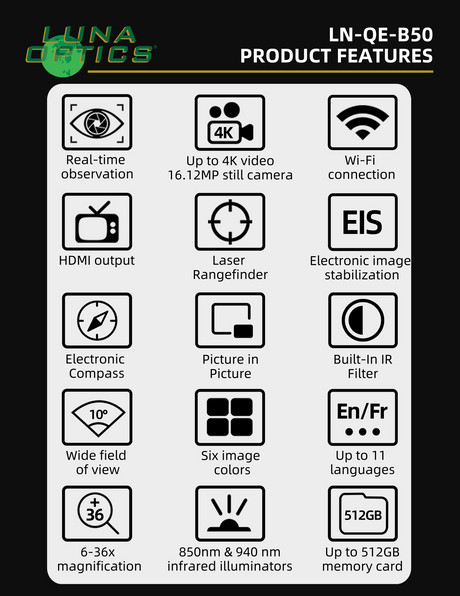
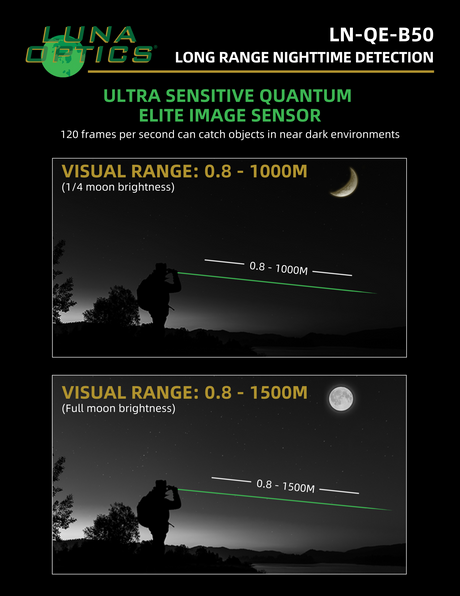
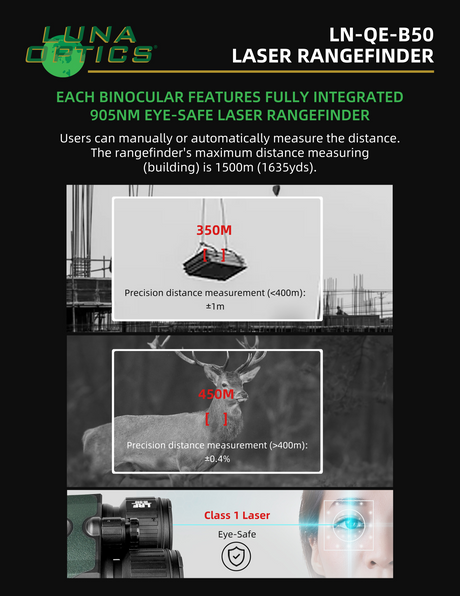
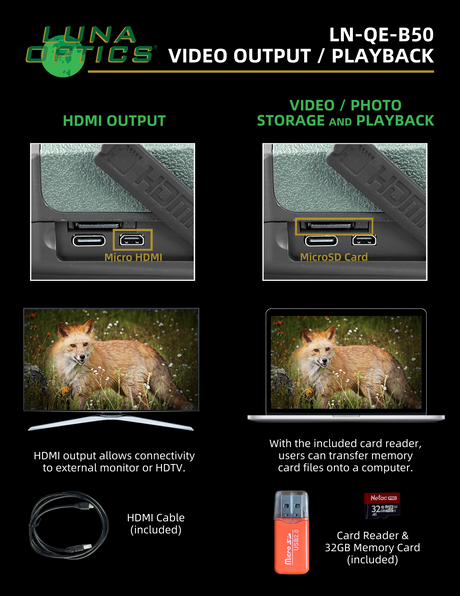
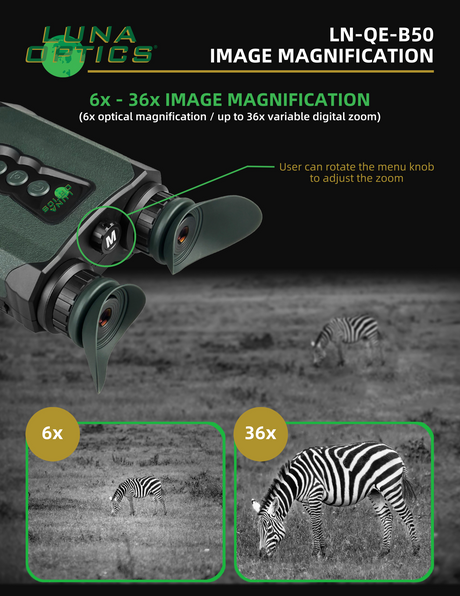
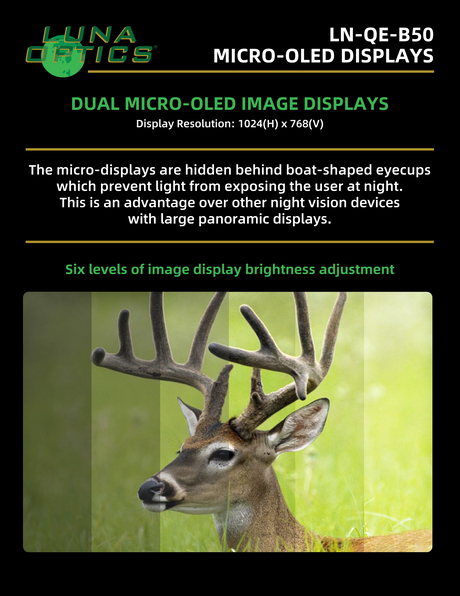
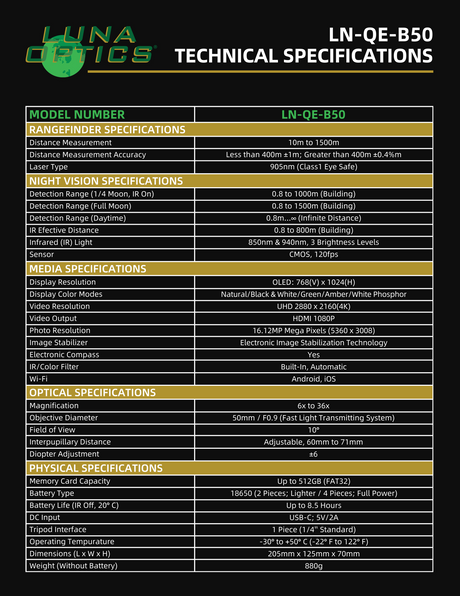
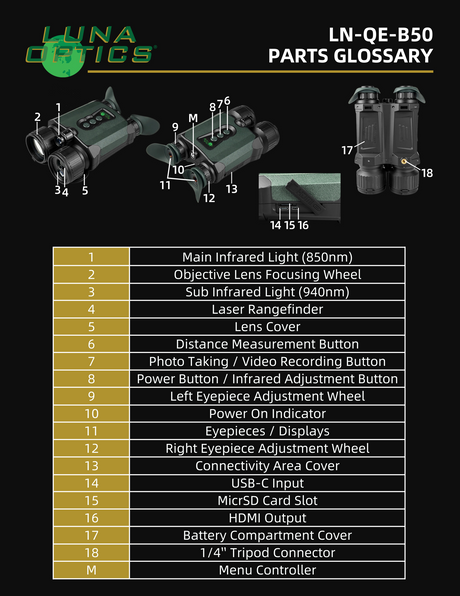
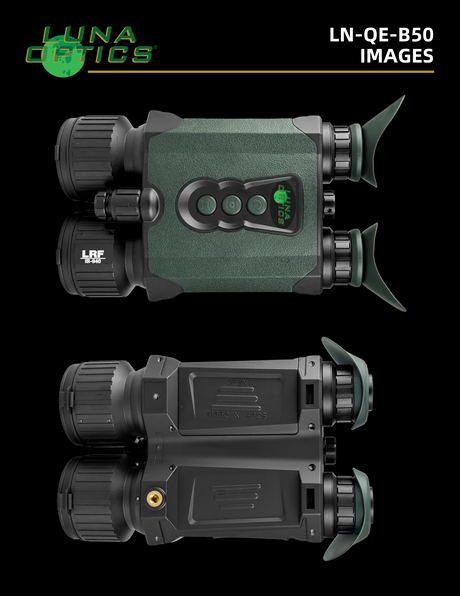
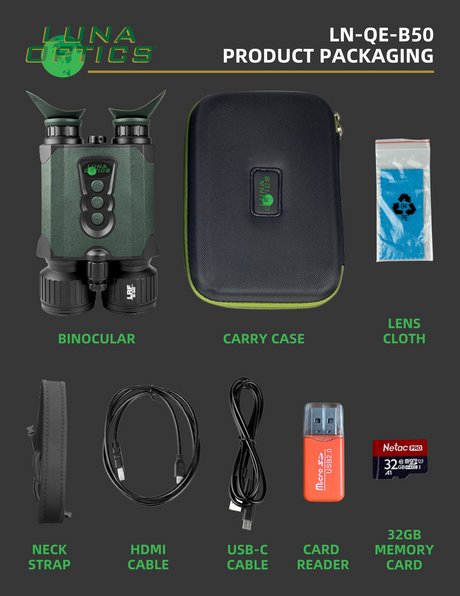
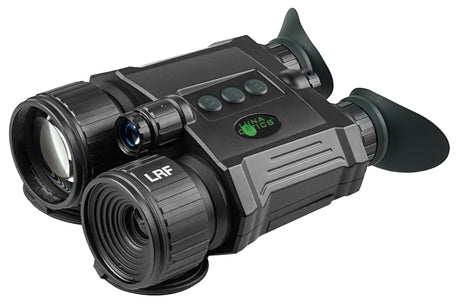
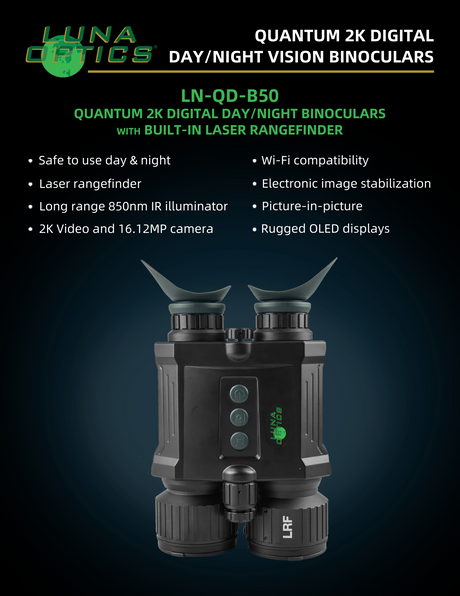
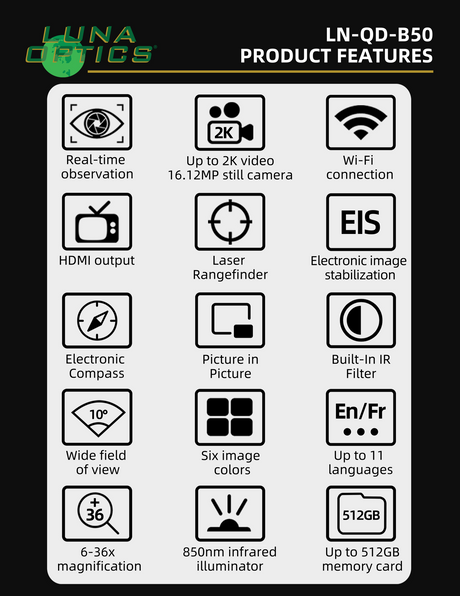
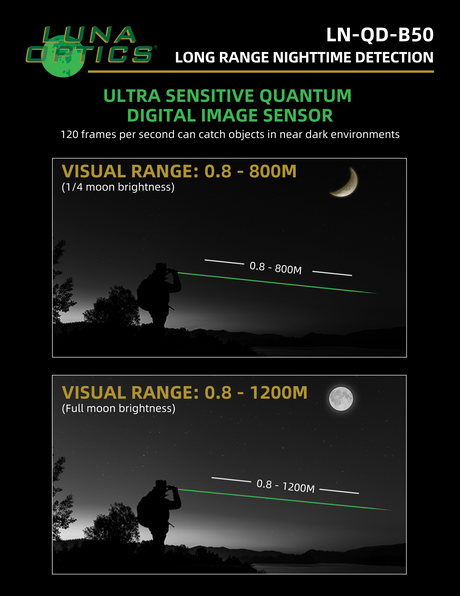
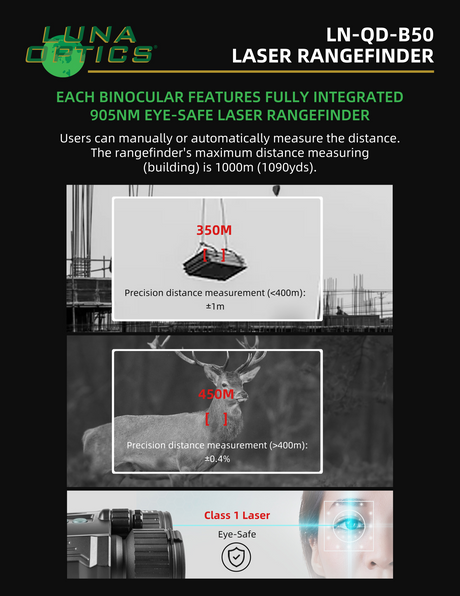
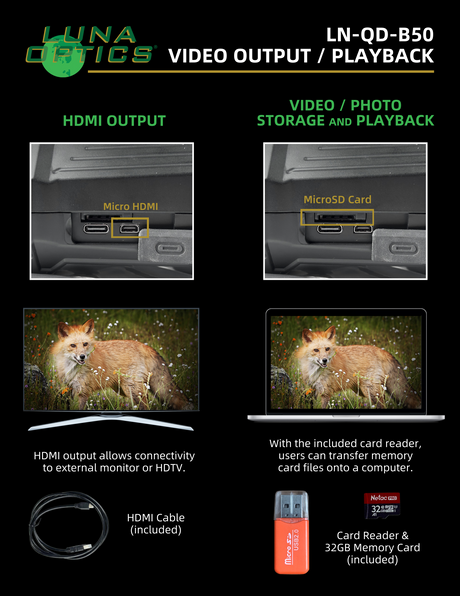
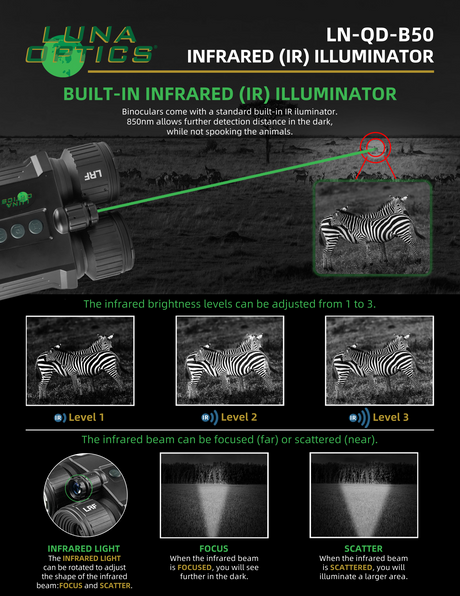
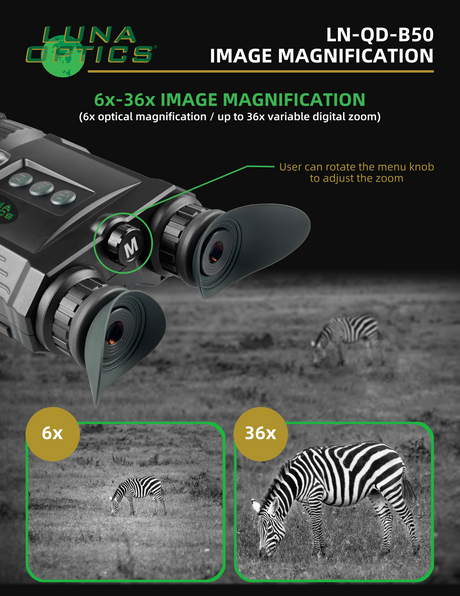
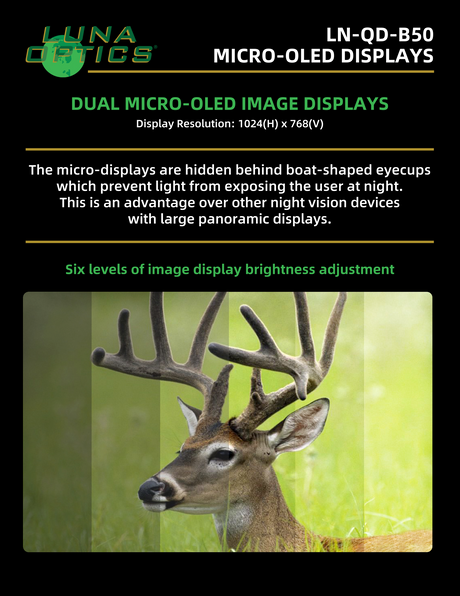
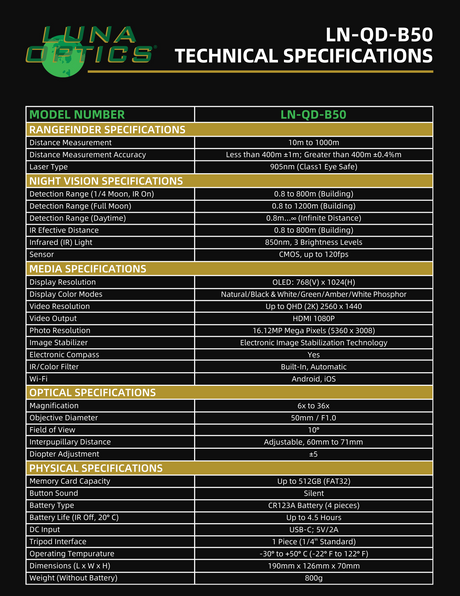
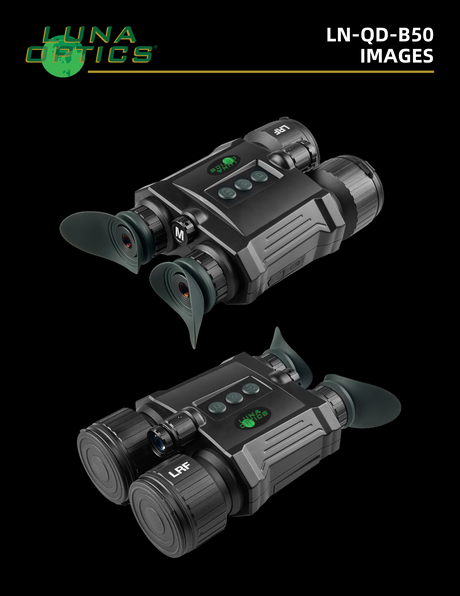
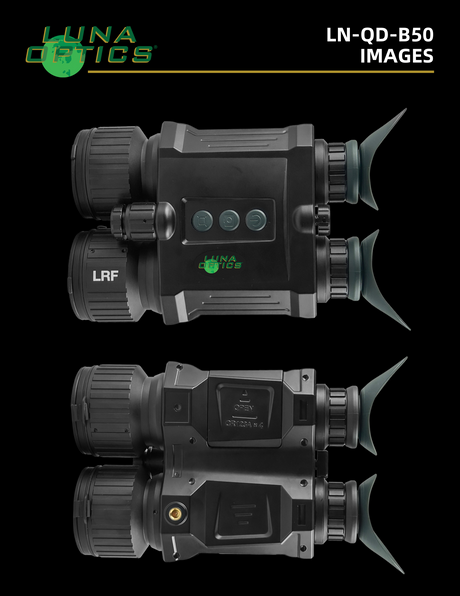
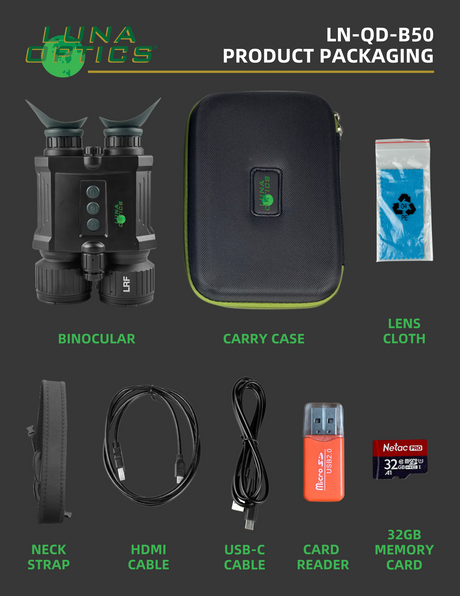
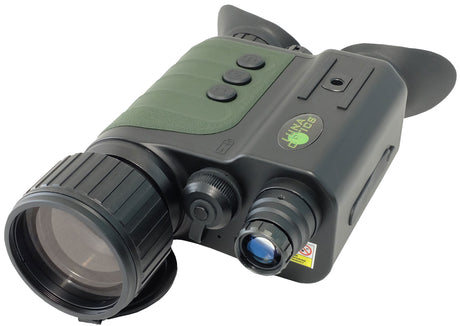
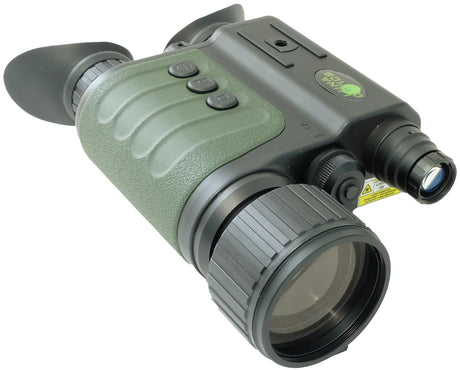
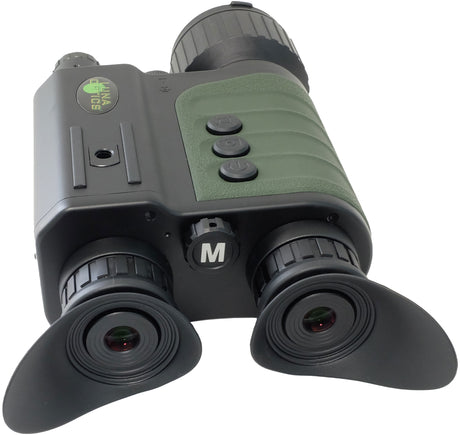
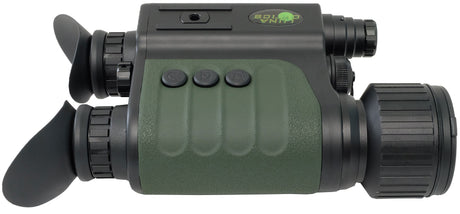
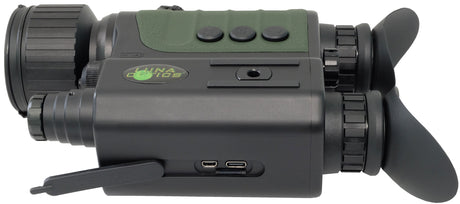
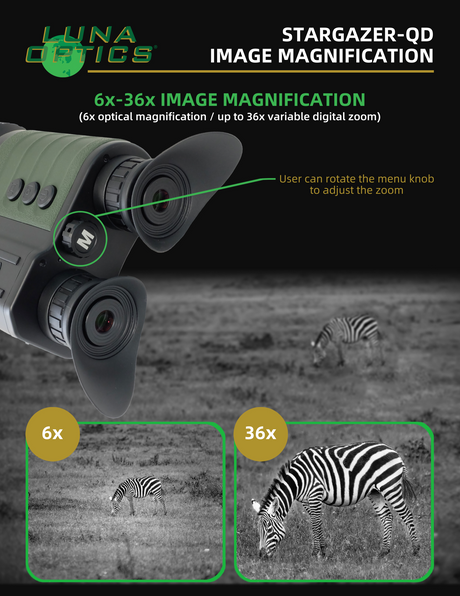
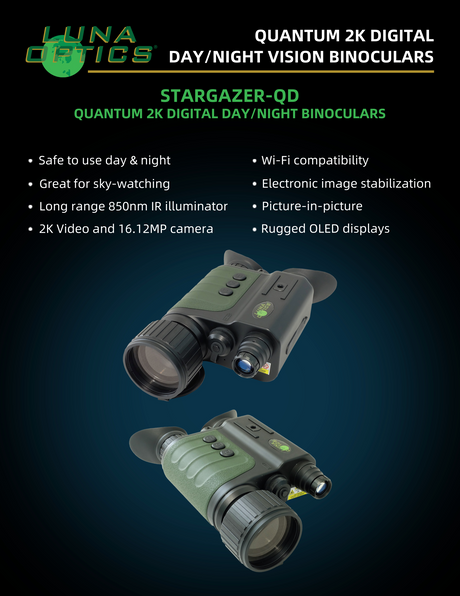
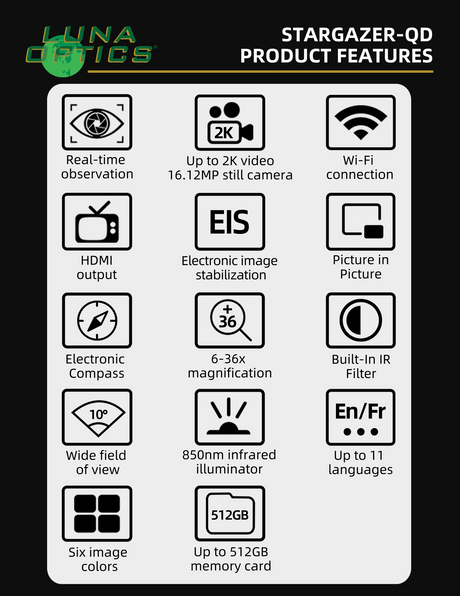
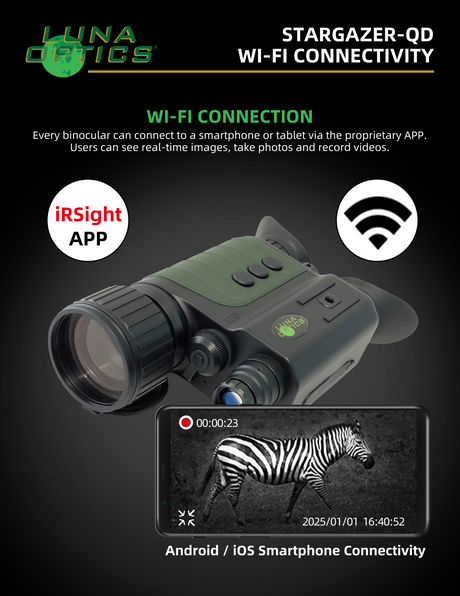
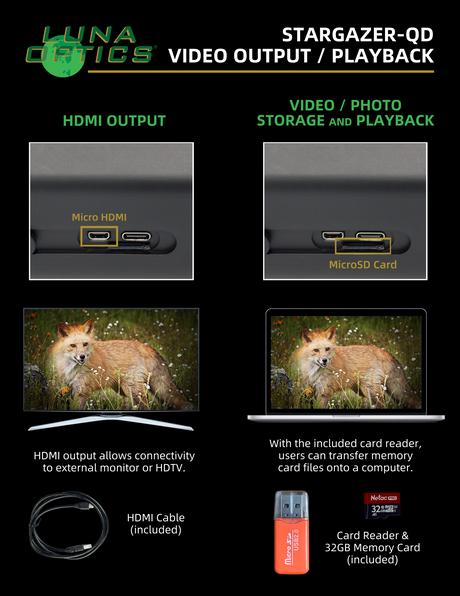
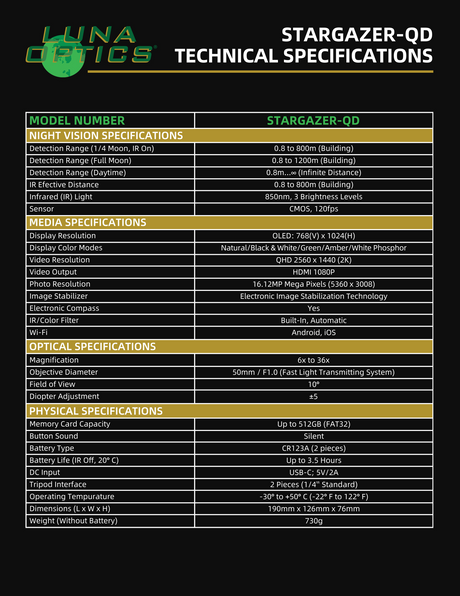
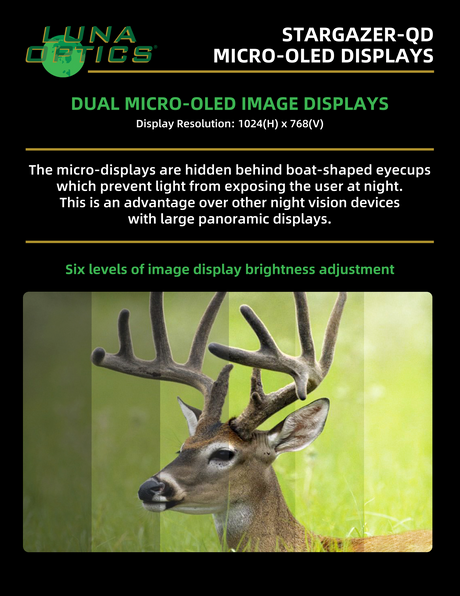
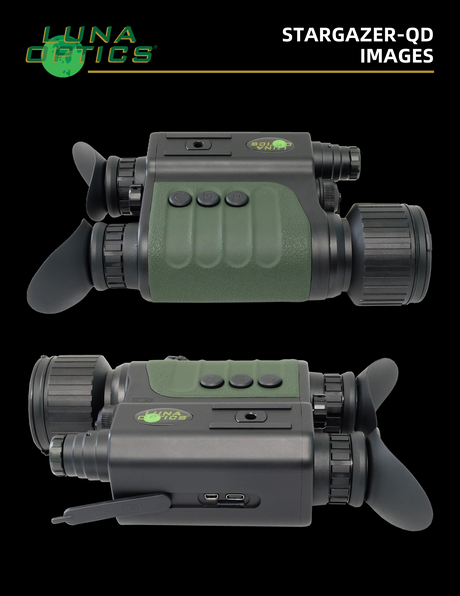
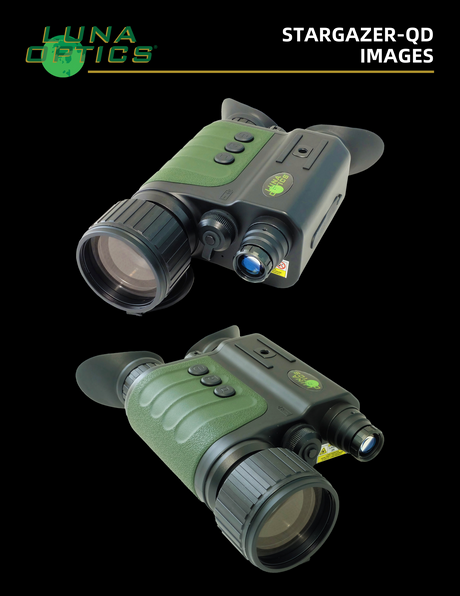
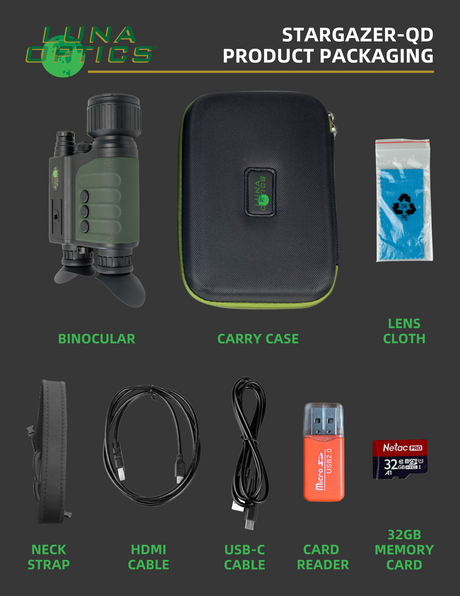
Luna's Quantum binoculars share one platform: 6-36x magnification, a 50 mm objective, 1024x768 AMOLED displays, and video and 16.1 MP photo recording to a microSD card. They differ in sensor and rangefinder. The Quantum Elite has the 4K UHD sensor (2880 x 2160, rated to 0.0005 lux) and dual-wavelength infrared, and the Quantum Digital models use a QHD sensor rated to 0.0015 lux. Three of the four carry a laser rangefinder, rated to 1,635 yards on the Elite and one Quantum Digital and 1,100 yards on the other; the Stargazer-QD has none.
Frequently Asked Questions
Can I use digital night vision in daylight?
Yes. Unlike a traditional tube, a digital sensor is not damaged by daylight, and Luna's binoculars show full color by day.
How long do the batteries last?
It varies by model and drops with the infrared illuminator on. With the illuminator off, the Quantum Elite is rated at 8.5 hours on four rechargeable 18650 batteries.
Can I use them for hunting?
Rules on night vision for hunting differ by state and by species, so check with your state wildlife agency before you go.
For our picks and the full comparison, read Digital Night Vision Binoculars: A Complete Buyer's Guide.