








How to choose a Cronus ATS
Form factor
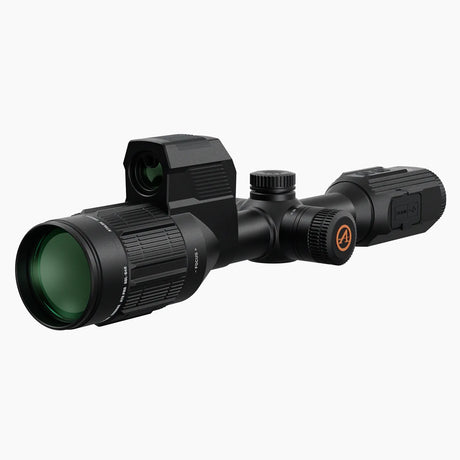
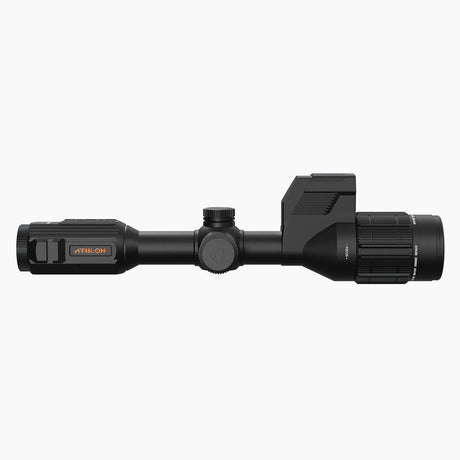
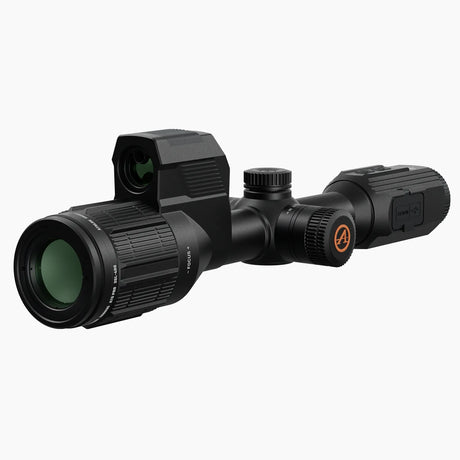
Start with the job: a standalone scope, either the compact Picatinny-mount 25P-250 and 35P-400 or the full-size 30 mm tube models; a clip-on that mounts ahead of your day scope, the 35C and 35CL; or a handheld monocular for scanning, the 35M-400 and 35ML-400.
Sensor
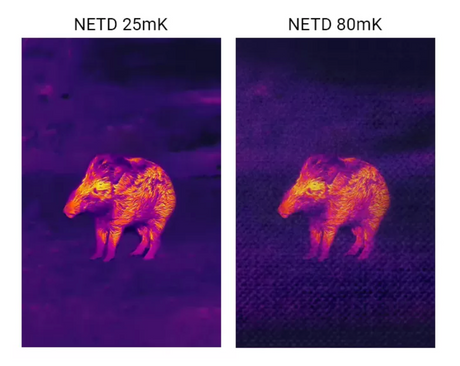
Every Cronus ATS uses a 12-micron pixel pitch sensor. The 400x300 resolves what you need inside about 250 yards, and the 640 earns its cost in open country, at 300 to 500 yards and beyond.
Rangefinder and display
Five models add a laser rangefinder: the 35L-400 and 50L-640 scopes, the 35CL-400 and 35CL-640 clip-ons and the 35ML-400 monocular. The full-size 30 mm tube scopes have Athlon's highest-resolution display, a 1440x1080 OLED.
Frequently Asked Questions
Which Cronus ATS is lightest?
The 35M-400 monocular, at 12.3 oz. Among the scopes, the 25P-250 weighs 17.8 oz, and the 50L-640 with rangefinder 42.3 oz.
Clip-on or scope?
A clip-on keeps your day scope on the rifle and adds thermal after dark; a scope replaces it and carries the larger display.
Is thermal hunting legal?
Rules differ by state and by species. Check your state wildlife agency before you hunt with thermal.
What does the P in 25P and 35P mean?
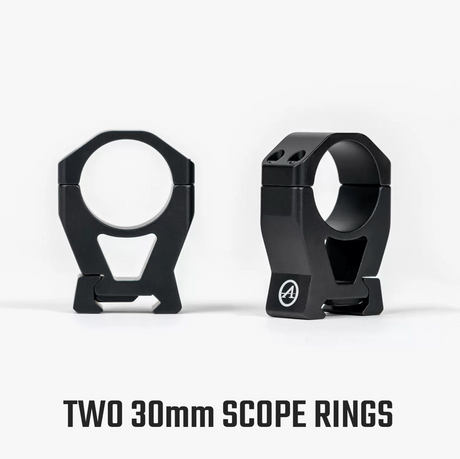
Picatinny: those two compact scopes mount on a Picatinny rail. The full-size models use a 30 mm tube in standard rings, and Athlon rates the Cronus ATS Pro at 10 hours or more of battery life.
Do the monoculars mount on a rifle?
No. The two Cronus ATS monoculars are handheld scanning tools for finding animals, not sights.
For the thermal specs in depth, read Thermal Imaging Specs Explained.