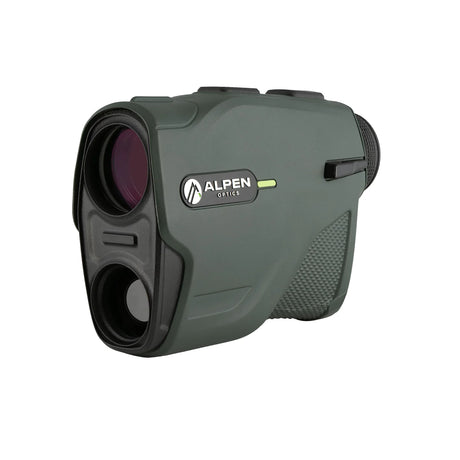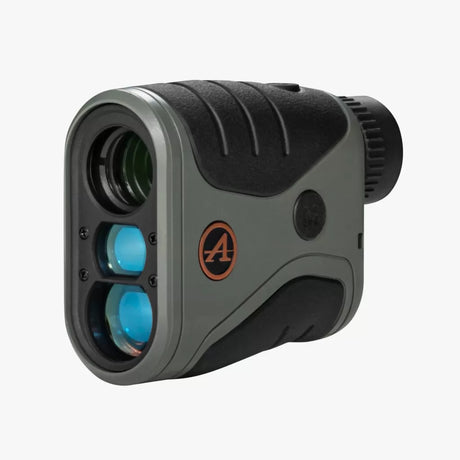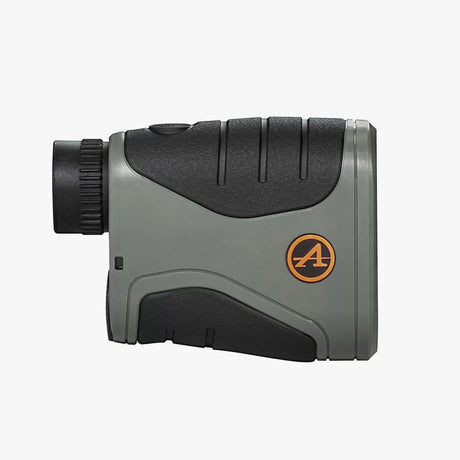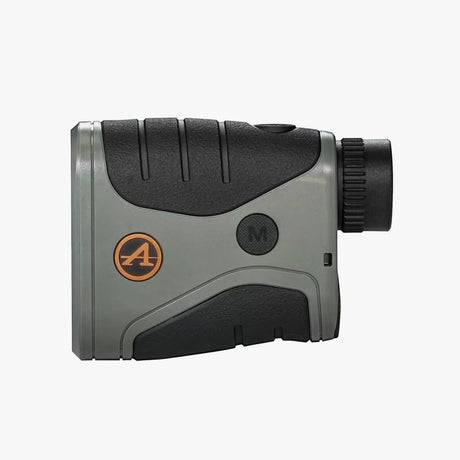

A laser rangefinder replaces guesswork with precision. Instead of estimating "that buck is probably 250 yards out," you press a button and know it's 237. That single data point changes shot placement, arrow trajectory, and club selection from a gamble into a decision.
This guide covers how laser rangefinders work, the specs that matter, how to choose between a standalone unit and rangefinder binoculars, and how to match a rangefinder to your activity and budget.
Looking for a broader overview of sport optics? Start with our Sport Optics Buyer's Guide.
How Laser Rangefinders Work
A laser rangefinder fires an invisible infrared laser pulse at your target. The unit measures how long the pulse takes to return after bouncing off the target, then calculates the distance based on the speed of light. The entire process takes a fraction of a second.
The result is displayed in your viewfinder, typically in yards or meters, switchable by the user. Makers rate the units we carry at ±0.5 to ±2 yards at typical hunting and golf distances.
Unlike GPS rangefinders (which calculate distance from pre-loaded maps), laser rangefinders measure direct line-of-sight distance to whatever you point them at. This makes them versatile: they work in any terrain without pre-loaded data, on any target that reflects enough of the laser to return a reading.
Key Specs to Compare
Here are the specs worth checking before you buy.
1. Maximum Range
Advertised max range is measured against large, reflective targets (like a building). Ranging a deer-sized target in field conditions cuts that sharply. Makers' own deer ratings for the standalone rangefinders we carry run at roughly 35-45% of the advertised max: Alpen rates the Crestone XP to 2,000 yards on hard targets and 700 yards on deer, and Athlon rates the Midas G2 1 Mile to 1,760 yards reflective and 800 yards on deer. Check the deer rating on the spec sheet, not just the headline number.
- Bow hunting: 600+ yards advertised (reliable well past 100 yards on game, more than enough)
- Rifle hunting: 1,000-1,500 yards advertised (roughly 350-675 yards on deer at those ratios)
- Long-range precision: 1 mile+ advertised (roughly 600-800 yards on deer)
- Golf: 400-800 yards advertised is plenty for course use
2. Accuracy
Makers' ratings for the rangefinders we carry run from ±0.5 yard (Athlon Midas G2 1 Mile) to ±1–2 yards, widening with distance (Alpen rates the Crestone XP ±1 yard under 100 yards and ±2 yards from 100 to 1,000). For hunting and golf, ±1 yard is more than adequate: the difference between 237 and 238 yards doesn't change your holdover or club selection.
3. Magnification
Standalone rangefinders typically include 5x to 7x built-in magnification, enough to identify targets and place the aiming reticle precisely. The two we carry are 6x (Athlon Midas G2 1 Mile) and 7x (Alpen Crestone XP). Rangefinder binoculars offer 10x, giving you full-quality observation optics with ranging built in.
4. Angle Compensation
When shooting uphill or downhill, the straight-line distance to your target isn't the distance to hold for: your bullet or arrow drops as if the target sat at the shorter true horizontal distance. Angle compensation calculates the effective distance automatically. This is essential for mountain and hill-country hunting and useful for golf on hilly courses.
Makers label it differently: Alpen calls it HCD (Horizontal Component Distance), Athlon offers a horizontal-distance mode, and Steiner shows a horizontal distance (HD) readout.
5. Display Quality
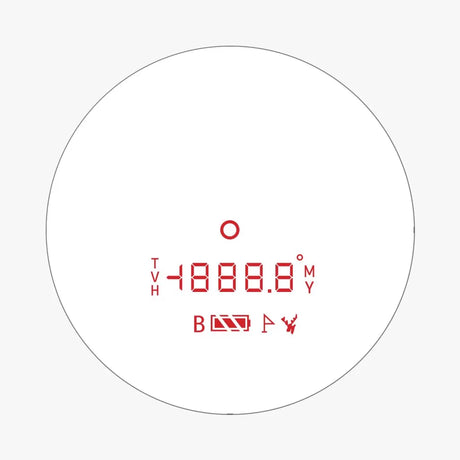
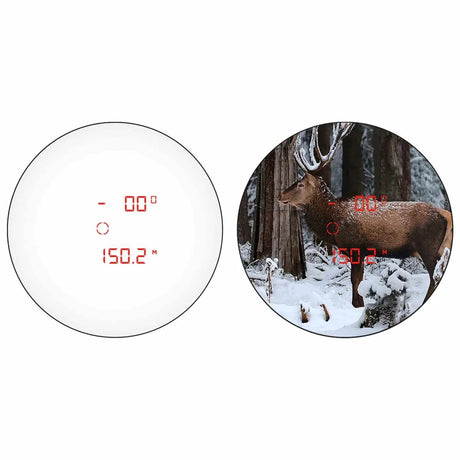
You'll use your rangefinder at dawn, dusk, and in bright midday sun. A clear, adjustable-brightness display is important. OLED displays offer crisp readouts in all lighting conditions: illuminated characters, typically red, whose brightness you can raise for direct sunlight and lower for dawn.
Look for an uncluttered readout that shows distance (and angle, if applicable) at a glance without distracting information.
6. Speed and Target Modes
How fast the unit acquires a distance reading matters when you have limited time: a game animal that might move, or a tournament round where pace matters. Check the maker's response-time rating: Alpen rates the Crestone XP at under 1.5 seconds.
Useful target modes include:
- First priority: Ranges the nearest object (useful when the target stands in front of a busy background, such as a flagstick against trees)
- Last priority: Ranges the farthest object (useful when ranging past foreground obstacles)
- Scan/continuous mode: Holds the button and continuously updates distance as you pan, handy for tracking moving game
7. Weatherproofing
Rangefinders live in pockets, packs, and on belts in all conditions. IPX4 (rain-resistant) is the minimum for hunting use. Better models are IPX7 (submersible to 1 meter). Fog-proofing via nitrogen purging keeps the internal optics clear through temperature swings.
Standalone vs. Rangefinder Binoculars
This is the biggest decision in the rangefinder category. Both types use the same laser ranging technology, but the form factor changes how you use them in the field.
Standalone Laser Rangefinders
Compact, pocket-sized units with built-in 5-7x magnification. You pull them out, range your target, and put them back. They're lightweight (ours weigh 4.8 to 6.6 oz), affordable, and fast to deploy.
Best for: hunters who carry separate binoculars, golfers, bow hunters, and anyone who wants ranging capability without replacing their existing glass.
Rangefinder Binoculars
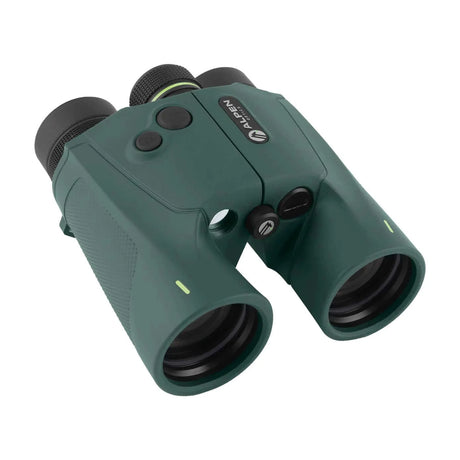
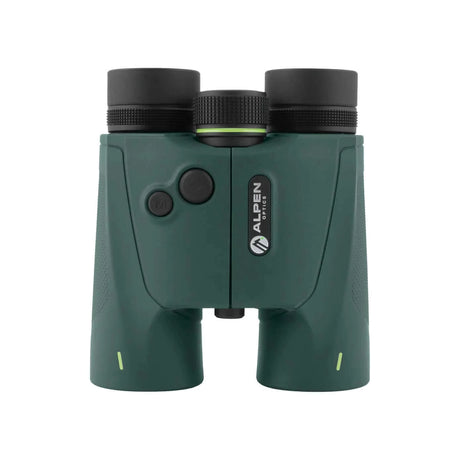
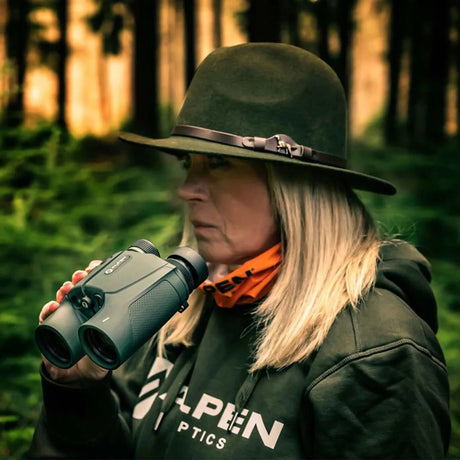
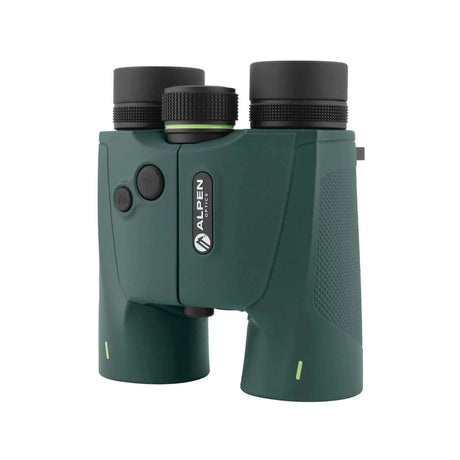
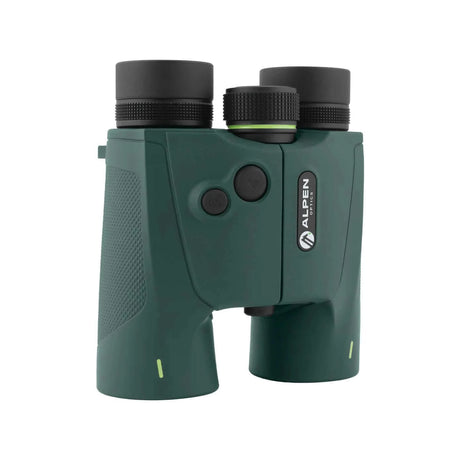
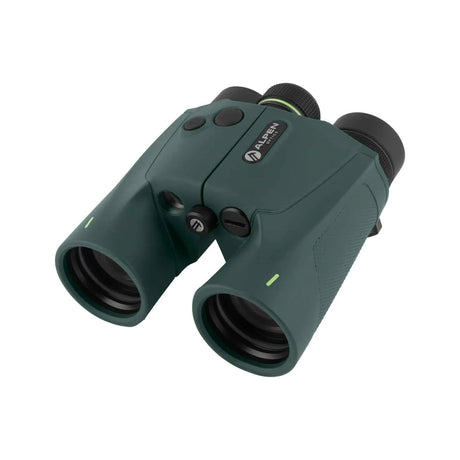
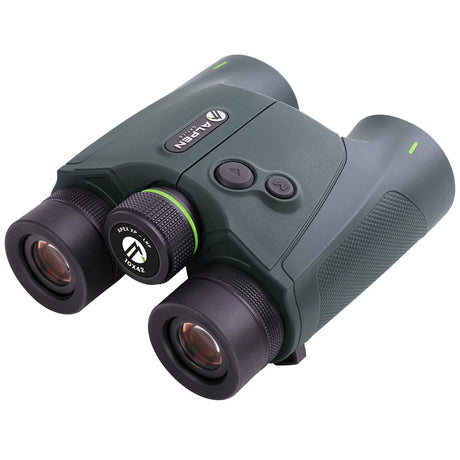
Full-quality 10x binoculars with an integrated laser rangefinder. You observe through premium optics and range in a single device, with no switching between binos and a separate rangefinder. An aiming reticle appears in the view, so you range what you are looking at.
Best for: serious hunters who want to eliminate gear juggling, mountain and backcountry hunters where carrying one device instead of two matters, and anyone who uses binoculars as their primary observation tool.
The trade-off is cost and weight. Rangefinder binoculars are significantly more expensive than buying a standalone rangefinder and separate binoculars. But for hunters who range frequently, the convenience of a single integrated unit is a genuine advantage in the field.
Choosing by Activity
What to prioritize depending on how you'll use your rangefinder.
Rifle Hunting
Precision distance is the difference between a clean harvest and a miss. Priorities: angle compensation (essential for hill and mountain terrain), 1,000+ yard advertised range (roughly 350-450 yards on deer at makers' ratings), fast acquisition speed, and full weatherproofing. A standalone 6x rangefinder paired with quality 10x42 binoculars covers these priorities. Rangefinder binoculars consolidate the kit into one device.
Bow Hunting
At bow distances (10-80 yards), even 5 yards of error changes arrow drop significantly. A compact standalone rangefinder with angle compensation is the standard tool. You don't need extreme range: 600 yards advertised is more than enough. Speed matters: you'll often range while an animal is approaching, with limited time before it moves into or out of a shooting lane.
Long-Range Precision Shooting
PRS, NRL, and ELR shooters need rangefinders that reliably reach 1,000+ yards on small targets. Some premium models include ballistic calculators or Bluetooth connectivity to pair with ballistic apps on your phone, feeding distance and angle data directly into your firing solution. Pair with a precision riflescope and a spotting scope for a complete long-range setup.
Golf
Golf rangefinders prioritize pin-lock technology (vibration confirmation when the laser locks onto the flagstick rather than background trees) and slope compensation (angle-adjusted distance for uphill/downhill lies). Note: the Rules of Golf (Rule 4.3a) do not allow measuring elevation changes during a round, so slope mode is for practice rounds and casual play. Many golf rangefinders include a switch to disable slope for tournament compliance.
Our Rangefinder Brands
We carry rangefinders from three manufacturers, covering standalone units and rangefinder binoculars across all price tiers.
Alpen Optics
The widest rangefinder selection in our catalog. The Crestone XP 7x24 is a compact standalone unit with OLED display, an excellent entry into laser ranging. For integrated ranging, the Chisos 10x42 ED LRF and flagship Apex XP 10x42 ED LRF combine premium ED glass binoculars with built-in laser rangefinding.
Athlon Optics
The Midas G2 1 Mile 6x21 is a powerful standalone laser rangefinder with OLED display, angle compensation, and a 1-mile advertised range: a strong mid-range choice for hunters. It comes with Athlon's lifetime warranty.
Steiner Optics
The ePredator LRF 10x42 is a rangefinding binocular built for long range. Steiner rates its laser to 3,000 meters, with four ranging modes and angle compensation, and it can send a reading over Bluetooth to a paired Steiner ePredator riflescope.
Budget Guide
Rangefinders span a wide price range, with the biggest jumps in value coming from form factor (standalone vs. binoculars) and optical quality. Prices are our selling prices; check each product page for the current price.
Under $250 — Entry-Level Standalone
Compact standalone rangefinders. The Alpen Crestone XP 7x24 lives here, rated to 2,000 yards on hard targets and 700 yards on deer. Adequate for bow hunting, golf, and rifle hunting at moderate distances. Look for angle compensation at this price; the Crestone XP has it.
$250–$600 — Mid-Range Standalone
Standalone units with ranges past 1,000 yards, angle compensation, OLED displays, and rainproof housings. The Athlon Midas G2 1 Mile falls here, rated to 1,760 yards. The practical choice for most rifle hunters: reliable ranging with quality optics and features.
$600–$1,000 — Rangefinder Binoculars (Entry)
Where standalone rangefinders and binoculars merge into one device. The Alpen Chisos 10x42 ED LRF offers ED glass binoculars with integrated laser ranging: observation and distance measurement without switching devices. A significant convenience upgrade for hunters who range frequently.
Around $1,000 and Up — Premium Rangefinder Binoculars
Flagship integrated units with top-tier glass. The Alpen Apex XP 10x42 ED LRF and Steiner ePredator LRF 10x42 deliver premium binocular performance with built-in ranging.
Browse sport optics under $500 → | Browse sport optics under $1,000 →
Frequently Asked Questions
Do I need angle compensation?
Do I need angle compensation?
If you hunt or shoot in terrain with any significant elevation change, yes. Shooting at a 30-degree angle uphill or downhill at a target 300 yards away means the bullet only drops as if the target were ~260 yards away. Without angle compensation, you'll overshoot. It's especially important for mountain and hill-country hunting, and useful for golf on hilly courses.
For flat-terrain hunting and golf on level courses, it's less critical but still a nice-to-have.
Standalone rangefinder or rangefinder binoculars?
Standalone rangefinder or rangefinder binoculars?
If you already own binoculars you're happy with, a standalone rangefinder is the most cost-effective way to add ranging capability. A compact 6x or 7x unit slips into a pocket and costs $250-$300.
If you're buying binoculars and a rangefinder from scratch, rangefinder binoculars save you from carrying two devices and switching between them in the field. The premium over buying both separately can be worth it for serious hunters who range frequently. Consider it an upgrade in convenience, not a requirement.
What does 'advertised range' really mean?
What does 'advertised range' really mean?
Manufacturers measure maximum range against large, highly reflective targets (like a light-colored building wall). Makers' own deer ratings for the standalone rangefinders we carry run at roughly 35-45% of advertised max: Alpen rates the Crestone XP to 2,000 yards on hard targets and 700 yards on deer, and Athlon rates the Midas G2 1 Mile to 1,760 yards and 800 yards on deer. So a "1,000-yard" rangefinder may range a deer-sized target at only 350-450 yards. Check the deer rating on the spec sheet.
Weather, target color, and lighting also affect range. Dark-colored targets in overcast conditions are harder to range than light-colored targets in bright sun.
Can I use a hunting rangefinder for golf?
Can I use a hunting rangefinder for golf?
Yes: a hunting rangefinder works fine for golf. The laser ranging technology is identical. The main features you'll miss are pin-lock vibration (haptic confirmation when the laser locks onto the flagstick) and slope mode with tournament switch. If you golf casually and already own a hunting rangefinder, it'll work. If you golf competitively, a dedicated golf model with pin-lock and slope toggle is worth having.
How long do batteries last?
How long do batteries last?
Most standalone laser rangefinders use a CR2 lithium battery that lasts 2,000-5,000 readings, typically a full season or more of regular use. Some newer models use USB-C rechargeable batteries, which eliminate the need to carry spares but require charging between extended trips.
Rangefinder binoculars use CR2 or rechargeable cells as well. Battery life is similar per ranging event, but you'll use them more often since they're also your observation optic. Always carry a spare battery on multi-day hunts.
Are laser rangefinders safe for eyes?
Are laser rangefinders safe for eyes?
Used as the maker directs, yes, but rangefinders are not all the same laser class, so read the safety section of your model's manual. The Alpen Crestone XP 7x24 manual, for example, labels it a Class 3R laser product and says to avoid direct eye exposure, not to stare into the beam, and not to activate it while aiming at someone's face.
Get Dialed In
A quick summary to guide your decision:
- Bow hunting: Compact standalone, 600+ yard range, angle compensation, fast acquisition.
- Rifle hunting: Standalone (1,000+ yards) or rangefinder binoculars, angle compensation, weatherproof.
- Long-range precision: 1 mile+ standalone with Bluetooth/ballistic integration, or premium rangefinder binos.
- Golf: Compact standalone with pin-lock, slope mode, and tournament switch.
Match the form factor to how you'll use it. A $250 standalone rangefinder paired with your existing binoculars covers most hunting scenarios. Rangefinder binoculars are a convenience upgrade for hunters who range frequently and want fewer devices in the field.
Rangefinders
-
Alpen Optics
Alpen Crestone XP 7x24 OLED Laser Rangefinder
In stockRegular price $249.99Unit price -
-
20% off
Athlon Optics
Athlon Optics Midas G2 1 Mile 6x21 OLED Laser Rangefinder
In stockSale price $299.99 Regular price $374.99Unit price -
-
Pre-order
-
-
Alpen Optics
Alpen Apex XP 10x42 ED Laser Rangefinder Binoculars
In stockRegular price $999.99Unit price -
-
13% off
Steiner Optics
Steiner ePredator LRF 10x42 Rangefinder Binoculars
Low stockSale price $1,749.00 Regular price $2,010.99Unit price -