



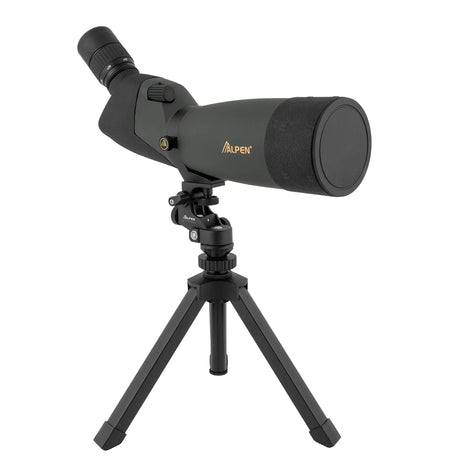


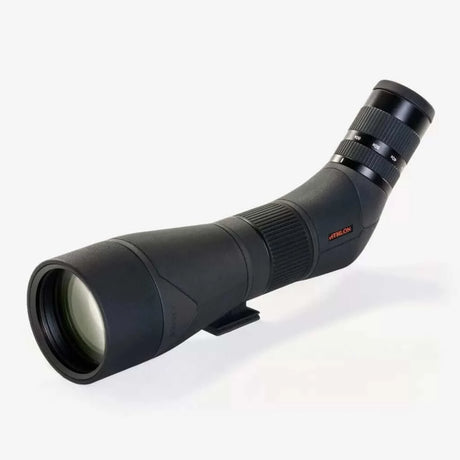
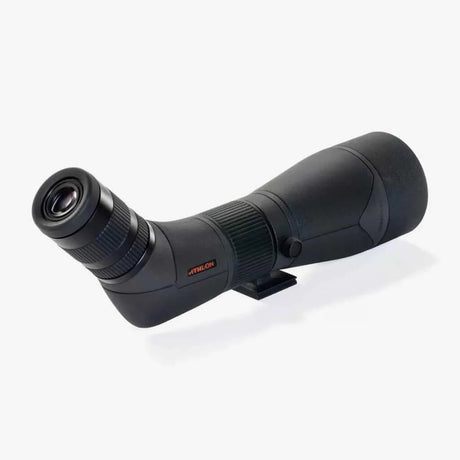
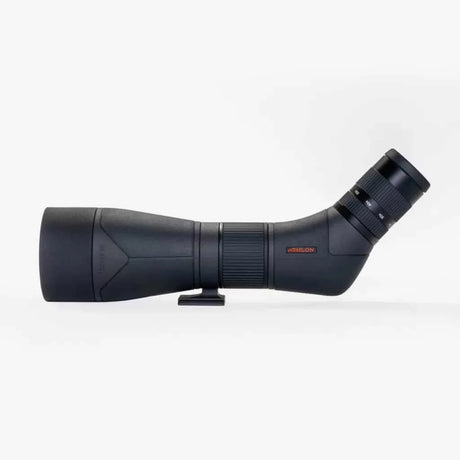


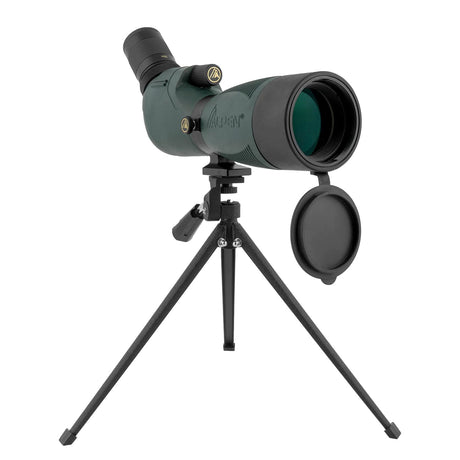
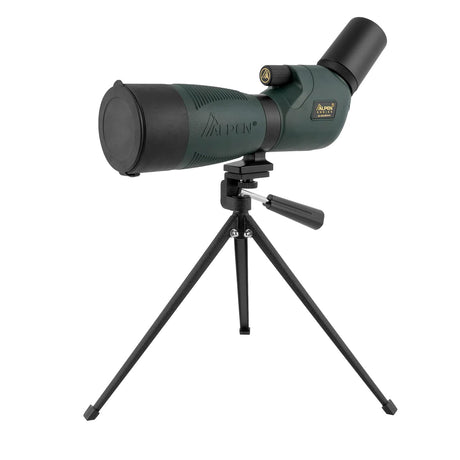
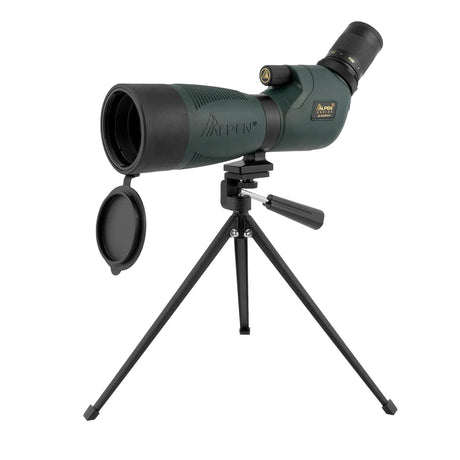
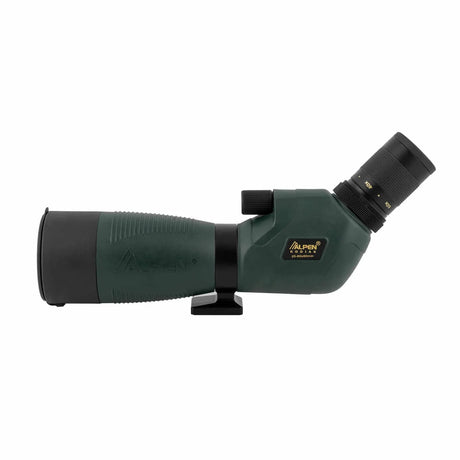
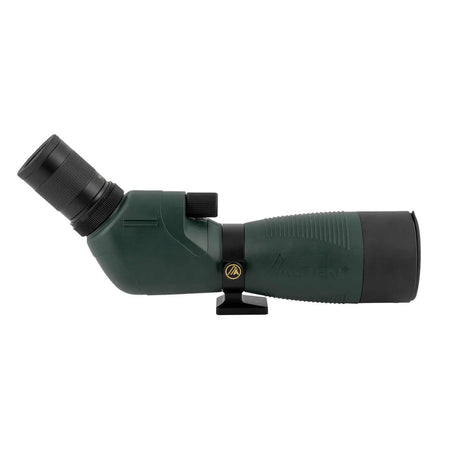
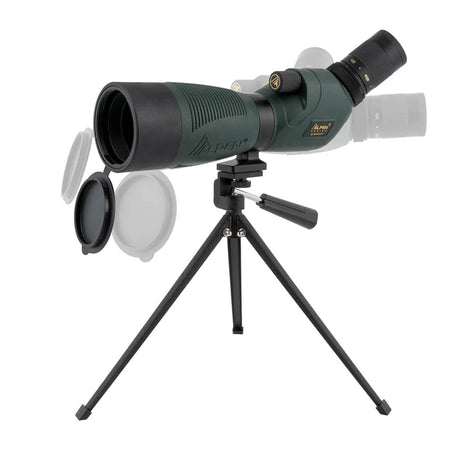




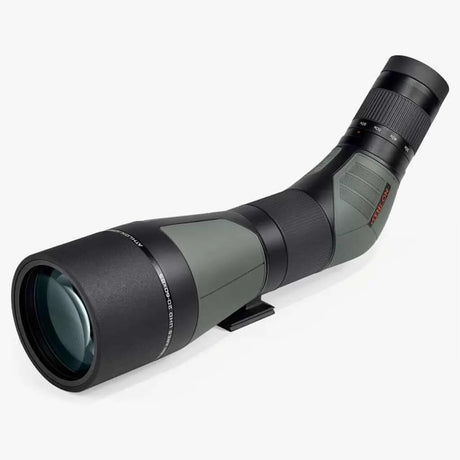
Why angled
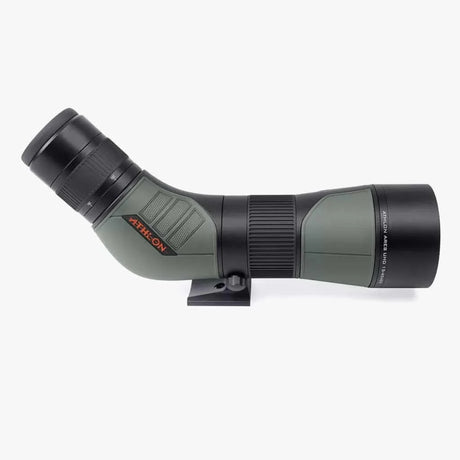
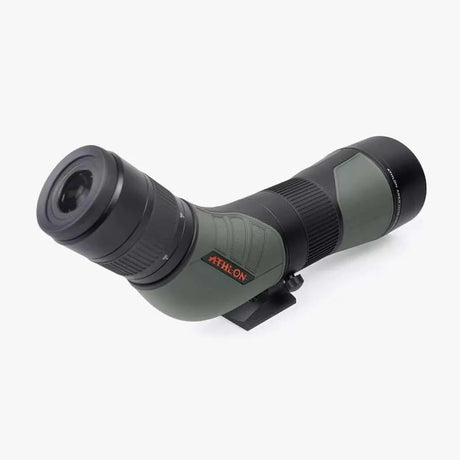
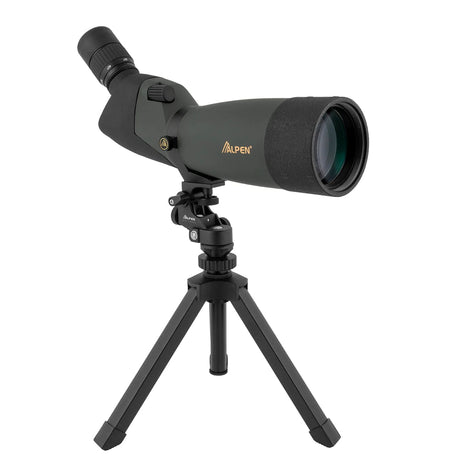
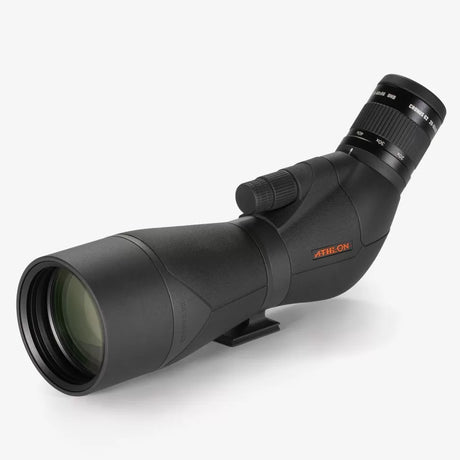
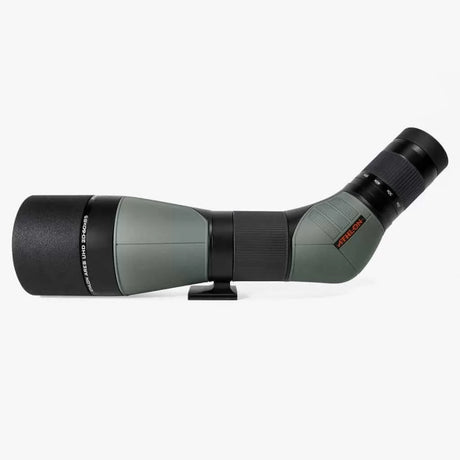
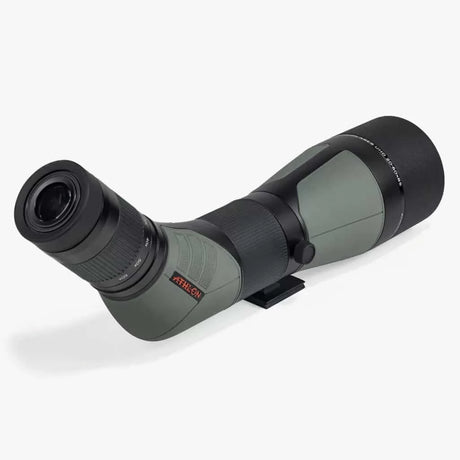
With the eyepiece at about 45 degrees to the barrel, people of different heights can share one scope without resetting the tripod, your neck stays comfortable over a long session, viewing uphill is easy, and a phone held to the eyepiece for photos is simpler to line up. That is why angled is the usual birding choice.
Choosing among them
Objective size
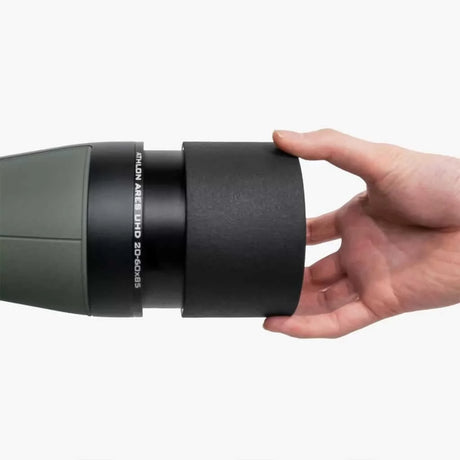
A larger objective gathers more light: an 80 mm collects about 78 percent more than a 60 mm, which shows at dawn and dusk and at high power. A smaller one is lighter to carry. Our angled scopes run from the 56 mm Kite SP 56 to the 100 mm Alpen Shasta Ridge.
Glass
ED, HD and UHD glass control the color fringing you see on a dark bird against a bright sky. Athlon's Ares G2 and Cronus G2 use its UHD glass, the Athlon Argos and Kite KSP 80 HD2 use HD glass, and the Alpen scopes and the Athlon Talos have fully multi-coated optics. The Kite SP 56 uses Kite's MHR coatings.
Frequently Asked Questions
What magnification do I need?
Look for a scope that is sharp at 30x. On most days the air limits fine detail beyond about 40x, whatever the zoom reaches.
Which angled scope suits birding?
For trail birding, a light scope: the 700 g Kite SP 56, or a 60 to 65 mm scope such as the Alpen Kodiak 20-60x60 or the Athlon Ares G2 UHD 15-45x65. For long sessions from one spot, in poor light or at distance, the Athlon Cronus G2 UHD 20-60x86.
Do I need a tripod?
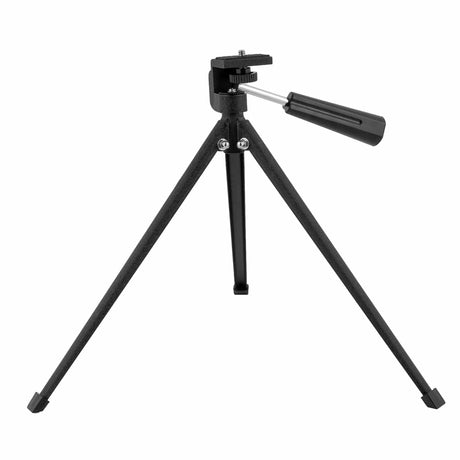
Yes. At 20x and above every vibration is magnified along with the view, so a solid tripod and head matter as much as the scope.
For birding picks, read Best Spotting Scopes for Birding 2026, and to compare Athlon's UHD lines, Athlon Ares vs Cronus.