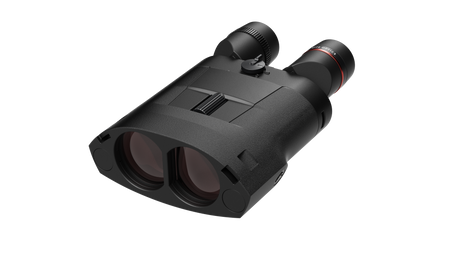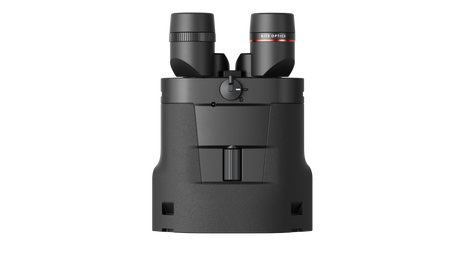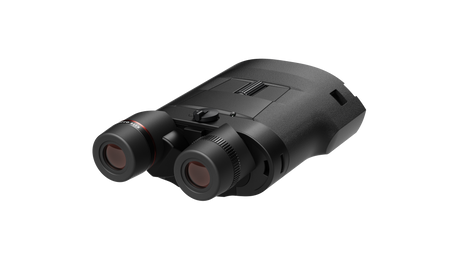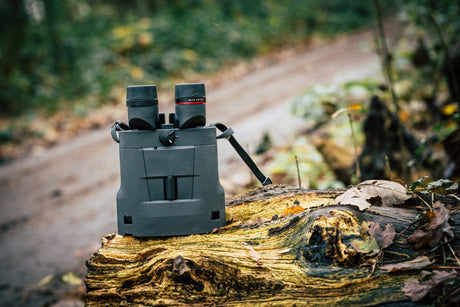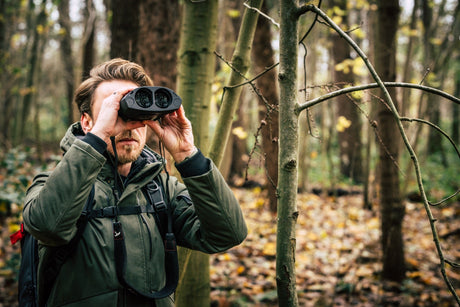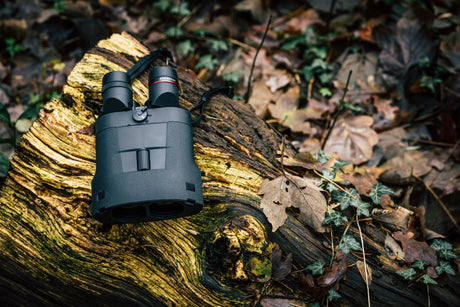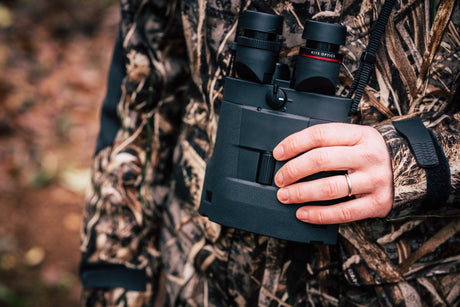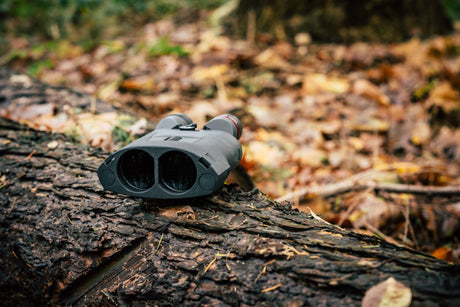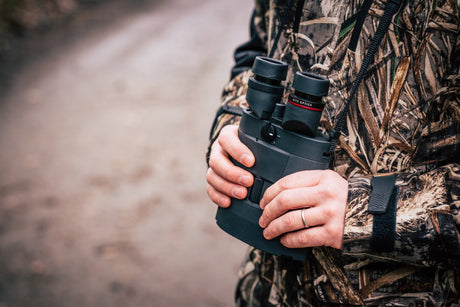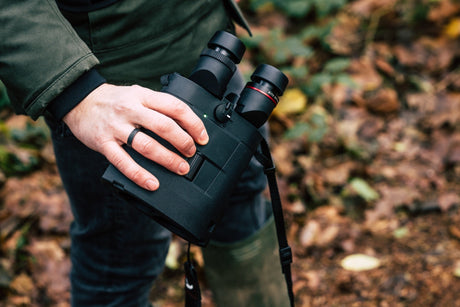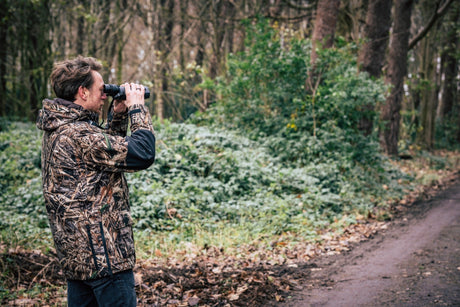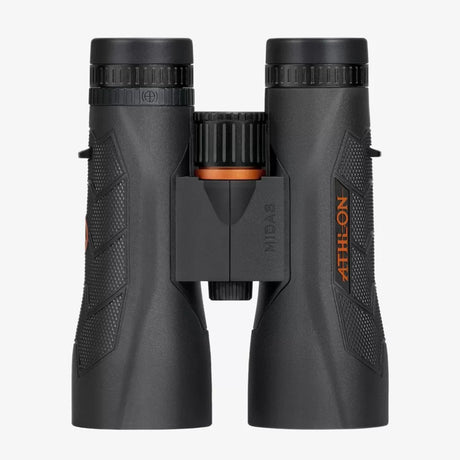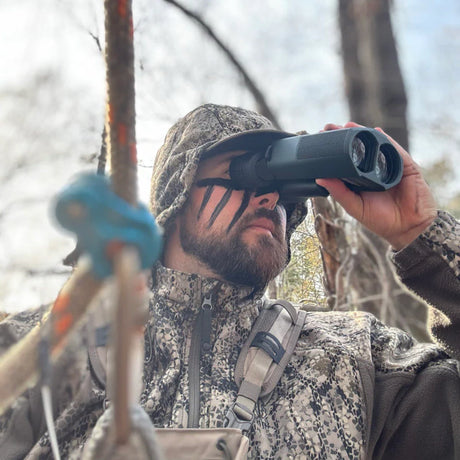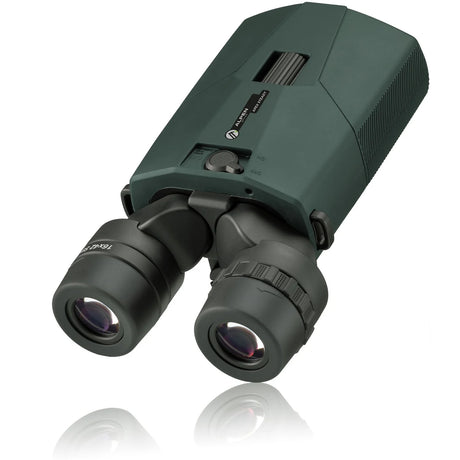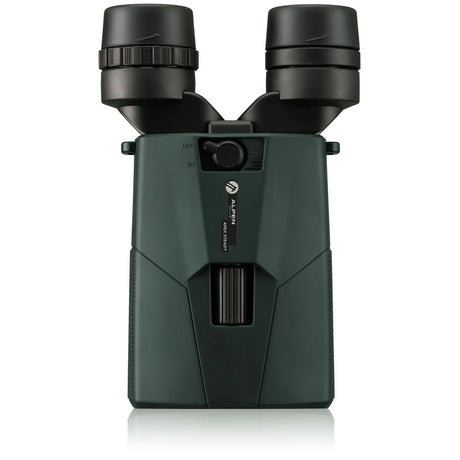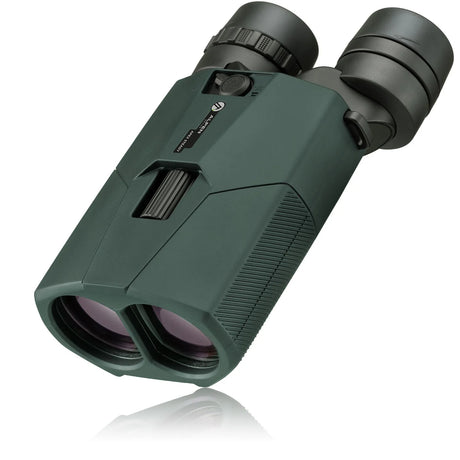

A good pair of binoculars changes the way you experience the outdoors. Birds that were distant specks become identifiable species. Game trails you'd never spot with bare eyes come into focus. Stars resolve into clusters. And the right pair feels so natural to use that you forget you're looking through glass at all.
This guide walks you through the specs that matter, the features worth paying for, and how to match a pair of binoculars to your activity and budget, whether you're a first-time buyer or upgrading from an entry-level pair.
Looking for a broader overview of sport optics? Start with our Sport Optics Buyer's Guide.
Understanding Binocular Specifications
Binocular specs look cryptic at first glance (numbers like 8x42 or 10x50), but they're straightforward once you know what each value means. Here's every spec worth checking before you buy.
1. Magnification (the First Number)
The first number tells you how many times closer objects appear. 8x makes an object 200 yards away look like it's 25 yards away. 10x pulls it to 20 yards.
Higher magnification isn't always better. Above 10x, even small hand movements create noticeable shake, which makes sustained viewing fatiguing. For handheld use, 8x to 10x hits the sweet spot. If you want 12x or higher, consider image-stabilized models or plan to use a tripod adapter.
2. Objective Lens Diameter (the Second Number)
The second number is the diameter of each front lens in millimeters. A larger lens gathers more light, which means brighter, clearer images, especially at dawn, dusk, and under overcast skies.
- 25–32mm (compact): Lightweight and packable. Best for daytime hiking and travel where every ounce counts.
- 42mm (mid-size/full-size): Balances brightness, portability, and field of view. Ideal for birdwatching, hunting, and general outdoor use.
- 50–56mm (full-size): Maximum light gathering for low-light conditions. Heavier, but excellent for dawn/dusk observation and astronomy.
3. Exit Pupil
Divide the objective lens by the magnification: a 10x42 has a 4.2mm exit pupil; an 8x42 has 5.25mm. The human pupil dilates to about 5–7mm in the dark (less with age), so a larger exit pupil means brighter images in low light. For dawn and dusk use, aim for 5mm or higher.
4. Eye Relief
The distance between the eyepiece and your eye where you still see the full field of view. If you wear glasses, you need at least 15mm of eye relief. Otherwise you'll see a narrowed, vignetted image. Most quality binoculars have twist-up eyecups that let you adjust this distance whether you're wearing glasses or not.
5. Field of View (FOV)
How wide an area you see, measured in feet at 1,000 yards (or degrees). A wider FOV makes it easier to find and track moving subjects like birds in flight.
- Birdwatching / tracking: Aim for 350 ft or more at 1,000 yards; the wider the field, the easier birds are to find.
- General use: 300+ ft at 1,000 yards is adequate.
Higher magnification narrows FOV. An 8x42 typically has a wider field than a 10x42 from the same line.
6. Close Focus Distance
The minimum distance at which you can get a sharp image. For birdwatching, 10 feet or less is plenty for most uses, and 6 feet or less lets you observe butterflies, flowers, and birds at close range. Some binoculars close-focus to just 4 feet.
7. Prism Type
Roof prism binoculars are the modern standard: slim, streamlined barrels that are easy to hold, durable, and almost always waterproof. Most binoculars in our catalog use roof prisms.
Porro prism designs have an offset barrel shape (wider at the front). They can offer slightly better depth perception and a wider field of view at lower price points, but they're bulkier and less common in sealed, waterproof builds.
For field use, roof prism is the go-to choice unless you have a specific reason to prefer porro.
Lens Coatings and Glass Quality
Coatings and glass type have a bigger impact on image quality than magnification. Two binoculars with the same specs (say, 10x42) can look dramatically different depending on their glass and coatings.
Anti-Reflective Coatings
Every time light passes through an uncoated air-to-glass surface, some is reflected away: lost brightness you'll never see. Anti-reflective coatings recover that light. The hierarchy:
- Coated: A single layer on at least one surface. Entry-level.
- Multi-coated: Multiple layers on at least one surface. Better.
- Fully coated: A single layer on all surfaces. Decent.
- Fully multi-coated (FMC): Multiple layers on every air-to-glass surface. The standard for quality binoculars. Maximizes light transmission and contrast.
For anything beyond casual use, look for fully multi-coated lenses. The difference is most obvious at dawn, dusk, and on overcast days when light is limited.
ED (Extra-Low Dispersion) Glass
Standard glass bends different wavelengths of light at slightly different angles, creating chromatic aberration: color fringing (purple or green halos) around high-contrast edges. ED glass elements correct for this, delivering sharper, more color-true images.
ED glass is common on mid-range and premium binoculars, though not universal. You'll find it in lines like Alpen's Chisos and Apex XP, Athlon's Midas and Cronus, and Explore Scientific's G600 series.
Phase Correction Coatings
Specific to roof prism binoculars. Light traveling through a roof prism splits into two paths that can get slightly out of phase, reducing contrast and resolution. Phase correction coatings bring the two paths back into phase. Any quality roof prism binocular should have them. Look for "phase-corrected" or "P-coated" in the specs.
Choosing Binoculars by Activity
The "best" binoculars depend entirely on what you're doing with them. Here's what to prioritize for each activity.
Birdwatching
Birding demands a wide field of view (to find birds in dense foliage), close focus of 10 feet or less (for warblers a few yards away), and enough brightness for early-morning outings. The sweet spot is 8x42: wide FOV, bright image, manageable weight for all-day use. If you want more detail on distant shorebirds, step up to 10x42, but expect a narrower field.
Pair with a spotting scope for stationary hides where you need 20–60x magnification.
Hunting
Hunters need binoculars that perform in low light: first and last light are prime time. A 10x42 or 10x50 with ED glass provides the detail and brightness to spot game at distance during the golden hours. Waterproofing and fog-proofing are non-negotiable for field use.
For mountain and backcountry hunts where weight matters, a 10x32 shaves ounces while still delivering solid glass. Pair your binos with a rangefinder for precise shot setup.
Hiking and Travel
Portability wins here. Compact 8x25 or 8x32 binoculars weigh 12–20 oz and fit in a jacket pocket or daypack lid. You sacrifice some low-light performance, but for daytime trail use (identifying wildlife, scanning ridgelines, taking in vistas), compact binoculars are hard to beat.
Astronomy
Binoculars are an underrated astronomy tool. A pair of 10x50 or 15x70 binoculars shows star clusters, the Milky Way, Jupiter's moons, and the craters of the Moon in a way that feels immersive thanks to two-eye viewing. For serious stargazing, large-aperture astronomy binoculars from Explore Scientific go up to 150mm objectives: essentially twin telescopes on a mount.
For handheld astronomy binos, image-stabilized models eliminate the shake that makes high-magnification stargazing frustrating without a tripod.
Spectator Sports and Events
A compact 8x25 or 10x25 is all you need: light, fits in a bag, and gives you a much better view of the stage or field. Don't overthink the specs here; focus on something small enough that you'll actually bring it.
Build Quality and Weatherproofing
Binoculars live outdoors, and the conditions they face (rain, humidity, temperature swings, bumps, and drops) separate a reliable tool from a frustrating one.
Waterproof Ratings
Look for O-ring sealed optics. This prevents moisture, dust, and debris from entering the optical path. Many quality outdoor binoculars are rated IPX7 (submersible to 1 meter for 30 minutes) or better, but not all: Alpen rates its image-stabilized Apex Steady models IPX4. If you'll only use them in dry conditions, this matters less, but sealed optics also keep internal dust and contaminants out for the lifetime of the product.
Fog-Proofing
Sealed binoculars are purged with nitrogen or argon gas to prevent internal fogging when you move between temperature extremes (stepping from a warm truck into cold morning air, for example). Most of the waterproof binoculars we carry are gas-purged, but not all: Steiner lists its Military-Marine models as waterproof but not nitrogen-filled.
Armor and Durability
Rubber-armored housings absorb impacts and provide a secure, non-slip grip in wet or cold conditions. Magnesium alloy or polycarbonate bodies keep weight down while maintaining structural rigidity. For heavy field use, armor and build material matter more than they might seem.
Twist-Up Eyecups
Multi-position twist-up eyecups let you fine-tune eye relief whether you wear glasses or not. Look for eyecups with defined click-stops (not just free-spinning) for a secure, repeatable position.
Our Binocular Brands
We carry binoculars from nine manufacturers, each with a distinct strength. Here's a quick orientation.
Alpen Optics
The broadest lineup in our catalog, spanning entry-level Wings and Kodiak models through mid-range Chisos ED and Apex XP ED to image-stabilized Apex Steady models. The range also includes rangefinder-integrated binoculars for hunters.
Athlon Optics
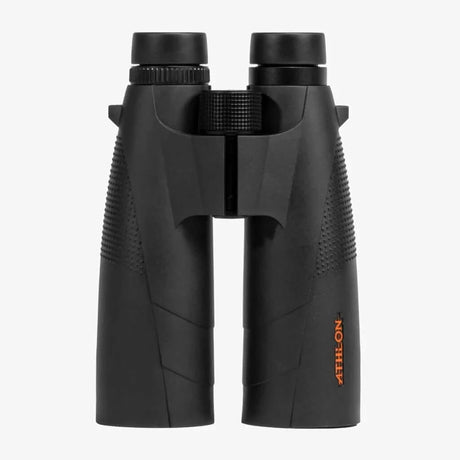
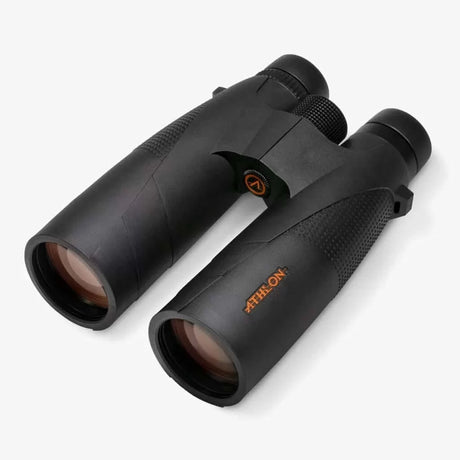
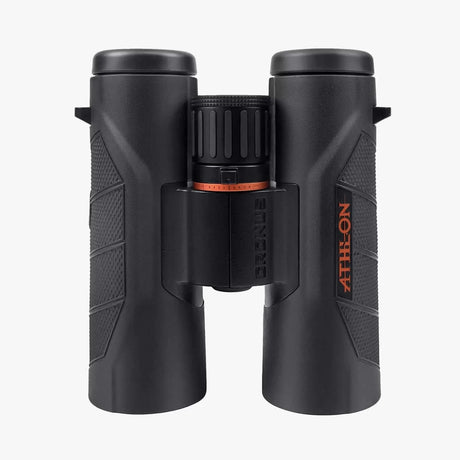
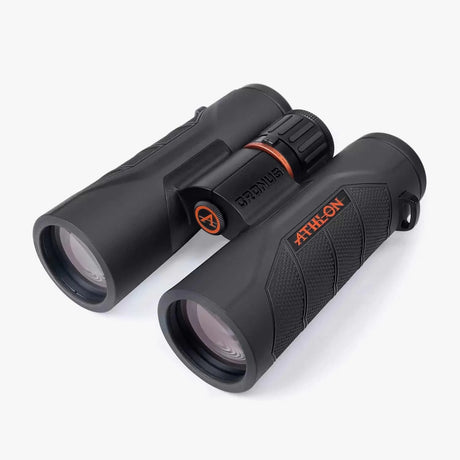
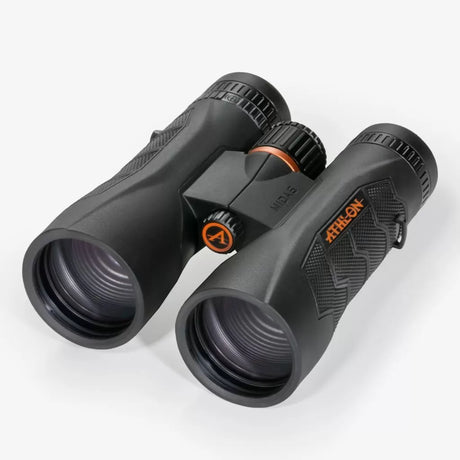
Purpose-built for hunters and outdoor professionals. The lineup climbs from the affordable Neos G2 HD through Argos G2 UHD and Midas G2 UHD to the flagship Cronus G2 UHD. Across the Athlon binoculars range, formats run from 8x42 to 15x56. Its UHD models use what Athlon calls Extra-Low Dispersion UHD glass, and Athlon covers its binoculars with a lifetime warranty.
Kite Optics
Premium optics from a Belgian family-run company. The Lynx HD+ series pairs an HD optical system with a wide field (453 ft at 1,000 yards on the 8x42) for birding and nature observation, while the APC Stabilized line provides electronic image stabilization for shake-free viewing at higher magnifications.
Steiner Optics
German optics built as purpose-specific families rather than one general-purpose range. Navigator and Commander cover marine use in the classic 7x50 format, with compass variants for navigation. Predator is the hunting line, using Steiner's Predator Diamond coating for high light transmission and contrast. Military-Marine and Tactical are the hard-use families, and the ePredator LRF integrates a laser rangefinder. Sealing depth is where Steiner's marine binoculars stand out: the Commander 7x50 seals to 33 feet, where Steiner rates its own Predator 10x42 hunting binocular to 3.
Explore Scientific
Ranges from the value-oriented G400 series and mid-range G600 ED to large-format BT binoculars (70mm–150mm objectives) designed for astronomy. The BT series are essentially twin telescopes for immersive deep-sky viewing.
Hawke Optics
British optics with a compact lineup that covers two ends cleanly. The Vantage series sits at the entry end of Hawke's range in 8x32 and 8x42, while the Endurance ED Marine line brings ED glass and a marine build to the 7x32 and 7x50 formats, including a compass model. A good fit if you want marine-grade sealing without flagship pricing.
National Geographic
Accessible 8x42 and 10x42 binoculars in the Excursion series. A good starting point for casual outdoor use, sporting events, and kids getting their first pair of binoculars.
Luna Optics
Specialized digital day/night vision binoculars, available with or without an integrated laser rangefinder. Purpose-built for low-light and nighttime observation, using digital sensors rather than traditional optics to amplify available light.
Guide
Thermal and digital night vision in binocular form. The DN70M 2.0 pairs thermal detection with 4K night vision in one housing, and the TN650L steps up to a 640×512 thermal sensor; both carry a 1,500m laser rangefinder. These are detection tools rather than glass: they work in total darkness and through light fog, and in brush a warm animal stands out where conventional binoculars show only cover.
Budget Guide
What you get at each price level, and what trade-offs to expect. Prices are our selling prices; check each product page for the current price.
Under $150 — Getting Started
Entry-level roof prism binoculars, waterproof and nitrogen-purged, with fully multi-coated lenses on the Kodiak and Neos G2 HD. Models like the Alpen Kodiak, Athlon Neos G2 HD, and Hawke Vantage 8x32 fall here. Suited to daytime hiking, sporting events, and casual wildlife observation. Low-light performance will be noticeably limited compared to pricier glass.
$150–$400 — The Sweet Spot
This is where most buyers should start. Fully multi-coated lenses on most models (the Hawke Vantage 8x42 is fully coated), reliable waterproofing, and a meaningful step up in low-light performance. Lines like the Alpen Chisos ED and Apex, Athlon Argos G2 UHD and Midas G2 UHD 8x42 and 10x42, Hawke Vantage 8x42, and Explore Scientific G400/G600 suit birdwatching, hunting, and regular outdoor use. ED glass at this price point significantly reduces color fringing.
$400–$800 — Premium Glass
Athlon's extra-low dispersion UHD glass and dielectric prism coatings, in rugged builds designed for daily field use. The Athlon Midas G2 UHD 10x50 and 12x50 and the Cronus G2 UHD deliver sharp, bright images with minimal chromatic aberration. Worth it for birders, guides, and hunters who use their optics every week. Marine-specific glass spans this tier and the one below it: the Steiner Military-Marine 7x50 and Hawke Endurance ED Marine 7x50 trade magnification for a steadier hand-held image.
$800+ — Flagship and Specialty
Image-stabilized binoculars (Alpen Apex Steady, Kite APC Stabilized), premium optics (Kite Lynx HD+, Steiner Commander 7x50), rangefinder-integrated models (Steiner ePredator LRF), digital night vision and thermal binoculars (Guide TN650L), and large-format astronomy binoculars. These are specialized tools for users who know exactly what they need and use them intensively.
Browse sport optics under $500 → | Browse sport optics under $1,000 →
Caring for Your Binoculars
Quality binoculars are built to last for years, but proper care keeps them performing at their best.
- Storage: Keep them in a case or pouch when not in use. Use the lens caps. Store in a cool, dry place away from direct sunlight.
- Cleaning lenses: Use a soft, lint-free microfiber cloth. For stubborn smudges, use optical-grade lens cleaning solution, never household glass cleaner. Blow loose dust off first with a blower or soft brush to avoid scratching coatings.
- Avoid touching lenses: Oils and dirt from fingers can degrade coatings over time. Handle by the body, not the glass.
- After saltwater or heavy rain: Rinse waterproof binoculars under lukewarm fresh water and pat dry. Salt residue can corrode metal parts and damage rubber armor over time.
- Neck strap: Always use the strap in the field. A dropped pair of binoculars can shift optical elements out of alignment.
Frequently Asked Questions
8x42 or 10x42 — which should I get?
8x42 or 10x42 — which should I get?
8x42 gives you a wider field of view and a brighter image in low light (larger exit pupil), making it easier to find and follow birds, scan landscapes, and hold a steady image. It's the better all-around choice for most people.
10x42 brings subjects closer and reveals more detail at distance, which is useful for hunting, longer-range birding, and situations where you already know where to look. The trade-off is a narrower FOV and more visible hand shake.
If you can only buy one pair, 8x42 is the safer choice. If you want more reach and have steady hands, go with 10x42.
For a full breakdown with real specs and our top picks at each budget, see our complete 8x42 vs 10x42 comparison.
Do I need waterproof binoculars?
Do I need waterproof binoculars?
If you'll use them outdoors in any weather beyond consistently sunny and dry, yes. Waterproof (O-ring sealed) and fog-proof (nitrogen/argon purged) binoculars protect against rain, humidity, and temperature swings. They also keep internal dust and debris out over the lifetime of the product. For casual indoor use or dry-climate events, it matters less.
What are image-stabilized binoculars, and are they worth it?
What are image-stabilized binoculars, and are they worth it?
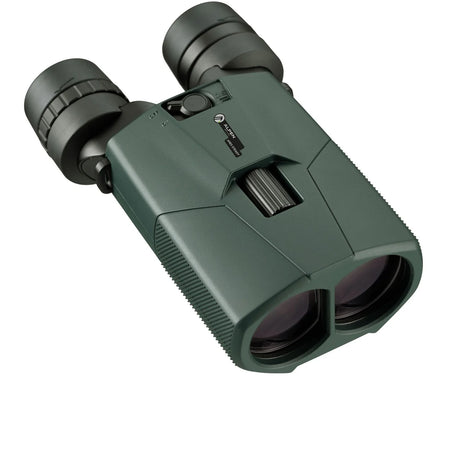
Image-stabilized binoculars use electronic sensors and motors to counteract hand shake in real time. This makes a dramatic difference at higher magnifications (12x, 14x, 16x+) where even small movements cause the image to bounce. They suit birders and boaters who need steady views without a tripod.
The trade-off is higher cost, battery dependency, and slightly more weight. If you primarily use 8x or 10x and have steady hands, standard binoculars are fine. If you want 12x+ magnification for handheld use, stabilized models are worth the investment.
Can I use binoculars for stargazing?
Can I use binoculars for stargazing?
Yes. Binoculars are one of the best ways to start exploring the night sky. A pair of 10x50 binoculars will show you the Milky Way in stunning detail, Jupiter's four largest moons, star clusters like the Pleiades, the Andromeda Galaxy, and the craters of the Moon.
For deeper astronomy, large-aperture astronomy binoculars with 70mm–150mm objectives provide telescope-like views with the immersive feel of two-eye viewing. These are typically mounted on a tripod or parallelogram mount.
How do I adjust binoculars for my eyes?
How do I adjust binoculars for my eyes?
Three adjustments to make on a new pair:
- Interpupillary distance (IPD): Fold the barrels until you see one merged circle, not two overlapping ones.
- Center focus: Close your right eye and focus the center wheel until the image is sharp in your left eye.
- Diopter adjustment: Close your left eye and turn the diopter ring (usually on the right eyepiece) until the image is sharp in your right eye. This compensates for differences between your eyes.
Once the diopter is set, you only need to use the center focus wheel. Many binoculars have a locking diopter to prevent accidental changes.
What's the difference between ED and HD binoculars?
What's the difference between ED and HD binoculars?
ED (Extra-Low Dispersion) refers to the type of glass used in the objective lenses. ED glass corrects chromatic aberration: the color fringing you see around high-contrast edges. It's a specific, measurable optical property.
HD (High Definition) is a marketing term that usually indicates premium coatings and/or ED glass, but its meaning varies by manufacturer. When comparing binoculars, focus on whether they use ED glass elements and fully multi-coated lenses rather than relying on the HD label alone.
Do binoculars come with a warranty?
Do binoculars come with a warranty?
Every brand we carry includes a manufacturer's warranty. Athlon Optics offers a lifetime warranty. Alpen Optics and Explore Scientific provide limited lifetime warranties on their non-electronic binoculars; Alpen's image-stabilized Apex Steady and laser rangefinder models carry a 5-year limited warranty. Kite Optics includes a manufacturer warranty with all products. Check the individual product page for specific warranty terms.
Start Exploring
A quick summary to guide your decision:
- Birdwatching: 8x42, wide FOV, close focus of 10 ft or less, fully multi-coated, waterproof.
- Hunting: 10x42 or 10x50, ED glass, low-light performance, rugged build.
- Hiking / travel: Compact 8x25 or 8x32, lightweight, pocket-friendly.
- Astronomy: 10x50 for handheld, large-format binoculars (70mm+) on a mount for deep sky.
- General outdoor: 8x42 is the most versatile starting point: it works well for nearly every activity.
Match the specs to your primary activity, invest in the best glass your budget allows, and take care of your optics. A good pair of binoculars will serve you for years.
Binoculars
-
20% off
Athlon Optics
Athlon Optics Cronus G2 UHD 15x56 Binoculars
Sale price $749.99 Regular price $937.49Unit priceIn stock -
-
20% off
Athlon Optics
Athlon Optics Cronus G2 UHD 10×42 Binoculars
Sale price $549.99 Regular price $687.49Unit priceIn stock -
-
8% off
Kite Optics
Kite Optics APC Stabilized 14x50 ED AA Binoculars
Sale price $1,799.00 Regular price $1,950.00Unit priceIn stock -
-
8% off
Kite Optics
Kite Optics APC Stabilized 14x50 ED Li-Ion Binoculars
Sale price $1,849.00 Regular price $1,999.00Unit priceIn stock -
-
20% off
Athlon Optics
Athlon Optics Midas G2 Pro UHD 12x50 Binoculars
Sale price $499.99 Regular price $624.99Unit priceIn stock -
-
Alpen Optics
Alpen Apex Steady 14x42 HD Binoculars with Image Stabilization
Regular price $999.99Unit priceIn stock -
-
8% off
Kite Optics
Kite Optics APC Stabilized 18x50 ED AA Binoculars
Sale price $1,849.00 Regular price $1,999.00Unit priceIn stock -
-
7% off
Kite Optics
Kite Optics APC Stabilized 18x50 ED Li-Ion Binoculars
Sale price $1,899.00 Regular price $2,050.00Unit priceIn stock -