






How to choose a thermal riflescope
Sensor and sensitivity
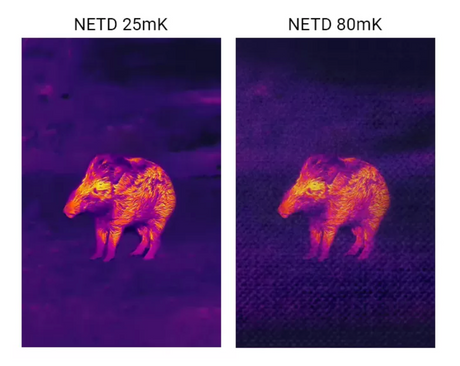
Resolution sets the detail: a 640x512 sensor has nearly three times the pixels of a 400x300, which shows when you need to tell one animal from another at distance. NETD, the smallest temperature difference the sensor can show, decides how the image holds up in fog, rain and humidity, and lower is better.
Rangefinder or not
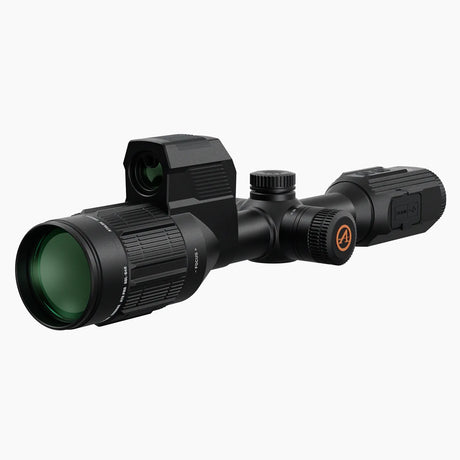
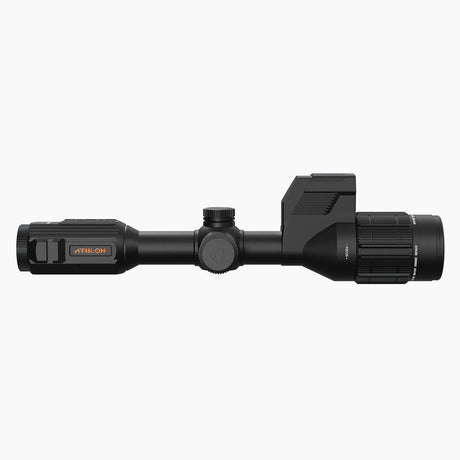
A built-in laser rangefinder gives you the distance without a second device, and a scope without one costs less. Most of Guide's TU 3.0 scopes, the Alpen Apex 640 and the Athlon Cronus ATS Pro 35L-400 and 50L-640 have one, and Guide's in-lens LRF sits inside the objective. The Guide Nova and TU425SE do without.
Refresh rate and battery
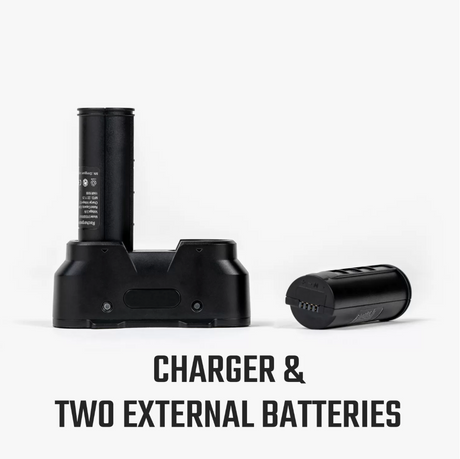
A 50 Hz refresh rate keeps a moving animal smooth. Battery life ranges from about 4 hours to 15 or more: Athlon rates the Cronus ATS Pro at 10 hours or more and Alpen rates its Apex LRF scopes at 15.
Scope, clip-on or monocular?
A thermal riflescope replaces your day optic. A clip-on mounts ahead of the day scope you already own. A handheld thermal monocular is the tool for scanning a field before you lift the rifle, and for most hunters it is the first thermal to buy.
Frequently Asked Questions
Is a 400-class sensor enough?
Inside about 250 yards, yes: a 400x300 sensor resolves what you need to see in brush country and at close sets. A 640 earns its cost in open country, where animals appear at 300 to 500 yards and more.
Is thermal hunting legal?
Rules differ by state and by species. Check your state wildlife agency before you hunt with thermal.
For the rangefinder models compared, read Best Thermal Scopes with Rangefinders in 2026, and for the specs, Thermal Imaging Specs Explained.