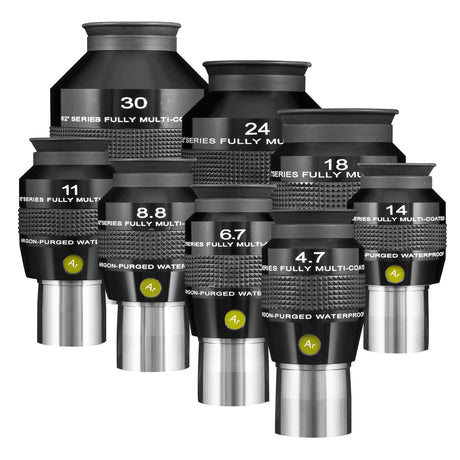
Why 82°
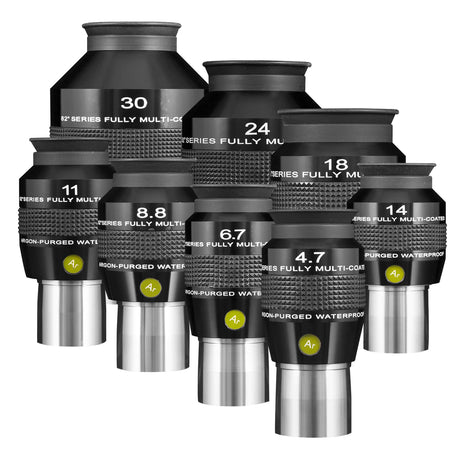
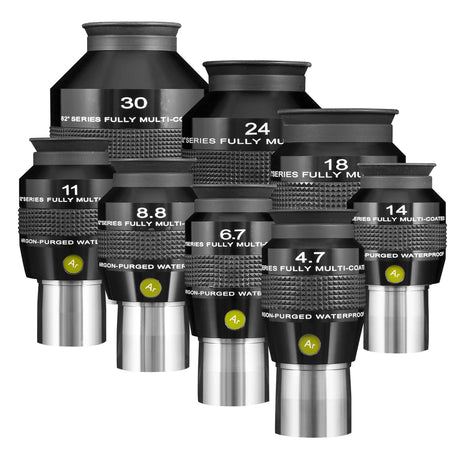
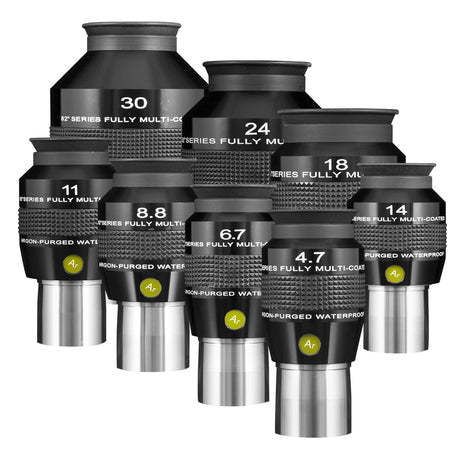
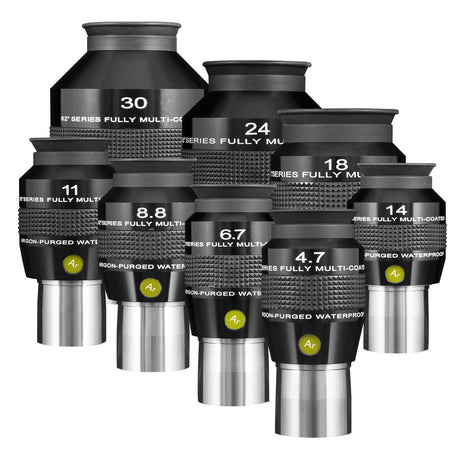
At 82 degrees the edge of the field disappears, and the true field, about the apparent field divided by the magnification, is about a third wider than a 62° eyepiece's at the same power. The series runs from 4.5 mm to 30 mm, so one line covers high, medium and low power.
Choosing one
Barrel
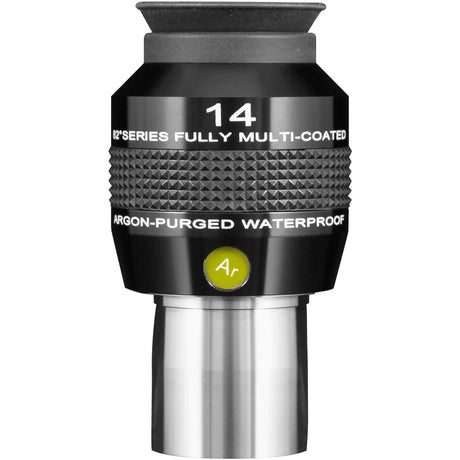
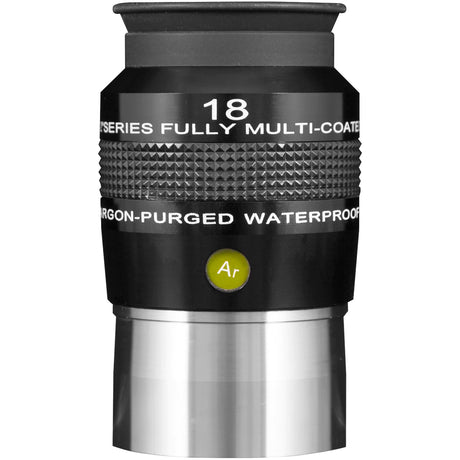
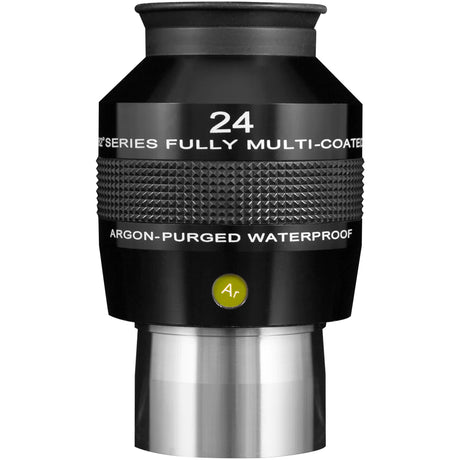
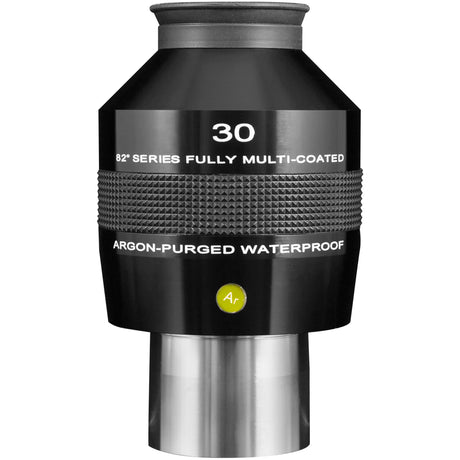
The 4.5 mm to 14 mm models have 1.25-inch barrels and fit almost any focuser. The 18, 24 and 30 mm are 2-inch, because a 1.25-inch barrel's field stop tops out at about 27 mm against 46 mm for a 2-inch. If your focuser takes 2-inch accessories, those longer models give a wider, brighter view.
Eye relief
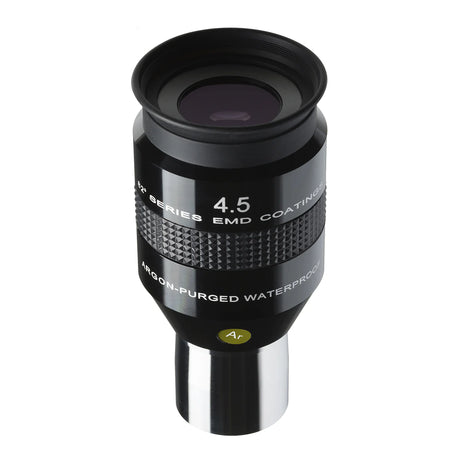
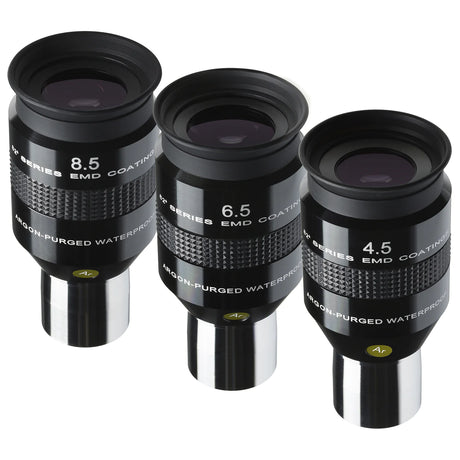
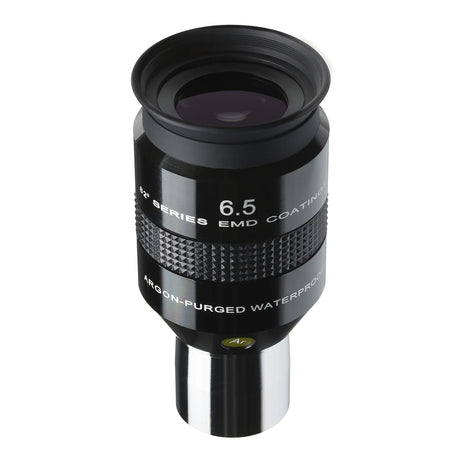
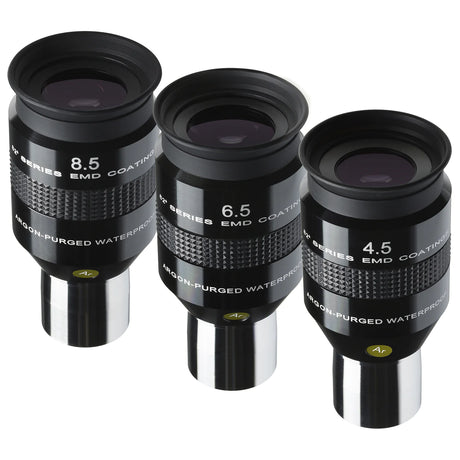
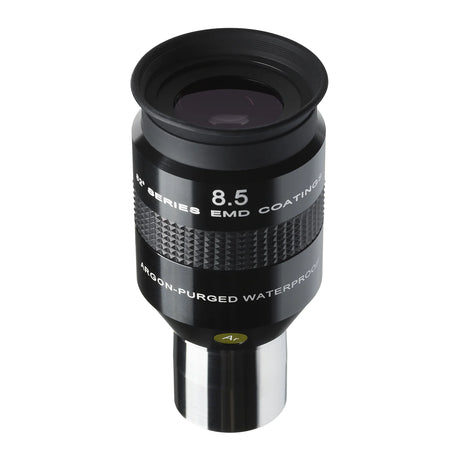
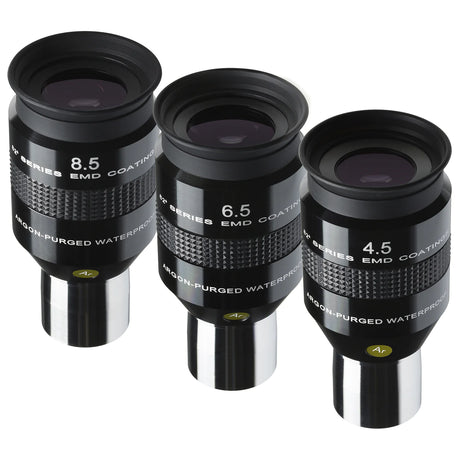
The long eye relief 4.5, 6.5 and 8.5 mm keep 15 to 16.8 mm of eye relief at high power, enough for glasses, and the 30 mm gives 22 mm.
Weight
The 1.25-inch models weigh 9 to 11.5 oz, and the 2-inch 30 mm 35.5 oz. Every 82° model carries Explore Scientific's EMD multi-coatings.
Frequently Asked Questions
Which 82° should I buy first?
The focal length you will use most nights. Three good eyepieces, for low, medium and high power, plus a 2x focal extender cover almost everything.
Will they fog?
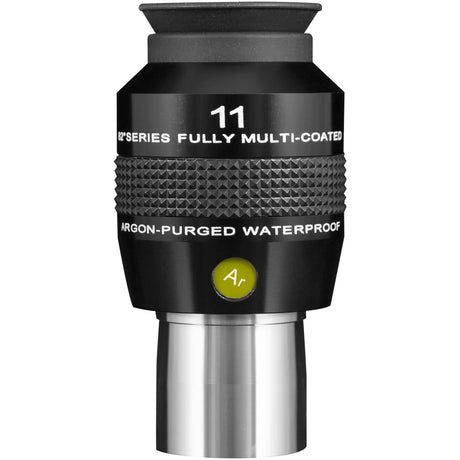
No. Each is argon-purged and waterproof, so the lenses do not fog internally.
What do the LER models add?
Room for glasses at high power: 15 mm or more of eye relief, where anything under 12 mm presses your eye close to the lens.
How much sky does an 82° show?
About 82 degrees divided by the magnification: a 24 mm in a 1,200 mm telescope gives 50x and about 1.6 degrees, three times the width of the full Moon.
For the widest views, browse our 100° eyepieces, and for a lighter step down, our 68° eyepieces.