



What 8 and 10 inches show
Both sizes show Saturn's rings, Jupiter's cloud belts and fine lunar terrain, and the Cassini Division on steady nights, though on the planets the air usually sets the limit before either mirror does. The gap opens on faint targets: the 10-inch gathers about 47 percent more light, which resolves more of a globular cluster's stars and more of a galaxy's spiral arms under a dark sky. From a bright backyard both still deliver the Moon, planets, double stars and bright clusters.
Choosing between them
Size and weight
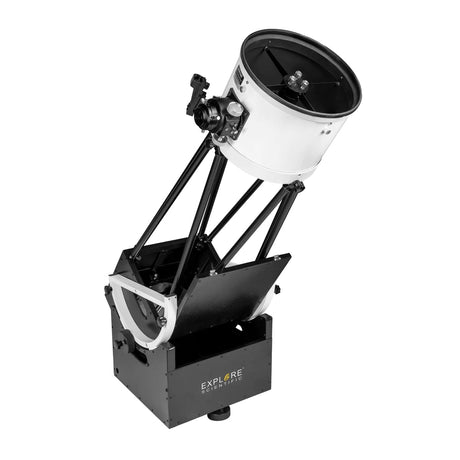
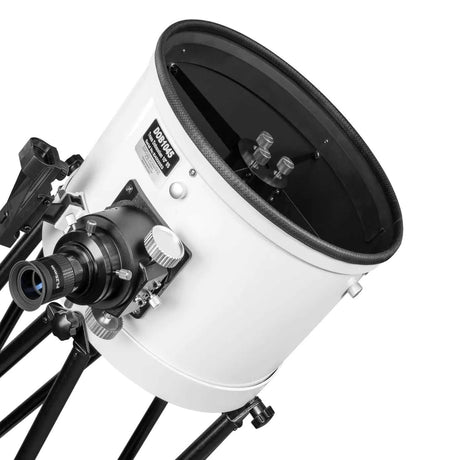
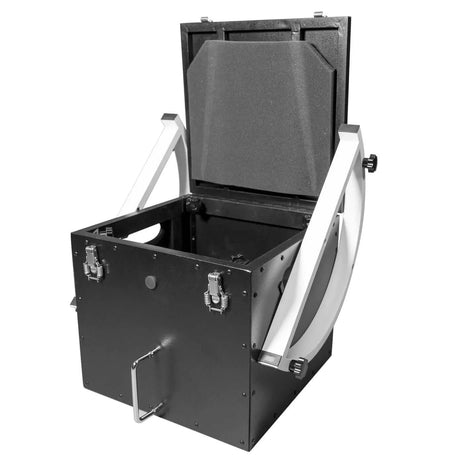
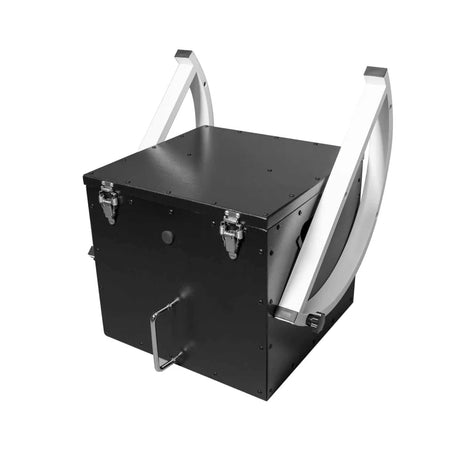
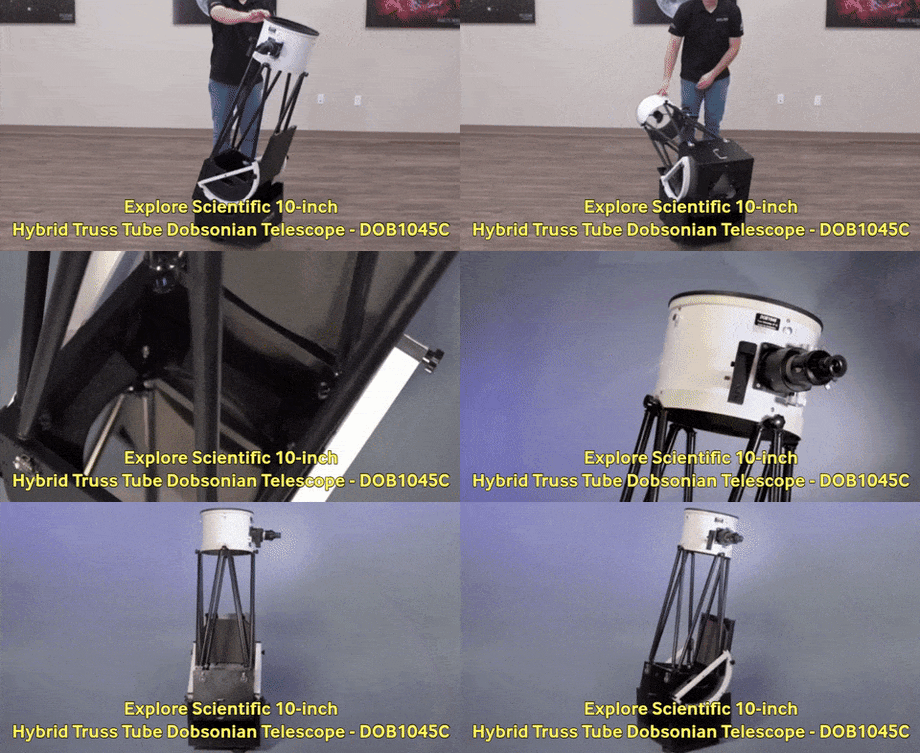
The solid-tube models come apart into a tube and a rocker base, carried in two trips. The 8-inch weighs 38.7 lb in all, with a 20.0 lb tube, and the 10-inch f/4.7 45.7 lb, with a 24.2 lb tube 11.9 inches across. The 10-inch hybrid truss breaks down into smaller pieces, the heaviest a 31.5 lb mirror box, with eight truss poles under a short upper tube, for tight storage.
Eyepieces and collimation
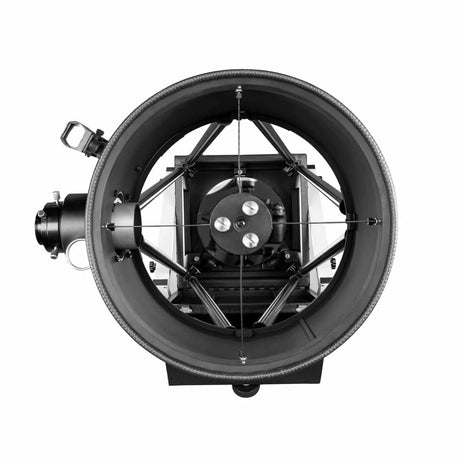
The two solid tubes have focal lengths of 1,219 mm and 1,200 mm, within 2 percent of each other, so an eyepiece gives the same magnification in either. The faster 10-inch f/4.7 asks more: the 8-inch f/5.9 is about twice as forgiving to collimate, and the 10-inch shows about 1.5 times the coma toward the edge of the field. Give either 20 to 30 minutes outside for the mirror to cool.
Frequently Asked Questions
Is an 8-inch telescope 200 mm?
Close. 8 inches is 203 mm, and Explore Scientific's 8-inch Dobsonians have 208 mm mirrors, which is why they are here rather than in our 101mm to 200mm collection.
What magnification can I use?
For the most planetary detail, about 160x to 250x on the 8-inch and 200x to 300x on the 10-inch, at 20x to 30x per inch of aperture. On an average night, expect the lower end.
Can I do astrophotography with one?
Of the Moon and planets, yes: the solid-tube models include a smartphone adapter for snapshots at the eyepiece. A Dobsonian does not track the sky, so long deep-sky exposures need a tracking mount.
Which eyepieces come with them?
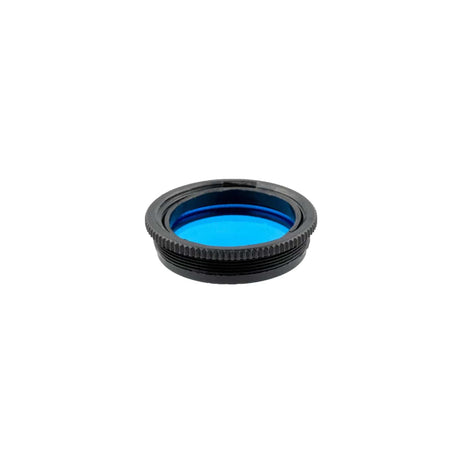
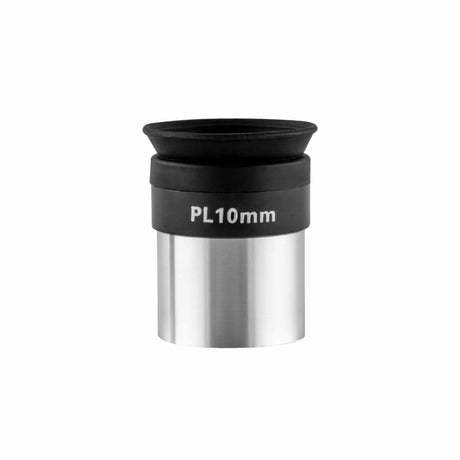
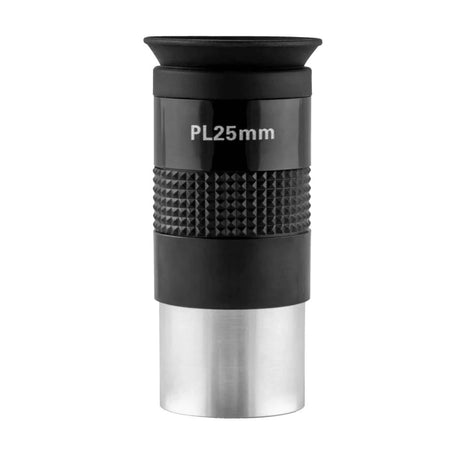
The 8-inch and 10-inch solid tubes include a 25 mm Plössl. The 8-inch Ruby Red swaps it for a 25 mm 70-degree eyepiece and adds a 10 mm Plössl and a 2x Barlow, and the hybrid truss comes with 25 mm and 10 mm Plössls, a moon filter and a collimation tool.
For lining up the mirrors, read Mastering Telescope Collimation, and for the 6-inch tabletop too, browse all our Dobsonian telescopes.