



How to choose a Dobsonian
Aperture
Aperture decides what you see, and a Dobsonian gives you the most of it for the money. Under the same sky, a 10-inch shows everything an 8-inch does and more of it, with 47 percent more light on every faint object. The cost is weight and girth: about 7 pounds and 2 inches more for the solid tubes, which come apart into a tube and a rocker base that you carry in two trips.
Focal ratio
Focal ratio matters too. The 8-inch f/5.9 is about twice as forgiving to collimate as the 10-inch f/4.7, and the faster 10-inch shows more coma toward the edge of the field, which is why the 8-inch is the one we would point a first-time reflector owner toward. Give either scope half an hour outside so the mirror can cool before you judge the view.
The Dobsonians we carry
- Explore Scientific 8" f/5.9 Dobsonian, in black or Ruby Red: the lighter, more forgiving choice. The Ruby Red has the same optics and adds an upgraded eyepiece kit.
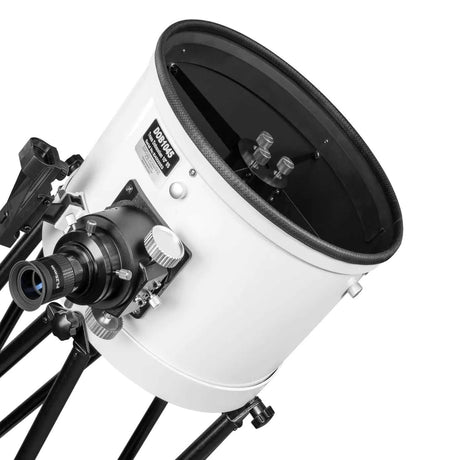
- Explore Scientific 10" f/4.7 Dobsonian: our pick for anyone who does not have to carry it far.
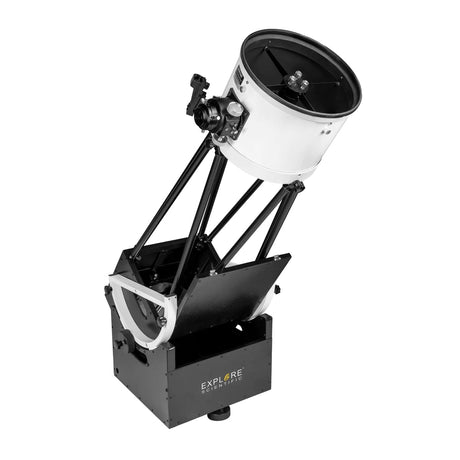
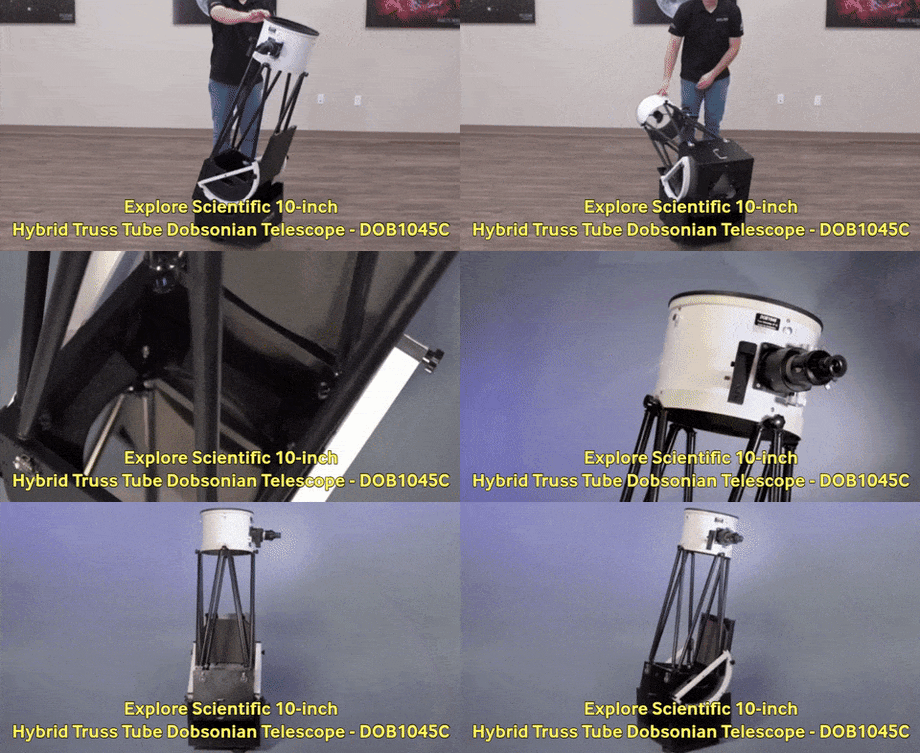
- Explore Scientific 10" f/5 Hybrid Truss Tube Dobsonian: the same 254 mm aperture on a short solid upper tube and eight truss poles, for tight storage.
- Explore Scientific 6" f/5 Tabletop Dobsonian: a compact tabletop model.
Frequently Asked Questions
Is a 10-inch worth it over an 8-inch?
If it can live on the ground floor or in a garage, yes: the 10-inch f/4.7 gathers 47 percent more light. If it has to go up stairs or travel often, the 8-inch is the easier telescope to take out every clear night.
Do I need to collimate a Dobsonian?
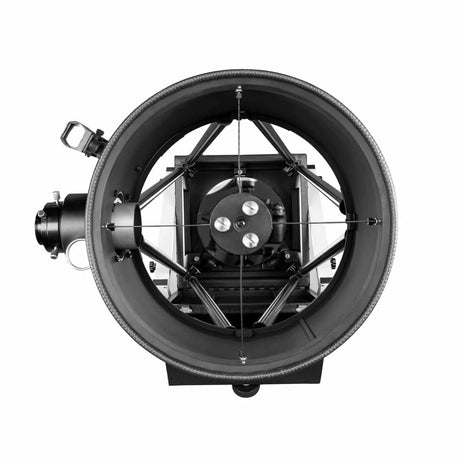
Yes. Every reflector needs its mirrors lined up from time to time, and the 8-inch f/5.9 is the more forgiving of the two to set.
For the full comparison, read 8 Inch vs 10 Inch Dobsonian Telescope: What the Extra 2 Inches Actually Cost.