


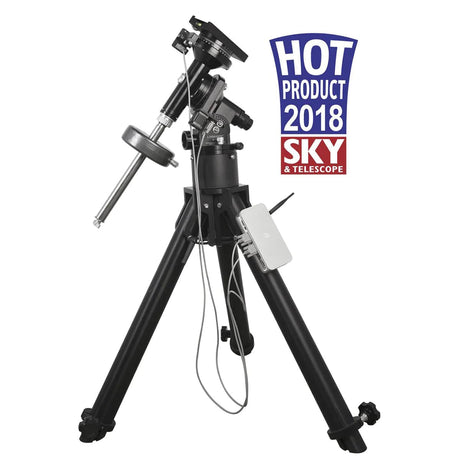
The mounts we carry
iEXOS-100 PMC-Eight
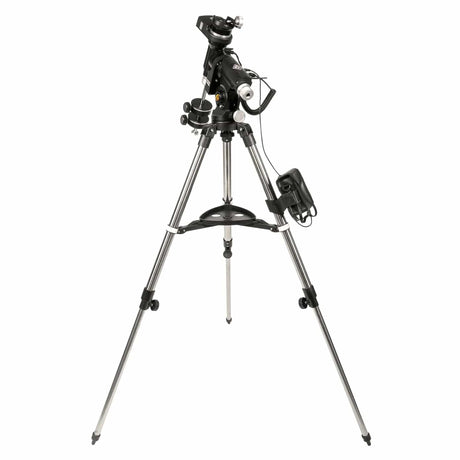
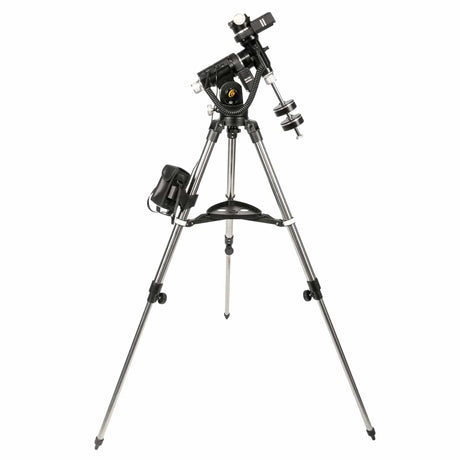
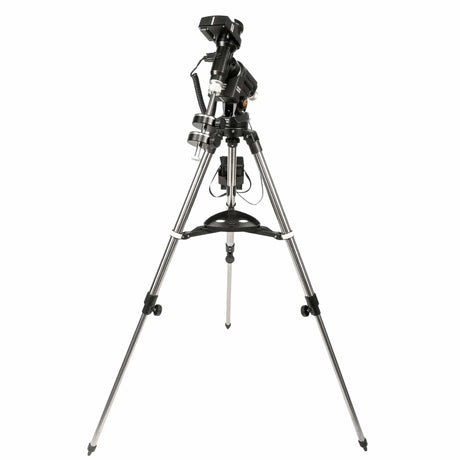
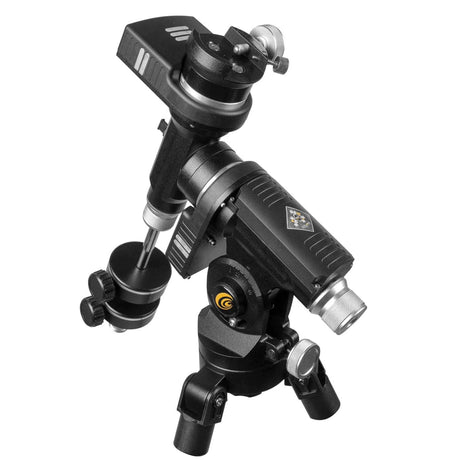
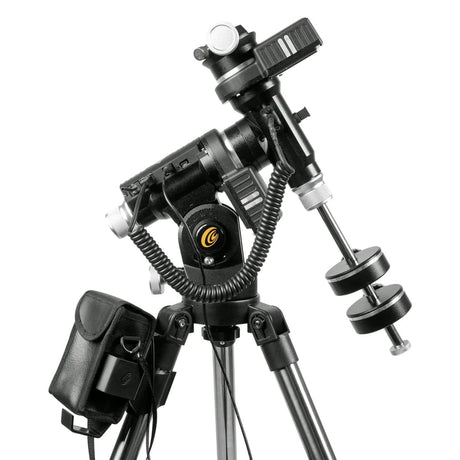
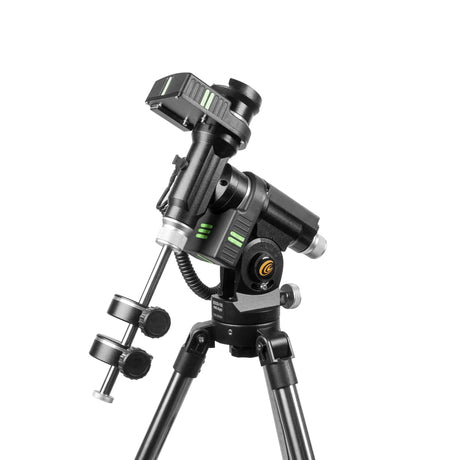
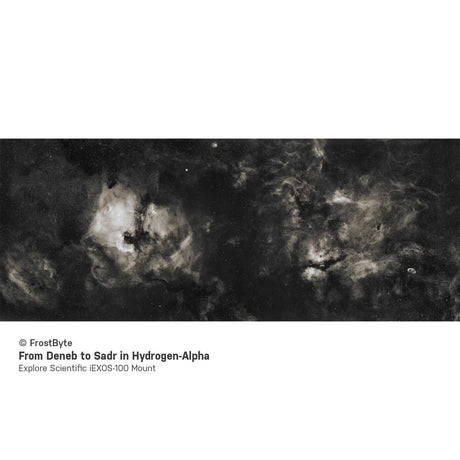
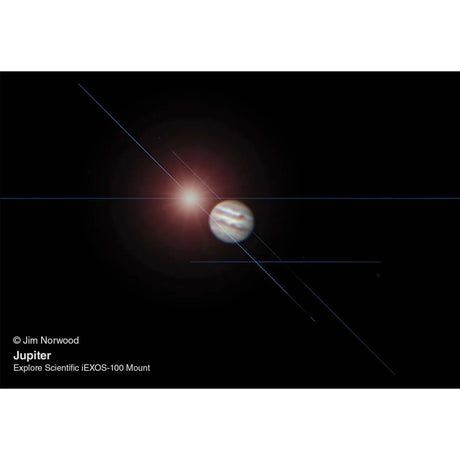
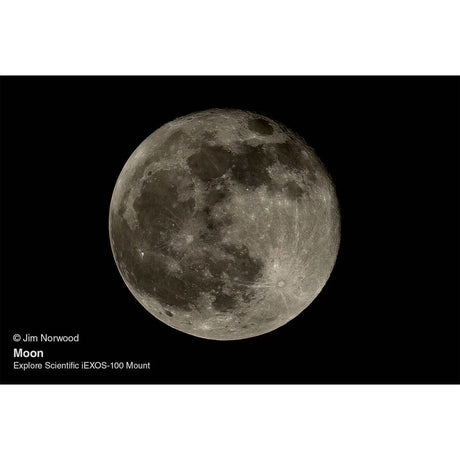
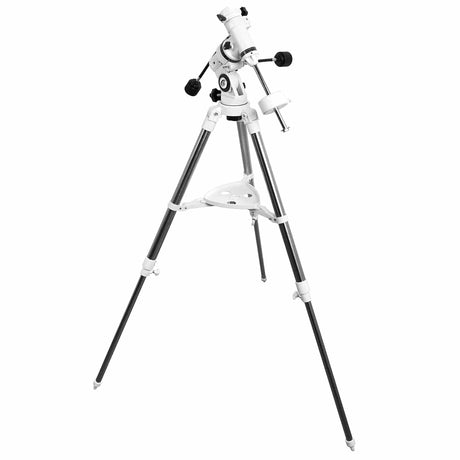
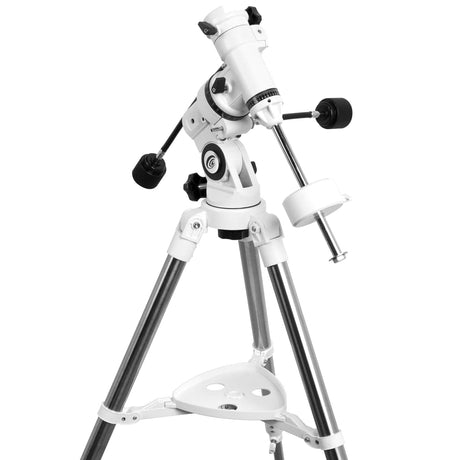
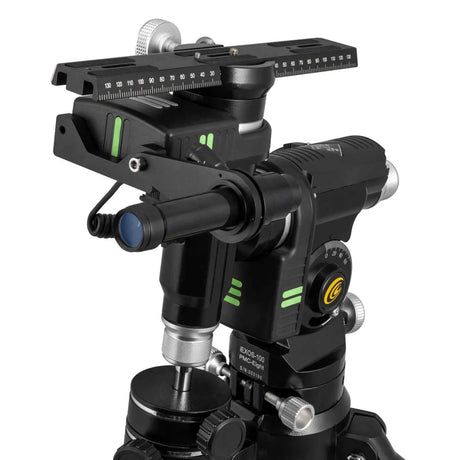
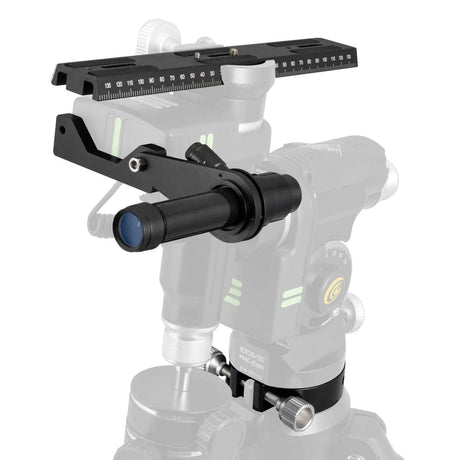
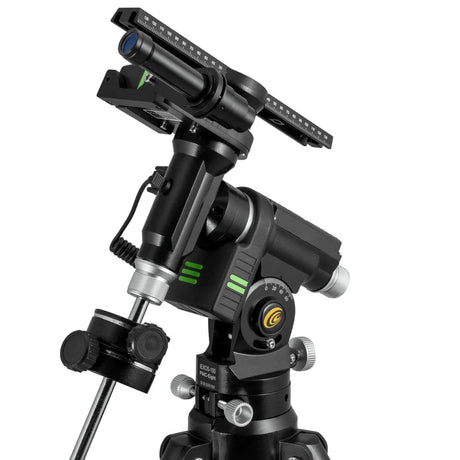
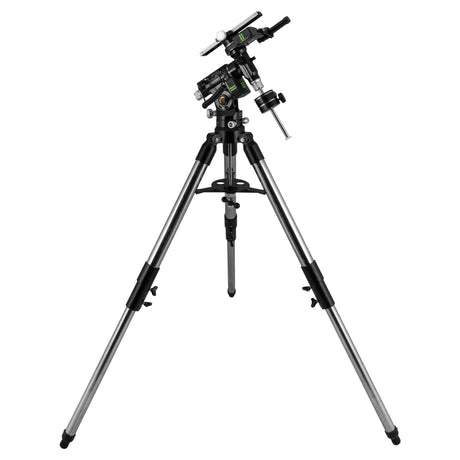
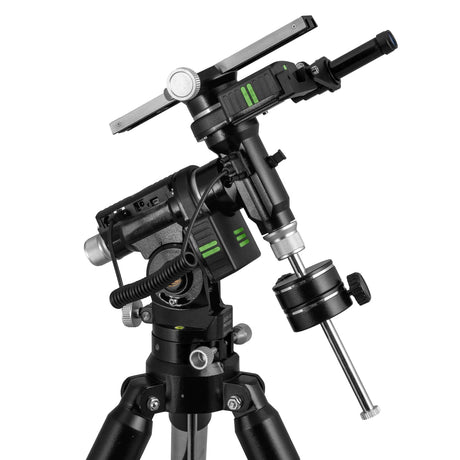
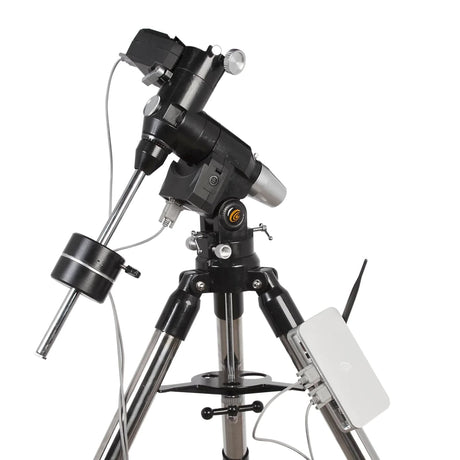
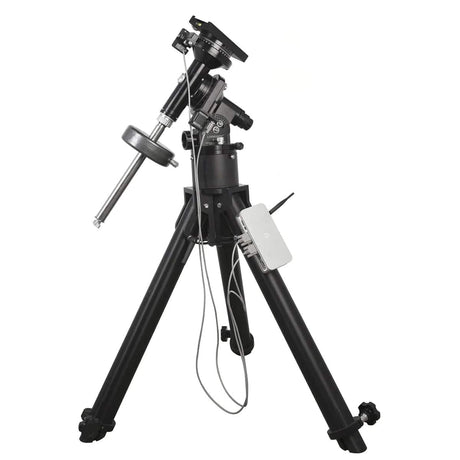
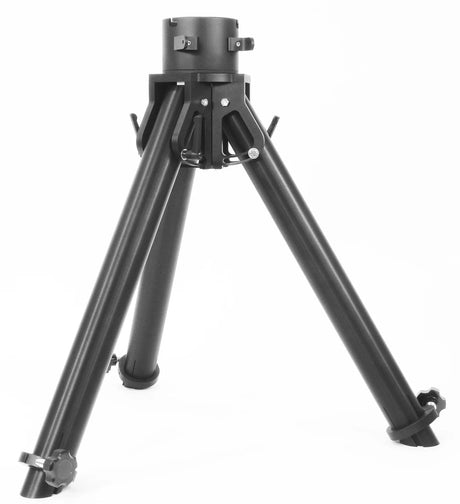
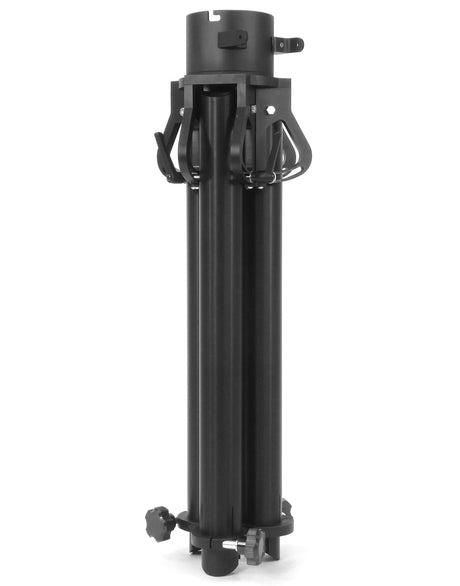
The iEXOS-100 is a German equatorial mount driven by Explore Scientific's PMC-Eight system, rated for about 15 lb of equipment and counterweights for astrophotography and 19 lb for visual use. The iEXOS-100-02 comes on a light travel tripod, and the iEXOS-100 HD on an 11 lb tripod.
EXOS2-GT
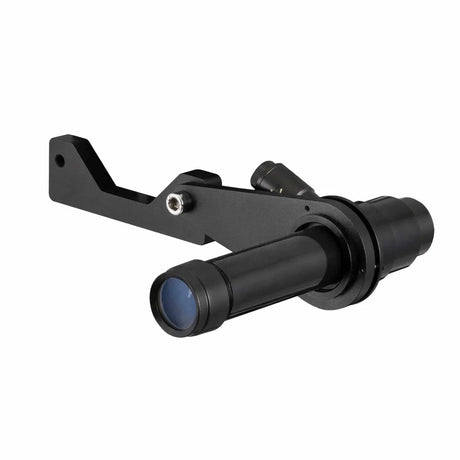
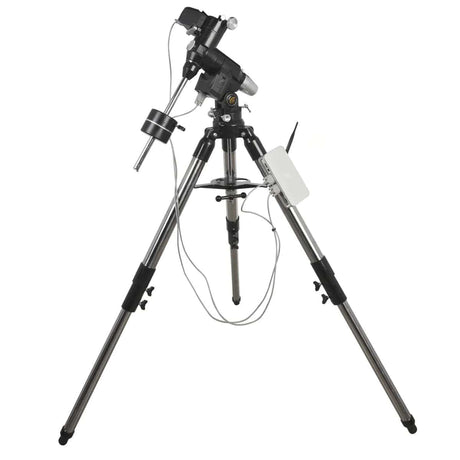
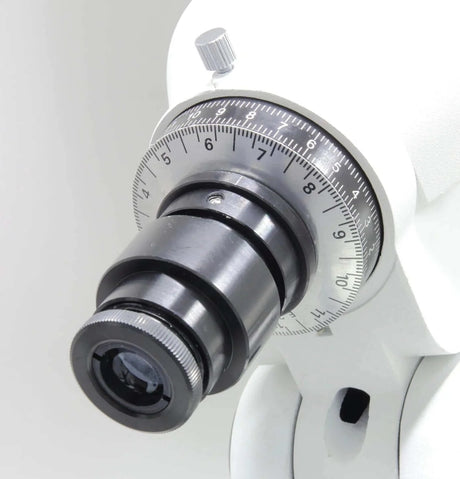
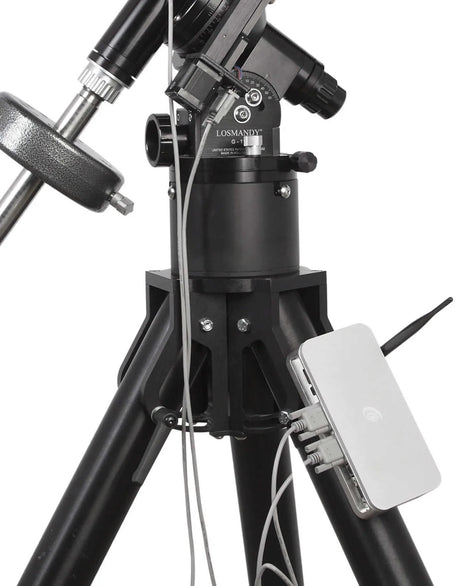
The EXOS2-GT carries much more: 28 lb of instruments plus counterweights for astrophotography and 40 lb for visual use, on a tripod with 2-inch stainless steel legs, with an illuminated polar axis scope.
EXOS Nano
The FirstLight EXOS Nano is a manual equatorial mount, at 10 lb.
Control and software
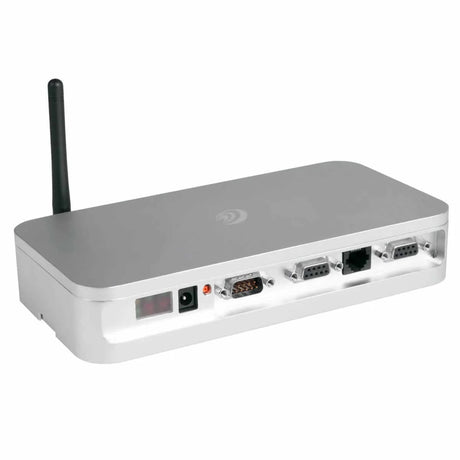
The PMC-Eight mounts run from Explore Scientific's free ExploreStars app, and they are ASCOM compliant, so astronomy software on a computer can drive them too.
Frequently Asked Questions
Do I need an equatorial mount for astrophotography?
For long exposures, yes. Once it is polar aligned, an equatorial mount tracks on one axis and the field does not rotate under the target, which long-exposure imaging needs.
Why does balance matter?
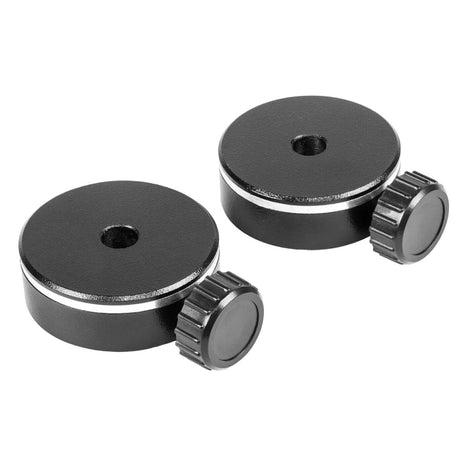
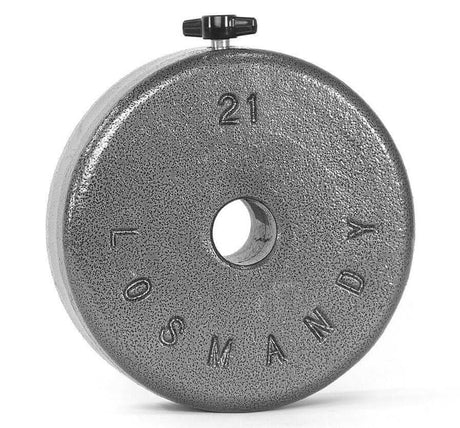
An unbalanced load makes the drive motor fight gravity, which shows up as tracking error and gear wear. Balance the right ascension axis first, then declination.
What is polar alignment?
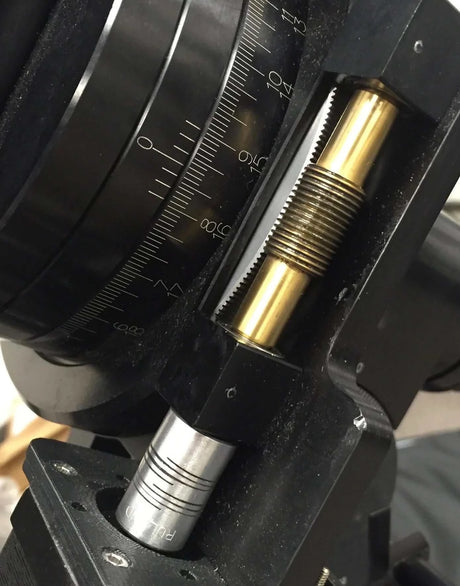
Pointing the mount's polar axis at the celestial pole. The altitude knob tilts the axis to match your latitude, and a polar scope, illuminated on the EXOS2-GT, refines the alignment for astrophotography.
To compare the PMC-Eight mounts, read Comparing Explore Scientific's iEXOS-100-02, iEXOS-ET, EXOS2-GT.