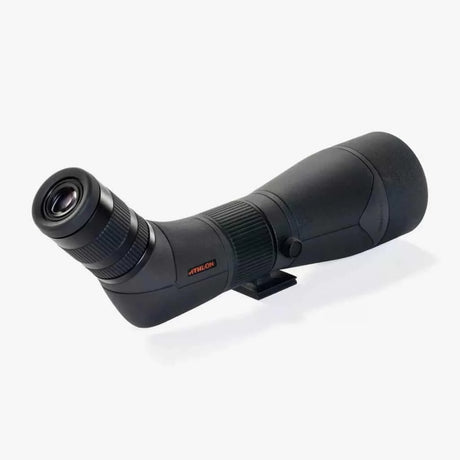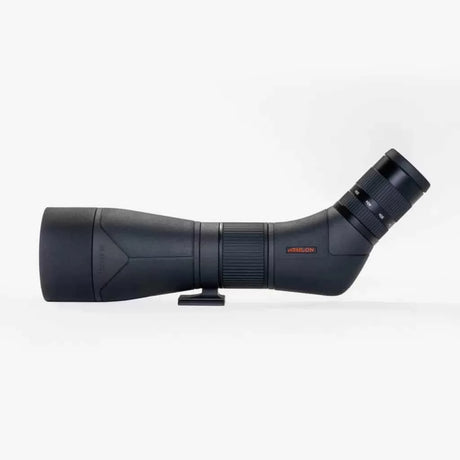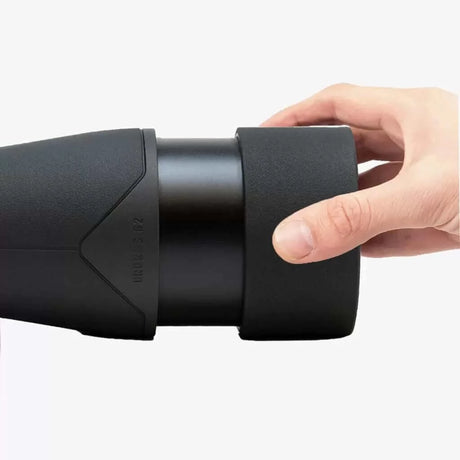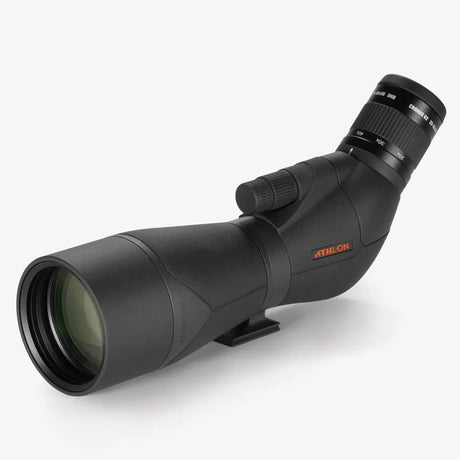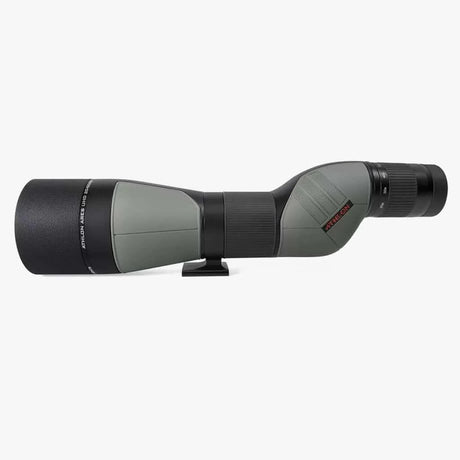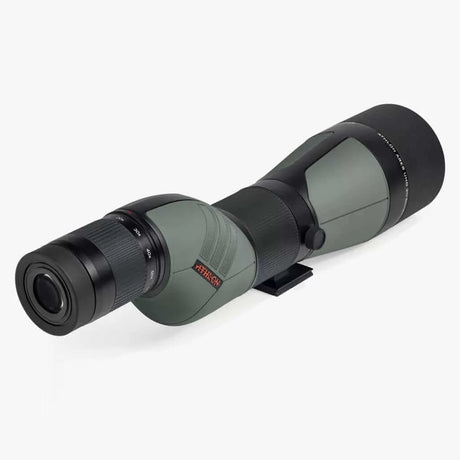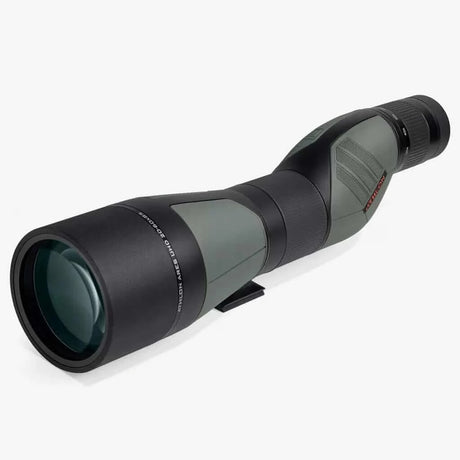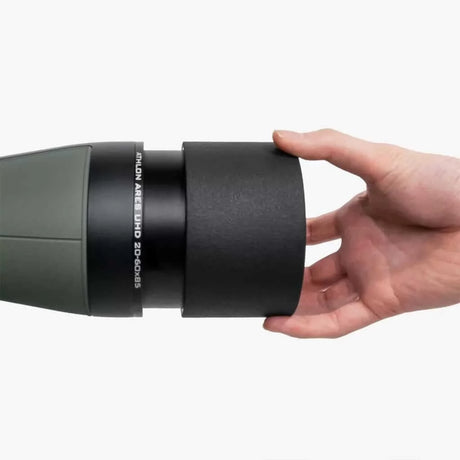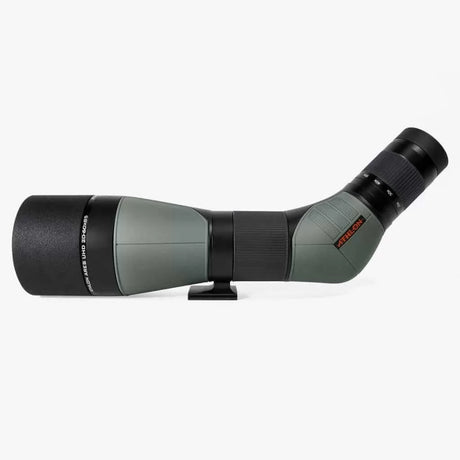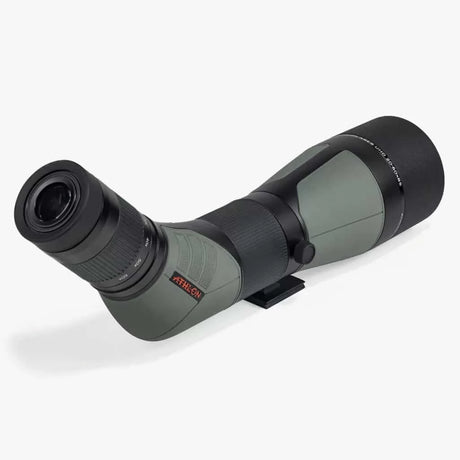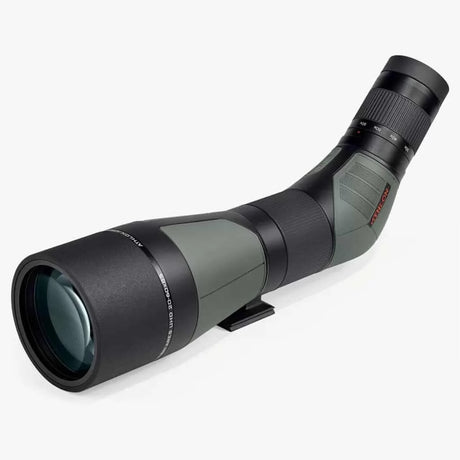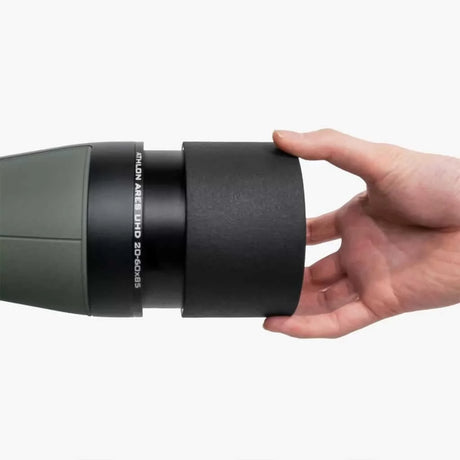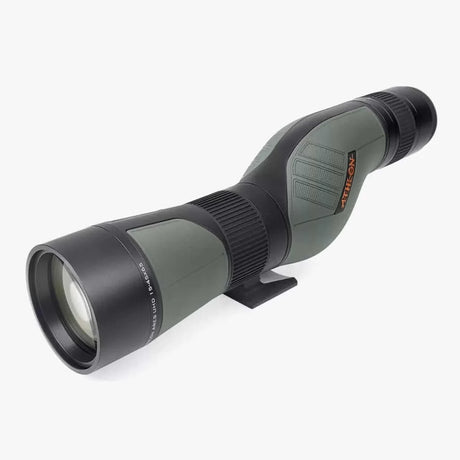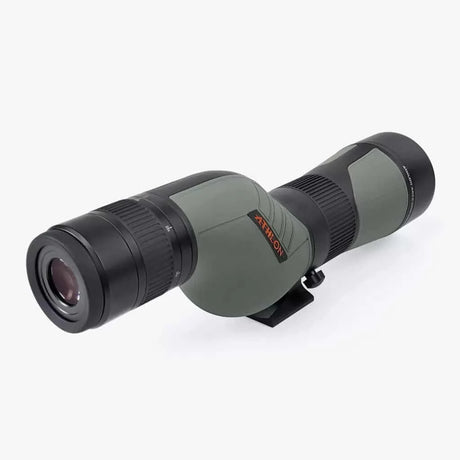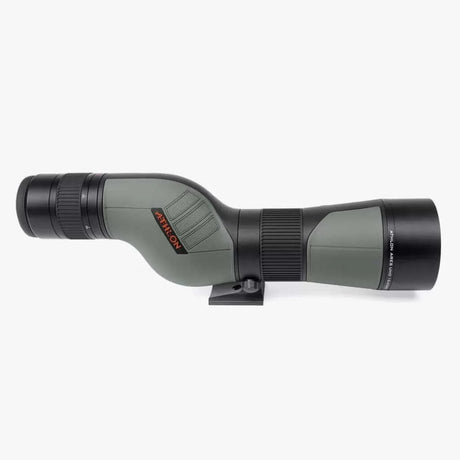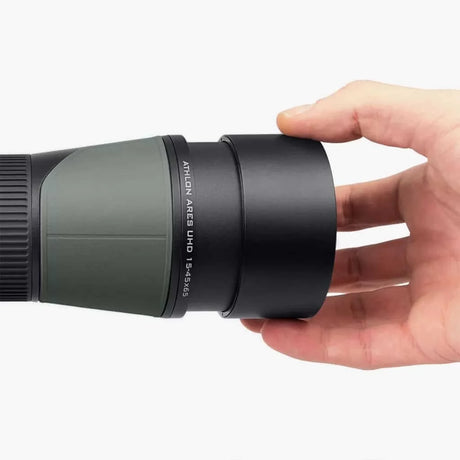

The Athlon Ares vs Cronus spotting scope decision is one of the best problems in optics: two lines sharing the same core UHD glass and apochromatic DNA, separated by a $250–$475 price gap at MSRP. Is the Cronus G2 worth the upgrade over the Ares G2, or is the Ares the smarter buy?
If you are comparing the Athlon Ares vs Cronus spotting scope, the answer depends on what you plan to glass, how far you need to see, and whether you prioritize portability or peak optical performance. This review breaks down every model in both lines — with specs, real-world tradeoffs, and honest limitations — so you can find the best Athlon spotting scope for how you actually use it.
TL;DR — Quick Summary
The Ares G2 ($900–$1,125) costs 65–82% of the Cronus price — best for daytime use, weight-conscious buyers, and anyone who wants a straight body option. The Cronus G2 ($1,375) wins on edge sharpness, field of view, and low-light performance — best for serious hunters, birders pushing past 40x, and precision shooters (tactical model). Browse all Athlon spotting scopes.
Table of Contents
Overview — Two Lines, One Philosophy
Both the Ares G2 and Cronus G2 share Athlon's UHD (Ultra High Definition) glass, apochromatic lens systems, and advanced fully multi-coated (AFMC) lens surfaces. The four 15-45x and 20-60x models also use BaK4 prisms with ESP dielectric coatings that reflect over 99% of light to your eye. Both are waterproof and argon-purged for internal fogproofing, so rain, snow, and humidity are non-issues. Both carry Athlon's lifetime transferable warranty — covering defects and accidental damage from normal use, with no receipt or registration required.
The Ares G2 UHD is the value line, with an MSRP from $900 to $1,125. It comes in four configurations spanning two objective lens sizes, each available in angled and straight bodies. The Cronus G2 UHD is the flagship, with an MSRP of $1,375 across three configurations that include a dual-focus model and a tactical variant with a first focal plane reticle.
All prices in this review reflect Athlon's MSRP. Check the product pages linked below for current pricing.
Where the two lines diverge is in the fine details: field of view, edge-to-edge sharpness at high magnification, focus mechanism design, and body style options.
Athlon Ares G2 UHD — The Value Contender

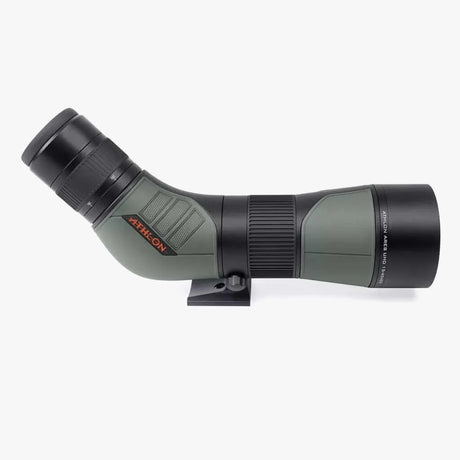
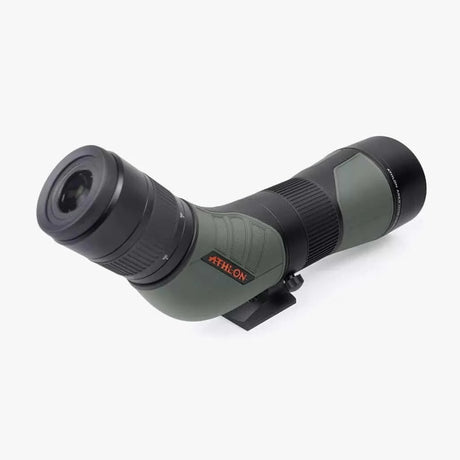
Ares G2 UHD 15-45x65 — $900
A BirdForum member called the 65mm Ares 'a pleasing surprise' in the title of a review thread, writing, 'Most importantly, the scope is sharp.' It is also the most portable spotting scope in either Athlon line. At 45.9 ounces and 11.9 inches in the angled configuration, the 65mm Ares is light enough to justify carrying on a day hike or packing into a backcountry campsite.
The 15-45x magnification range starts lower than the 20-60x models, giving you a 171-foot field of view at 1,000 yards at the low end. That wide scanning view is a significant advantage for birders working a marsh or hunters glassing an open valley — you cover more ground before zooming in on what catches your eye.
The 65mm objective lens gathers less light than the 80mm+ models, so it gives up some brightness at dawn and dusk. If you regularly glass in the last 30 minutes of legal shooting light, you will notice the difference. But for daytime observation, the gap is marginal, and the weight savings are not. The barrel focus system also introduces slight vibration when adjusting — less of an issue on a sturdy tripod, but worth noting if you are used to a top-mounted focus knob.
The Ares 65mm is also the only model in the lineup with an interchangeable eyepiece system. Athlon offers a 22x Ranging Reticle Eyepiece ($287.49 MSRP) with a TSSR2 SFP MIL reticle that swaps in for the standard zoom eyepiece, adding mil-based ranging capability. At $900 + $287.49 for the scope and eyepiece, this is a budget-friendly path to a ranging spotter compared to the $1,375 Cronus Tactical — though you trade the Cronus’s FFP reticle and 7-42x zoom range for a fixed 22x with a 143-foot field of view.
Available in both angled and straight bodies.
Best for: Birders, day hikers, backpack hunters, and anyone who values a lightweight setup over maximum magnification.
Ares G2 UHD 20-60x85 — $1,125
The full-size Ares. An 85mm objective lens paired with 20-60x zoom gives you the magnification range most hunters and target shooters rely on. At 70 ounces and 16.9 inches, it is a truck-and-tripod scope rather than a backpack scope — but the image brightness at 85mm makes early morning and late evening glassing sessions noticeably more productive.
Field of view runs 99–48 feet at 1,000 yards, narrower than the Cronus at the same magnification range. Like the Ares 65, the 85 uses barrel-style focusing. The barrel design introduces more vibration than a top-mounted knob — particularly noticeable on lightweight tripods. If precise focus adjustments matter to you, test this before buying or consider the Cronus Dual Focus.
Available in both angled and straight bodies — the only full-size G2 UHD spotting scope offered in a straight configuration.
Best for: Hunters glassing at distance, target shooters, and anyone who needs 60x magnification without stepping into flagship pricing.
Athlon Cronus G2 UHD — The Flagship

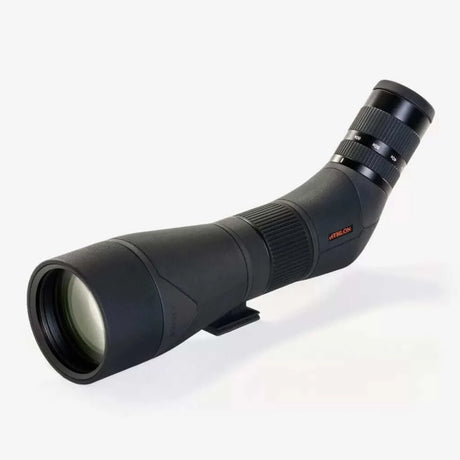
Cronus G2 UHD 20-60x86 — $1,375
Backwoods Pursuit called it one of the best spotting scope values on the market, praising its edge-to-edge clarity and resolution. Long Range Only's review backed that up with digiscoped photos demonstrating the glass quality at various magnifications and distances.
The 86mm objective is only 1mm larger than the Ares 85, but the Cronus pulls ahead in field of view: 111–60 feet at 1,000 yards versus the Ares's 99–48 feet. That 12% wider view at 20x and 25% wider view at 60x is immediately noticeable in the eyepiece. Low-light performance is also stronger.
At 73.5 ounces it ties the Dual Focus as the heaviest scope in the lineup, and it is only available as an angled body. You need to position your face precisely to see the full field of view, which can cause fatigue during long glassing sessions. The single focus wheel is finely geared for precise adjustments but lacks the dual-speed option available on its sibling model. If you need a straight body or want both options, the Ares 85 is your only full-size choice in the G2 UHD lineup.
Best for: Hunters and birders who want Cronus G2 glass and are comfortable with an angled body.
Cronus G2 UHD 20-60x86 Dual Focus — $1,375
The Dual Focus shares the same UHD glass and 86mm objective as the standard Cronus, but the dual-speed focus mechanism changes more than just how you focus. The revised eyepiece design delivers a wider field of view — 117 feet at 20x versus the standard Cronus's 111 feet — and the body is a full inch shorter at 15.2 inches. The fine-focus ring adds precise adjustments that matter when you are at high magnification trying to nail focus on a distant bird or when digiscoping through a phone adapter, where even small focus shifts are amplified.
Birders and wildlife photographers who spend long sessions dialing in focus will appreciate the dual-speed system. The wider field of view is a bonus that makes this the best scanning optic in the Cronus line for observation use. If you mostly glass at lower magnifications or favor speed over precision, the standard Cronus is sufficient.
Angled body only.
Best for: Birders, digiscopers, and anyone who values precision focus control at high magnification.
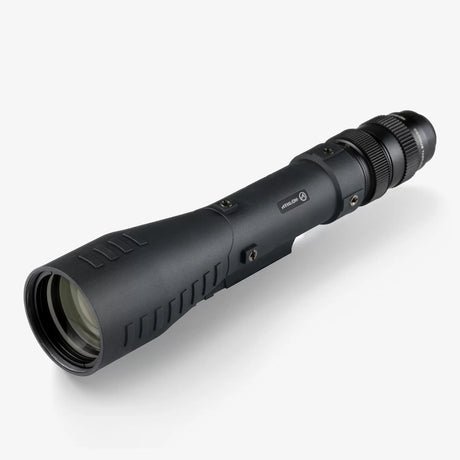
Cronus G2 UHD 7-42x60 Tactical — $1,375
A different animal from the rest of the Cronus line. The 7-42x60 is a compact, straight-body scope built for precision shooters. At 46.6 ounces and 13.9 inches, it is closer in size and weight to the Ares 65mm than to its Cronus siblings.
The standout feature is a first focal plane TSSR MIL reticle, located at the focal plane in front of the erector tube, providing mil-based ranging feedback at any magnification. The 7x low end delivers a massive 284-foot field of view at 1,000 yards — useful for scanning a shooting range or spotting impacts across a wide area before zooming in.
The 60mm objective means less light gathering than the 86mm models, so this scope trades brightness for portability and tactical capability.
Best for: Long-range precision shooters, tactical applications, and hunters who need ranging capability built into their spotter.
Athlon Ares vs Cronus Spotting Scope: Head-to-Head Comparison
| Spec | Ares 15-45x65 | Ares 20-60x85 | Cronus 20-60x86 | Cronus Dual Focus | Cronus 7-42x60 |
|---|---|---|---|---|---|
| Magnification | 15-45x | 20-60x | 20-60x | 20-60x | 7-42x |
| Objective Lens | 65mm | 85mm | 86mm | 86mm | 60mm |
| FOV @ 1000 yds | 171-81 ft | 99-48 ft | 111-60 ft | 117-60 ft | 284-47.6 ft |
| Eye Relief | 0.75-0.63" | 0.77-0.70" | 0.78-0.70" | 0.79-0.70" | 1.18" |
| Weight | 45.9 oz (angled) / 49.5 oz (straight) | 70 oz (angled) / 68.9 oz (straight) | 73.5 oz | 73.5 oz | 46.6 oz |
| Length | 11.9" (angled) / 13.5" (straight) | 16.9" | 16.2" | 15.2" | 13.9" |
| Body Options | Angled / Straight | Angled / Straight | Angled only | Angled only | Straight only |
| Focus System | Barrel | Barrel | Barrel | Dual-speed knob | Barrel |
| Reticle | Optional (SFP TSSR2 MIL) | No | No | No | FFP TSSR MIL |
| MSRP | $900 | $1,125 | $1,375 | $1,375 | $1,375 |
Optical Quality
Both lines use UHD glass and apochromatic lens systems, but the Cronus delivers tighter edge-to-edge sharpness. At 20x the difference is subtle. At 50x and above, the Cronus holds resolution across a larger portion of the field while the Ares begins to soften toward the edges. If you spend most of your time at 30x or below — which many birders do — this difference may not justify the price gap.
Low-Light Performance
The Cronus has a measurable advantage in early morning and late evening conditions. The Ares 85mm is no slouch in low light, but the Cronus extracts more usable brightness from the same amount of ambient light.
Field of View
The Cronus 86mm delivers a wider field of view than the Ares 85mm at every magnification point despite the near-identical objective size. At 20x, the standard Cronus gives you 111 feet versus 99 feet — and the Dual Focus pushes that to 117 feet — enough extra width to notice when scanning a ridge line or treeline. The Ares 65mm compensates with its lower starting magnification (15x), delivering the widest scanning view among the standard observation models at 171 feet (the Cronus 7-42x60 Tactical reaches 284 feet at 7x, but serves a different purpose).
Weight and Portability
The Ares 65mm (45.9 oz) and Cronus 60mm tactical (46.6 oz) are the only sub-50-ounce options. The full-size models range from 68.9 to 73.5 ounces — close enough that weight alone should not drive the decision between the Ares 85 and Cronus 86.
Body Options
This is where the Ares holds a concrete advantage. Both Ares models come in angled and straight configurations, while the Cronus is locked to angled (standard and Dual Focus) or straight (tactical only). If you specifically want a straight-body full-size spotter, the Ares 20-60x85 is your only option in the G2 UHD lineup.
Warranty
Identical across both lines. Athlon's lifetime transferable warranty covers defects in materials and workmanship, and their policy extends to accidental damage from normal use — no receipt or registration required. It eliminates much of the risk of either purchase.
What's in the Box
All Athlon G2 UHD spotting scopes ship with a padded nylon carrying case, objective lens cover, eyepiece cover, and a lens cleaning cloth. Most models have integrated (non-removable) eyepieces. The exception is the Ares 15-45x65, which accepts interchangeable eyepieces — including Athlon’s 22x Ranging Reticle Eyepiece ($287.49 MSRP), sold separately. Athlon does not include a tripod or phone adapter with any model — budget separately for those.
Real-World Scenarios: Which Athlon Spotting Scope Fits?
"I hunt elk and mule deer in the Rockies and glass for hours from ridgelines." Go with the Cronus G2 20-60x86. The wider field of view helps you pick apart timber edges, and the low-light advantage matters when you are glassing at first and last light — which is when animals move. The extra 3.5 ounces over the Ares 85 are irrelevant when the scope lives on a tripod in your truck bed. The precise eye placement it needs is a real tradeoff for marathon sessions, so test it first if you can.
"I bird at local wetlands and parks, mostly weekend mornings." The Ares G2 15-45x65 is the right call. At 45.9 ounces you can carry it with a lightweight tripod without dreading the walk. The 15x low end gives you the widest scanning field of view to find warblers in dense cover, and you rarely need more than 30–35x for shorebirds and waterfowl at typical wetland distances. Save the money for a quality tripod and head. If birding is your main use, our guide to the best spotting scopes for birding stacks these Athlon picks against Kite and Alpen alternatives.
"I shoot long-range precision rifle and need to spot hits at 600–1,000 yards." The Cronus G2 7-42x60 Tactical. The FFP MIL reticle lets you range targets without switching tools, the 7x low end gives you a massive scanning field, and the straight body works naturally from a shooting bench. At 46.6 ounces it packs easily to a remote range.
"I want one spotter for both hunting season and spring birding, and I need to keep the budget reasonable." The Ares G2 20-60x85 does both well. The 20-60x range covers hunting distances and birding magnifications. Get the angled version for birding comfort and group sharing, or the straight if you prioritize fast target acquisition while hunting. At $1,125 MSRP, it leaves budget for a solid tripod setup.
"I photograph birds through my scope and need the sharpest possible images." The Cronus G2 Dual Focus. The dual-speed mechanism is a real advantage for digiscoping — the fine-focus ring prevents the frustrating overshoot that barrel-focus and single-knob scopes cause when you are trying to nail focus at 50x through a phone adapter. It also delivers the widest field of view in the Cronus observation line (117 ft at 20x) in a body that is an inch shorter than the standard Cronus.
Verdict — Which Should You Buy?
Choose the Ares G2 15-45x65 ($900) if you prioritize portability. The angled version is the lightest scope in the lineup and the 15x low end gives you the widest scanning field of view for birding and daytime observation. The $475 savings over the Cronus leaves room for a quality tripod.
Choose the Ares G2 20-60x85 ($1,125) if you want full-size glass at a mid-range price and need the flexibility of angled or straight body options. It handles everything from target shooting to elk hunting to backyard birding, and the Athlon warranty means you are not babying a fragile instrument.
Choose the Cronus G2 20-60x86 ($1,375) if optical quality is your top priority. The wider field of view, superior edge sharpness, and stronger low-light performance justify the premium for hunters who glass in marginal conditions or birders who push magnification past 40x regularly.
Choose the Cronus G2 Dual Focus ($1,375) if you are a birder or digiscoper who needs precise focus control. The dual-speed mechanism is a meaningful quality-of-life upgrade at high magnification, and the wider field of view (117 ft at 20x vs 111 ft) and shorter body (15.2" vs 16.2") make it arguably the better all-around Cronus for observation use.
Choose the Cronus G2 7-42x60 Tactical ($1,375) if you are a precision shooter. The FFP MIL reticle, 7x low-end magnification, and compact straight body are purpose-built for the range. The Ares 65mm can add ranging via the optional 22x eyepiece, but the Cronus Tactical’s FFP reticle and 7-42x zoom range are purpose-built for precision shooting.
Frequently Asked Questions
Is the Cronus G2 worth $250 more than the Ares G2?
For most users comparing the full-size models (Ares 85mm at $1,125 vs Cronus 86mm at $1,375), yes. The Cronus delivers a noticeably wider field of view, better edge sharpness at high magnification, and stronger low-light performance. The gap narrows if you primarily glass at moderate magnifications during daylight — in those conditions, the Ares 85 is nearly as sharp and saves you $250.
Can I use these scopes for digiscoping?
Yes. Both lines accept phone adapters and camera mounts. The Cronus Dual Focus is the best choice for digiscoping because the fine-focus ring lets you dial in precise focus without overshooting — a common frustration when photographing through a scope with a single-speed focus mechanism.
What tripod pairs well with Athlon spotting scopes?
Athlon makes its own Midas tripod line designed to pair with these scopes. The Midas AL28 is an aluminum tripod that works well with the compact models (Ares 65mm, Cronus 60mm tactical) and keeps your overall setup lightweight. For the full-size 85–86mm scopes, step up to a carbon fiber model like the Midas CF32 or Midas CF36 — both weigh more than the AL28 (5.7 lb and 7.7 lb against its 4.7 lb), but carbon fiber dampens vibration better than aluminum, which matters when you are running 50x+ magnification. All Midas tripods include a ball head. A flimsy tripod will negate the optical quality of either scope, so budget for a solid one. For a model-by-model breakdown by scope weight, see our guide to choosing the right Athlon Midas tripod.
Does Athlon's lifetime warranty really cover everything?
Athlon's warranty covers defects in materials and workmanship for the lifetime of the product, and their policy extends to accidental damage from normal use. No receipt or registration is required, and the warranty is fully transferable. It does not cover deliberate damage, misuse, theft, or maintenance by anyone other than Athlon's Authorized Service Department.
Should I get angled or straight?
Angled bodies are more comfortable for extended glassing sessions, easier to share between people of different heights, and work better with lower tripod settings. Straight bodies are more intuitive for quick target acquisition and easier to pack. If you glass from a vehicle or seated position often, go angled. If you need fast acquisition on the shooting range, go straight.
How does the Cronus G2 compare to the Vortex Razor HD, Maven S.3A or Meopta MeoPro HD 80?
Against the Vortex Razor HD 27-60x85 ($2,399.99 MSRP, though it street-prices nearer $1,700–$1,800), the Cronus costs about $1,000 less at MSRP and gives up some field of view: Athlon gives it 111–60 ft at 1,000 yards, against Vortex's 117–68 ft. The Maven S.3A (~$2,050) uses fluorite glass, but Maven sells only direct, through its website and at shows, with no dealer network. The Meopta MeoPro HD 80 (~$1,800 MSRP) has an integrated 20–60x eyepiece and comes in fewer configurations than the Athlon lineup.