

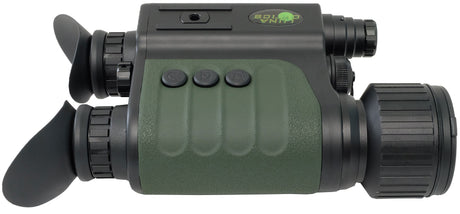
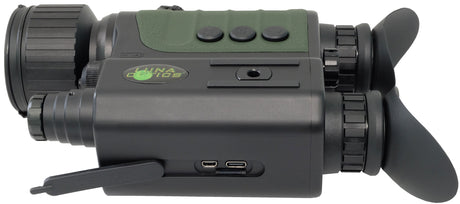
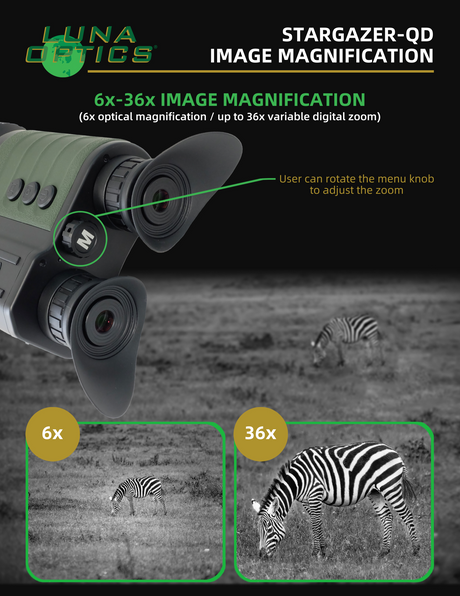
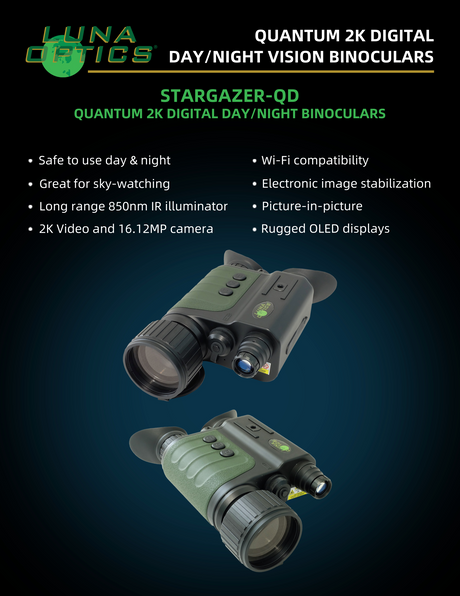
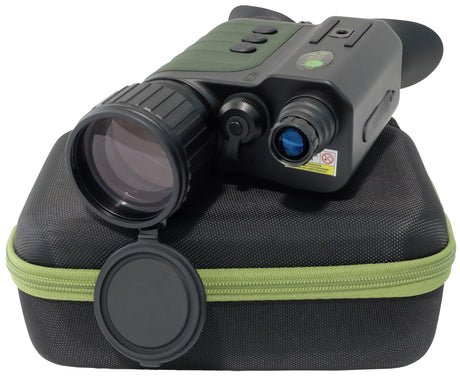
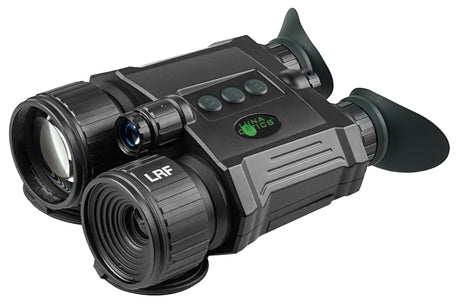
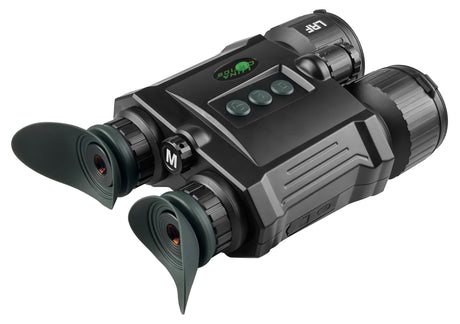
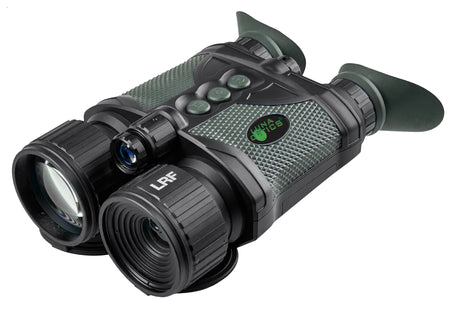
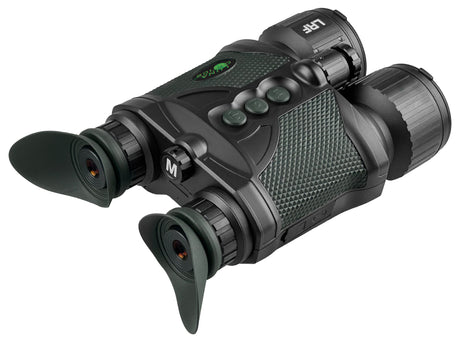
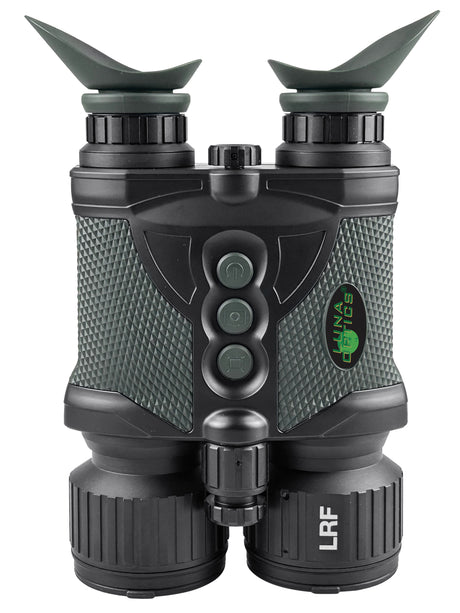
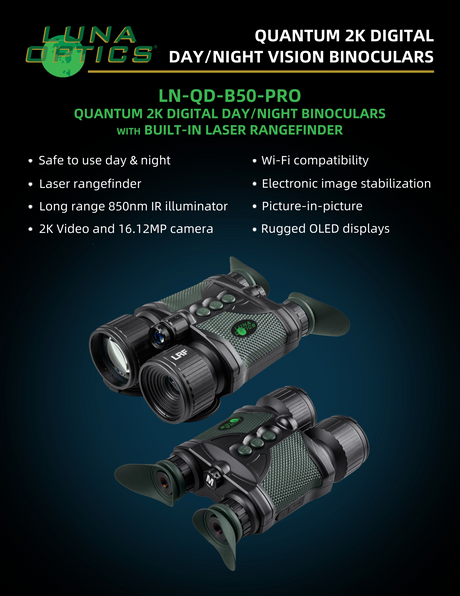
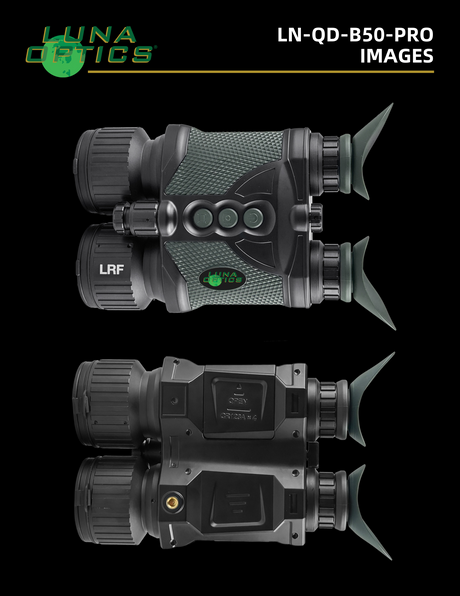
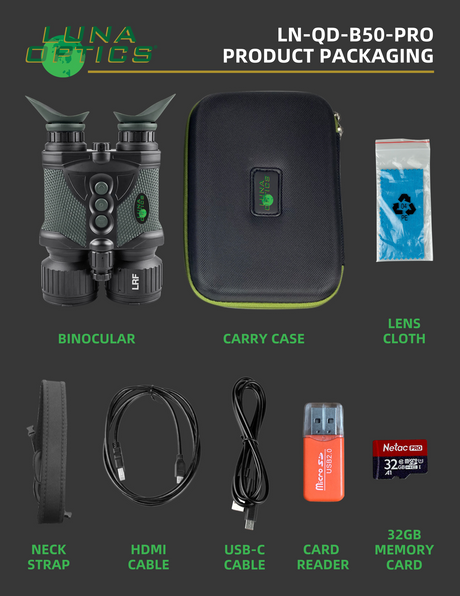
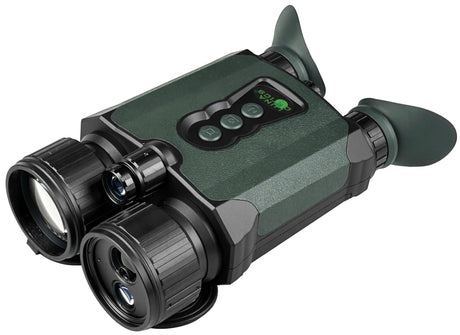
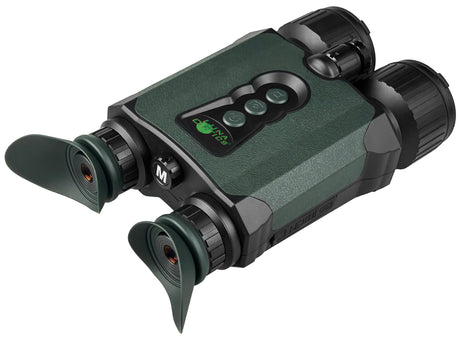
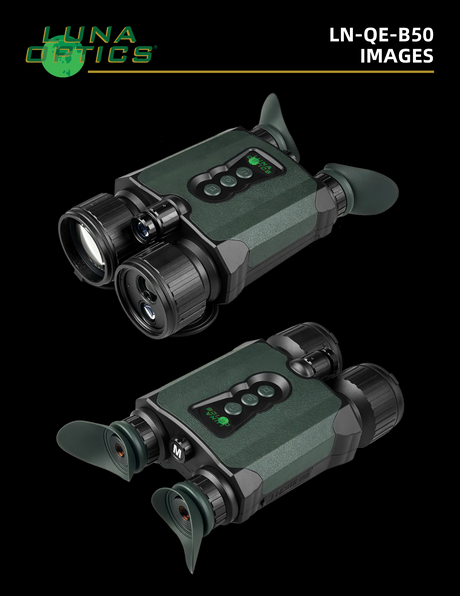
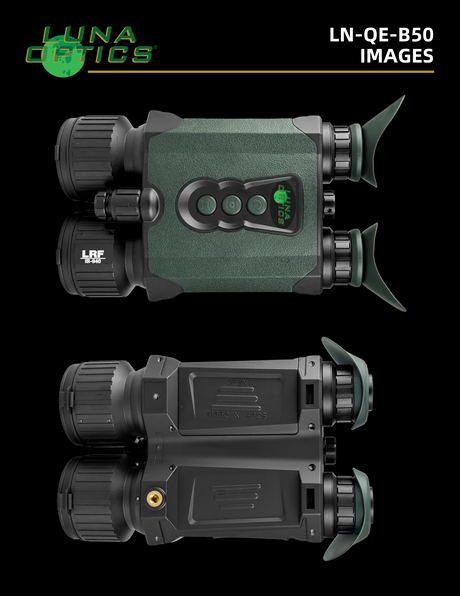
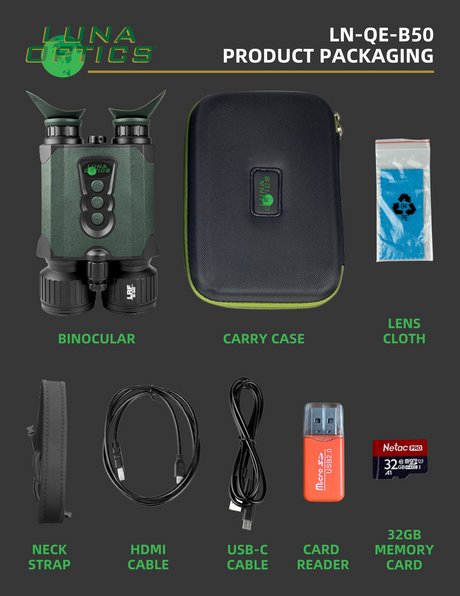
Monocular or binocular?
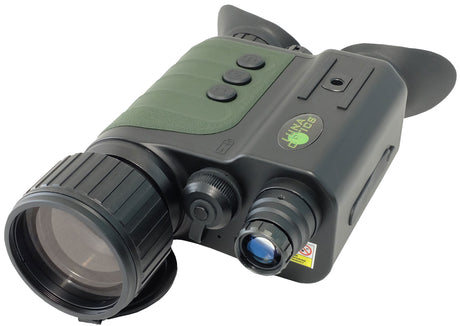
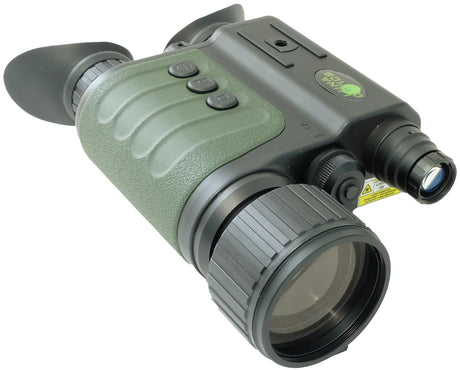
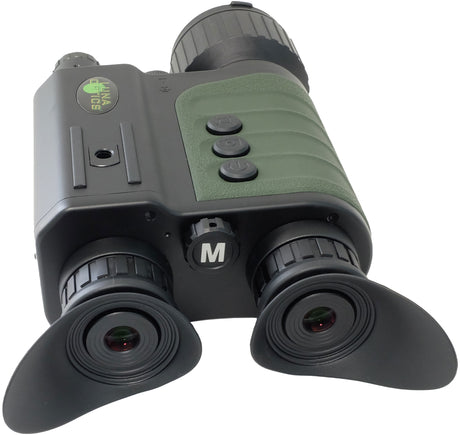
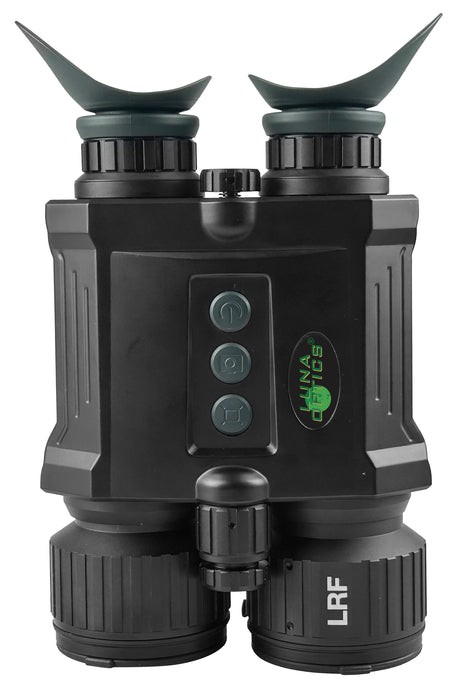
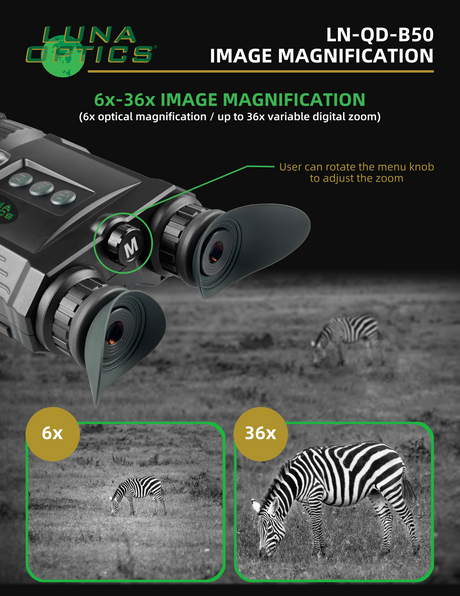
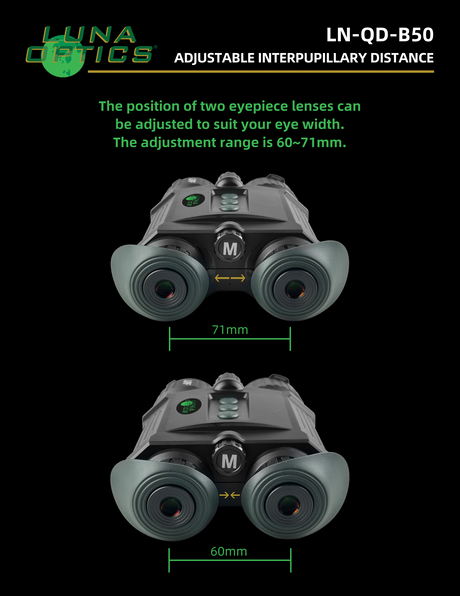
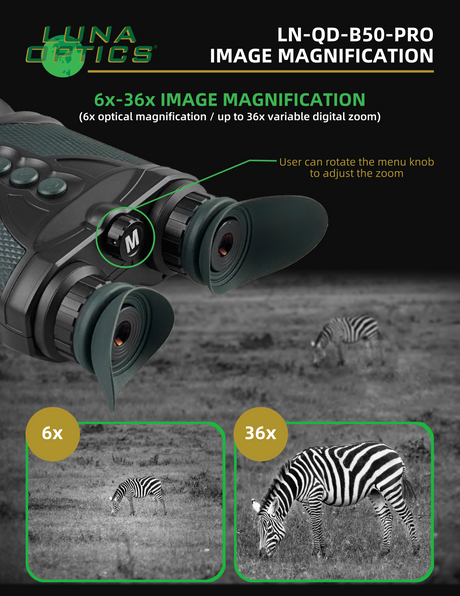
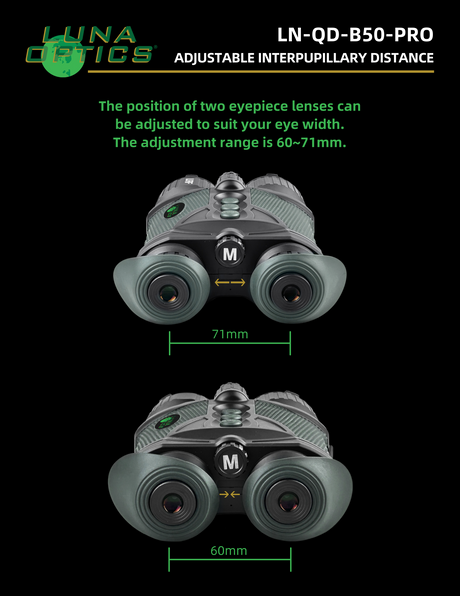
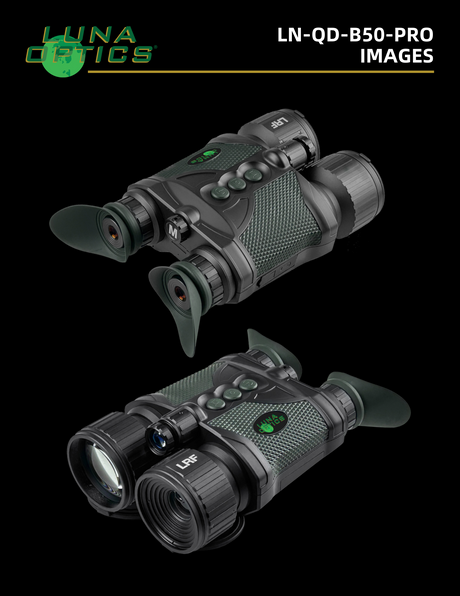
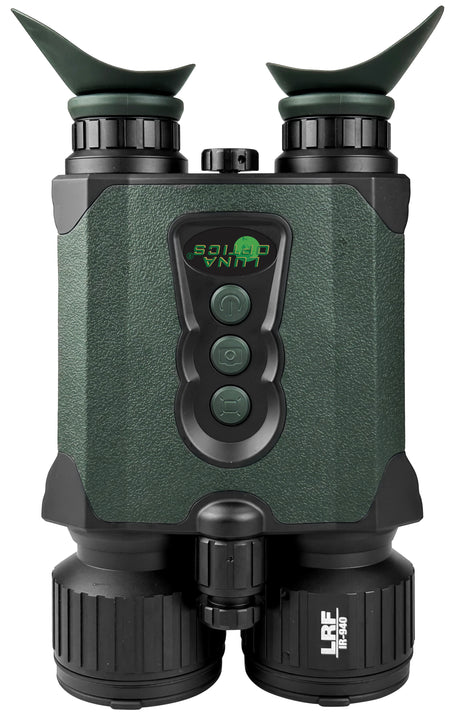
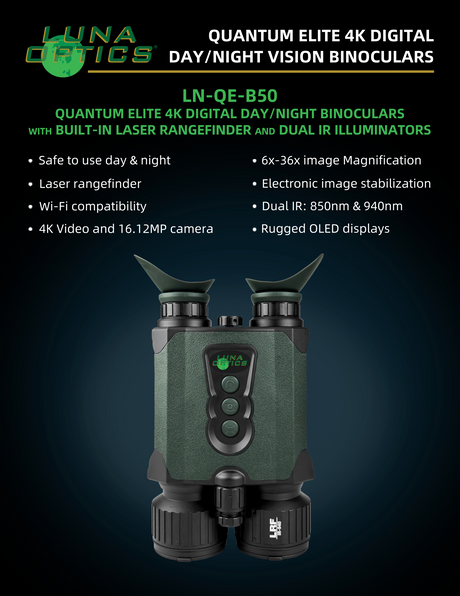
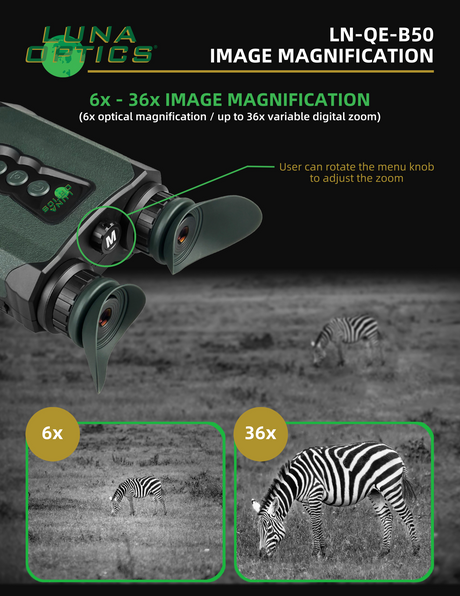
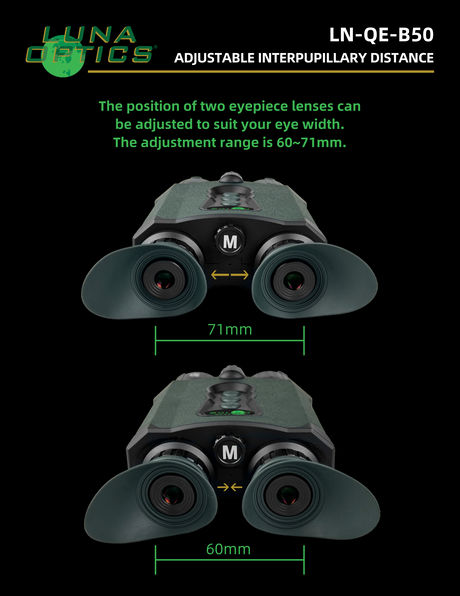
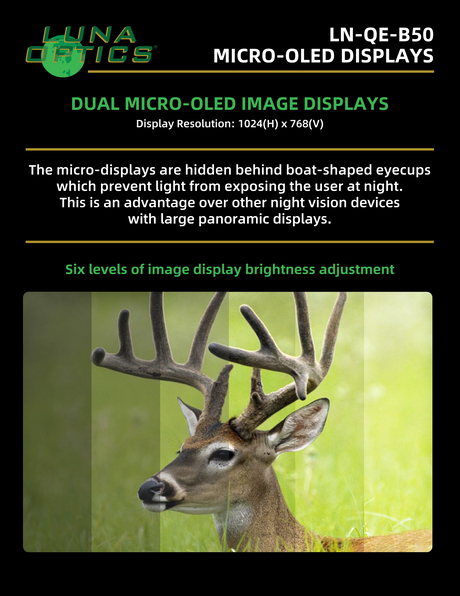
The G3 monoculars are the lighter and less expensive way in. The 5-30x44 is the one to carry when weight matters, and the 6-36x50 gathers more light through its larger objective, which helps if most of your viewing happens after dusk. The Quantum binoculars earn their extra cost over long sessions, because viewing with both eyes cuts the eye strain that builds up over an hour at an eyepiece.
Rangefinder or not?
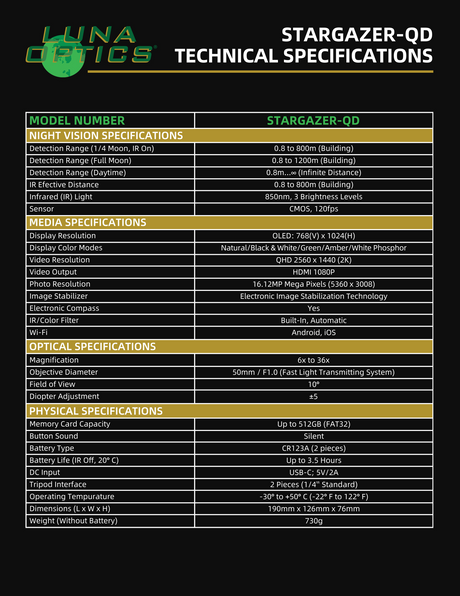
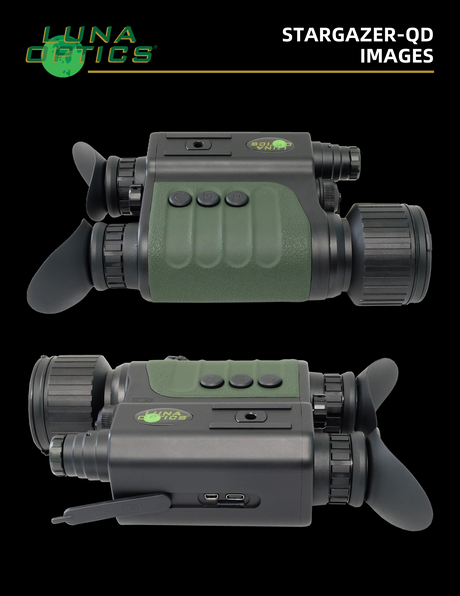
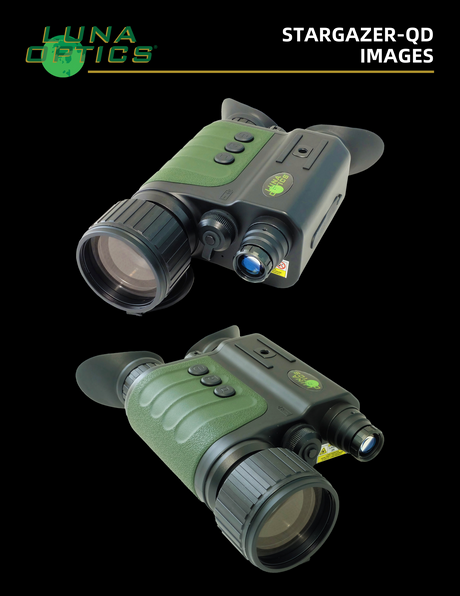
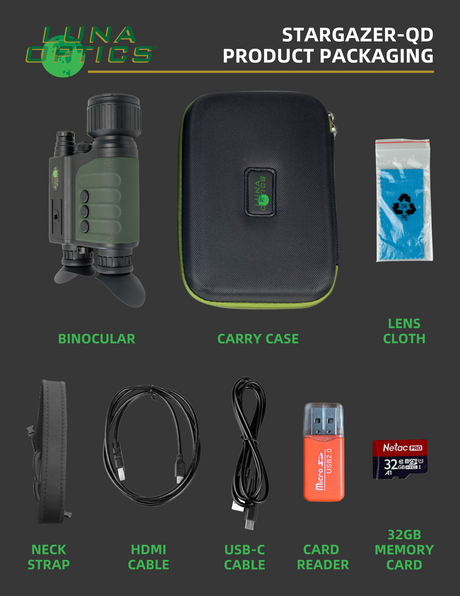
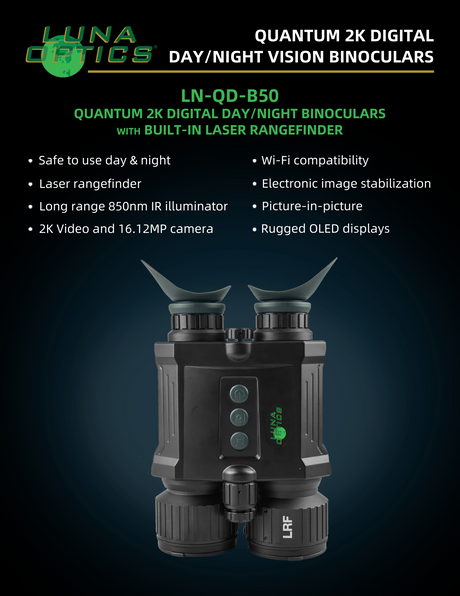
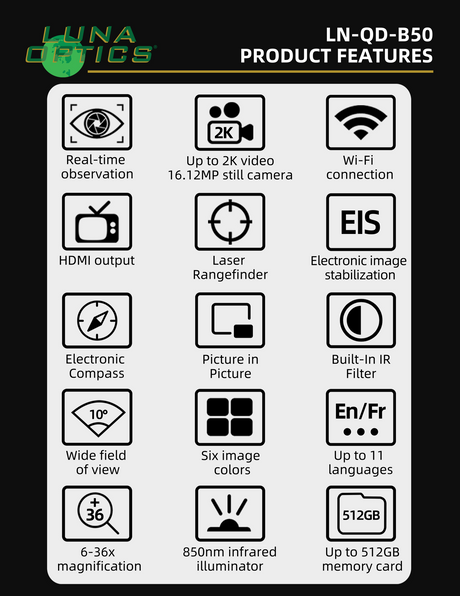
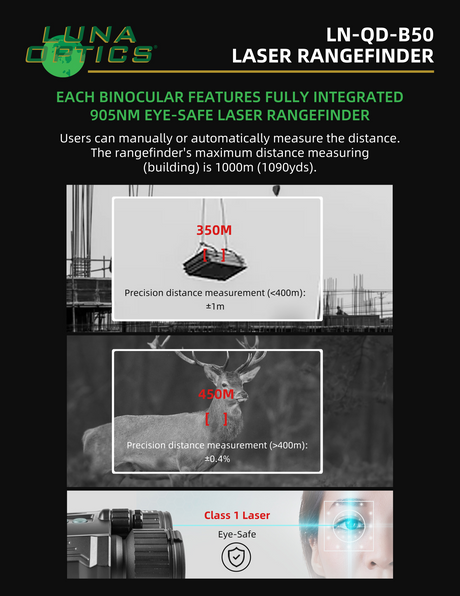
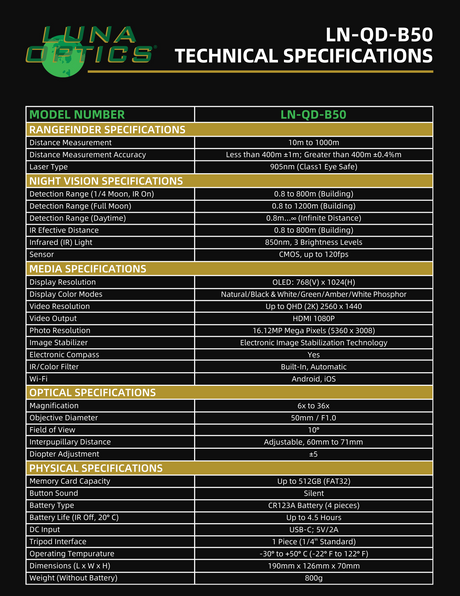
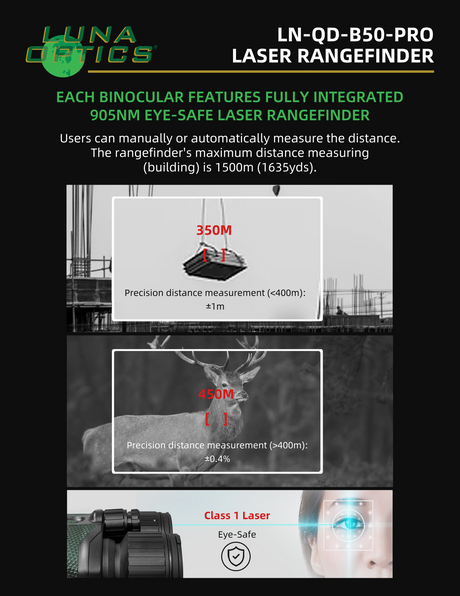
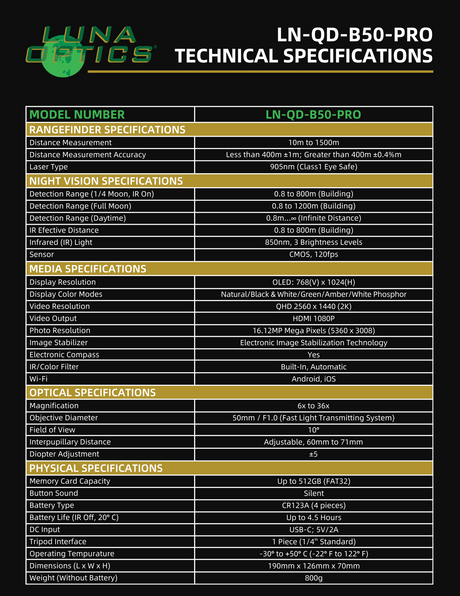
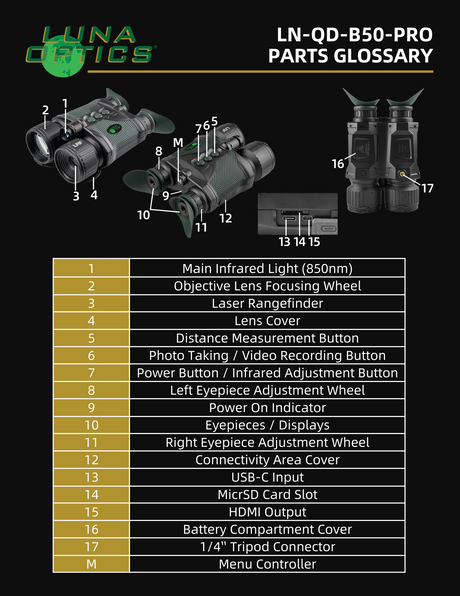
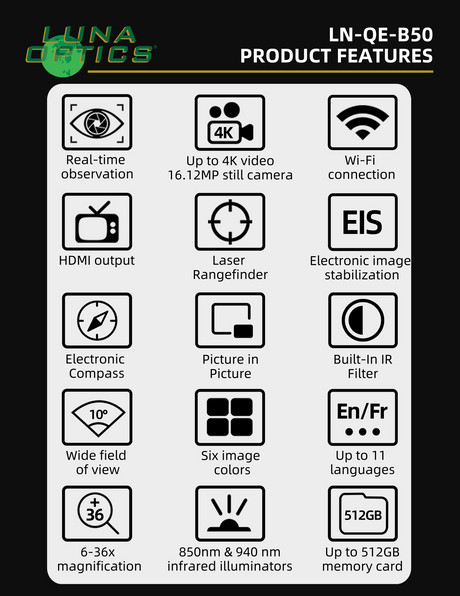
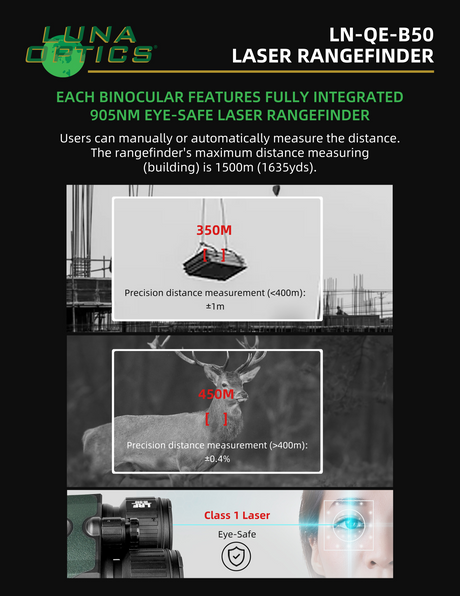
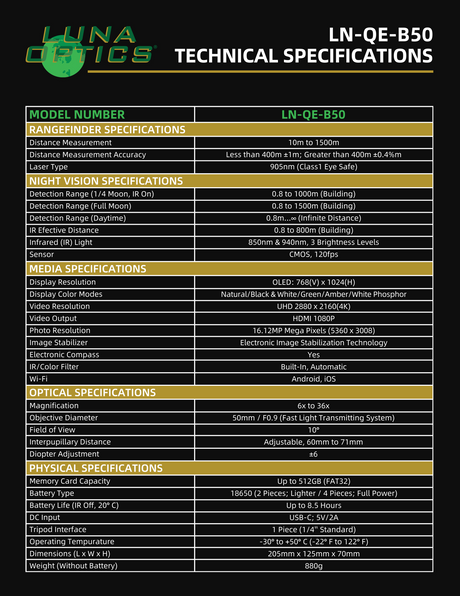
Three of the four binoculars carry a laser rangefinder: 1,100 yards on one Quantum Digital, and 1,635 yards on the other Quantum Digital and the Quantum Elite, the longer reach being what you need to read distance across a valley rather than a field. The Stargazer-QD leaves the rangefinder out, which is the sensible saving if you are observing rather than measuring.
Sensor sensitivity
A lower lux rating means a usable image in darker conditions. Luna rates the Quantum Elite's 4K sensor at 0.0005 lux, the Quantum Digital sensor at 0.0015 lux and the G3 sensor at 0.002 lux.
Frequently Asked Questions
Can I use these in daylight?
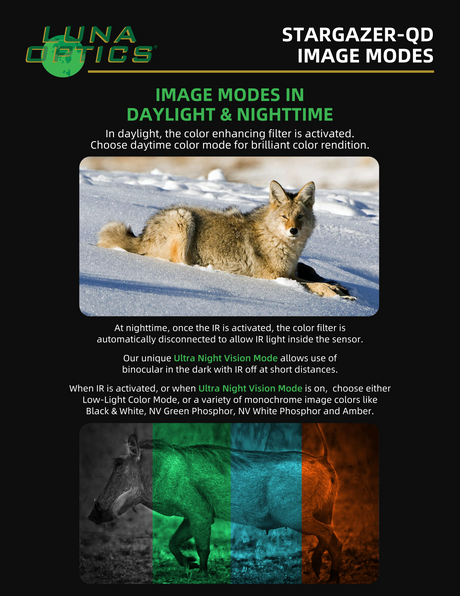
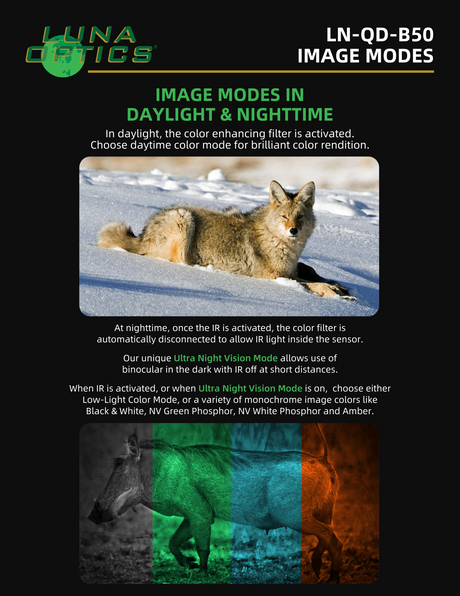
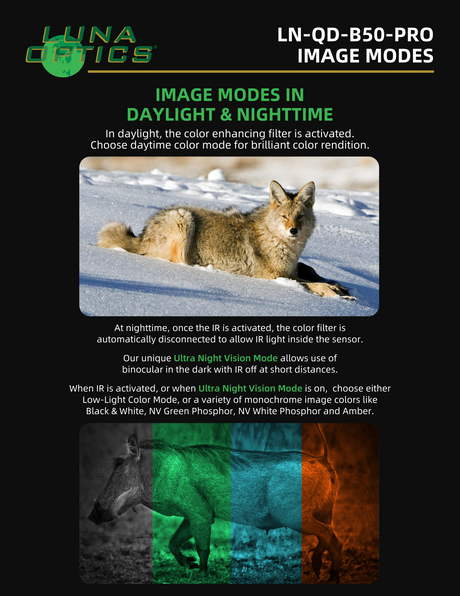
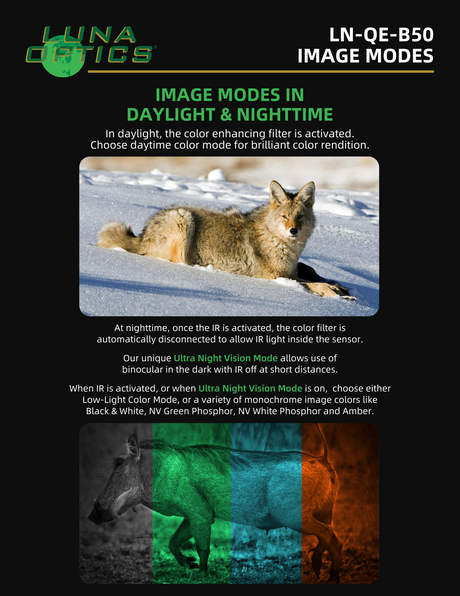
Yes. A digital sensor is not harmed by daylight, and all six show full color by day.
Do they record?
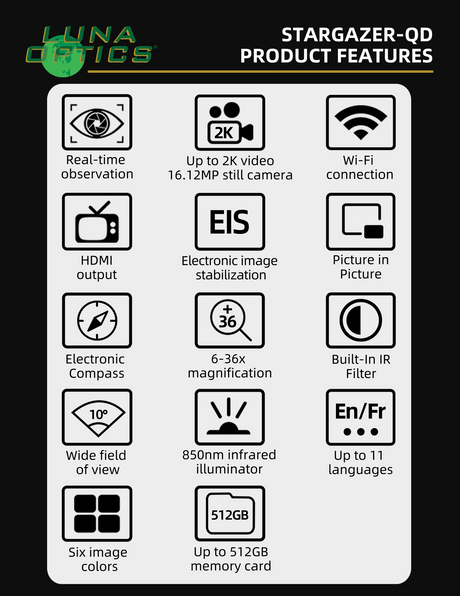
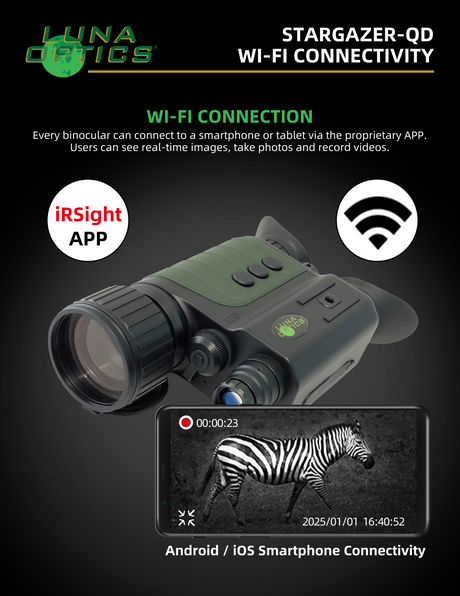
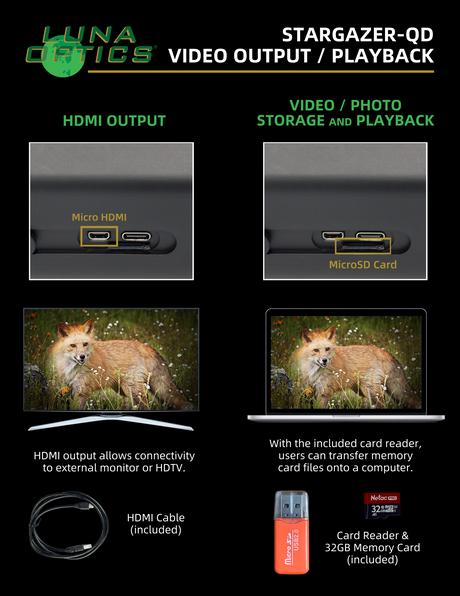
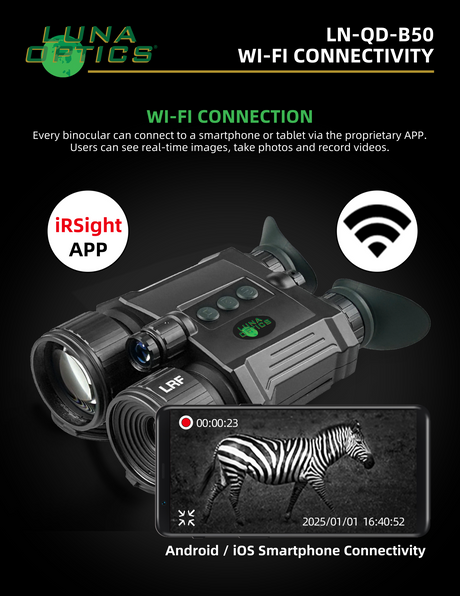
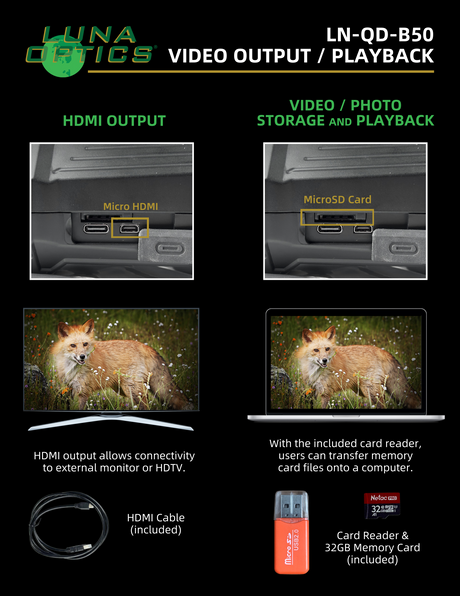
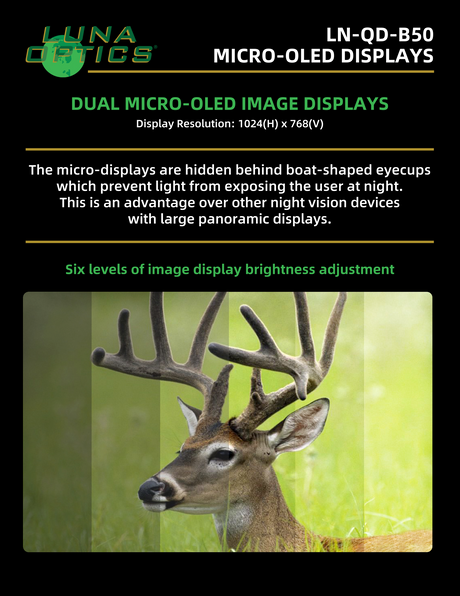
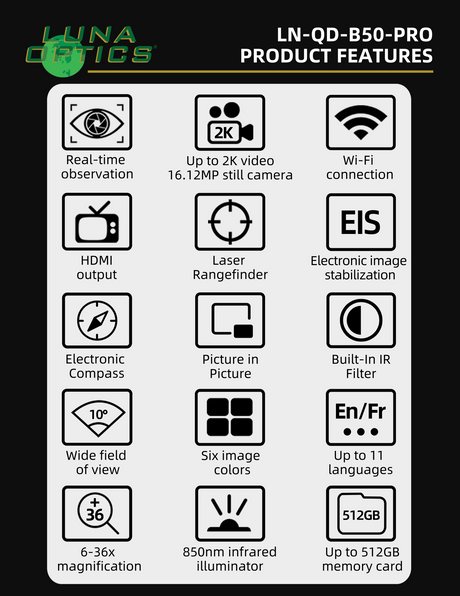
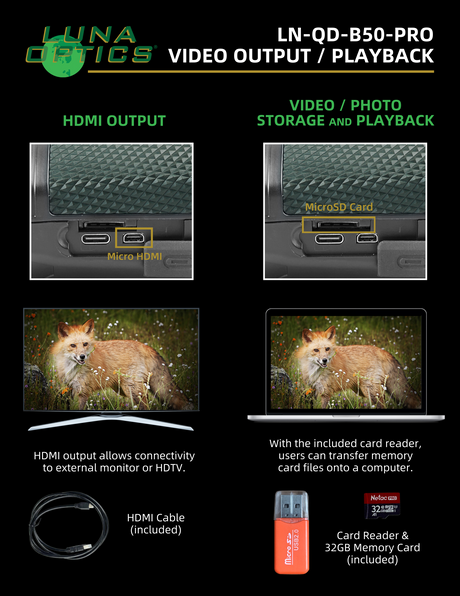
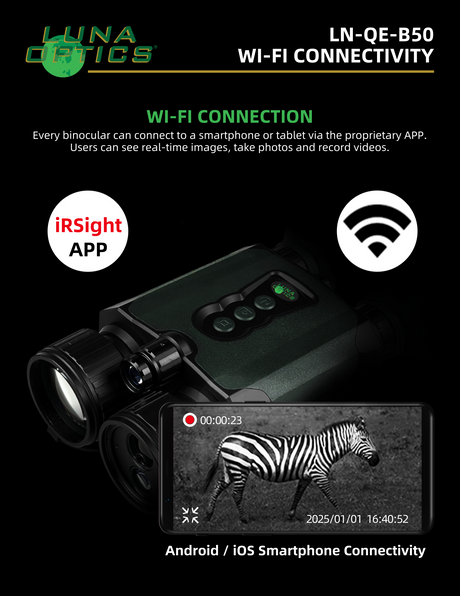
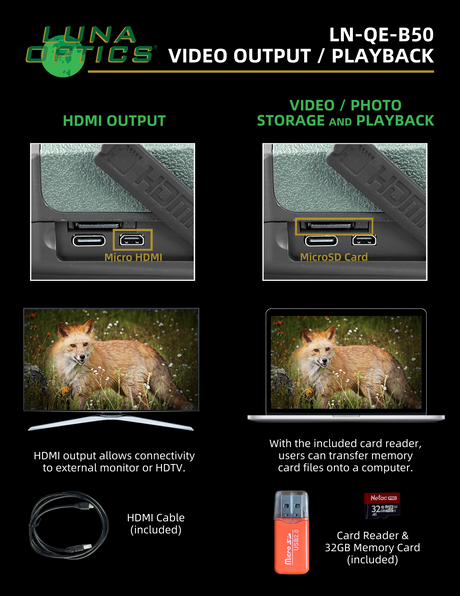
Yes, photos and video to a microSD card. The Quantum binoculars take 16.1 MP stills.
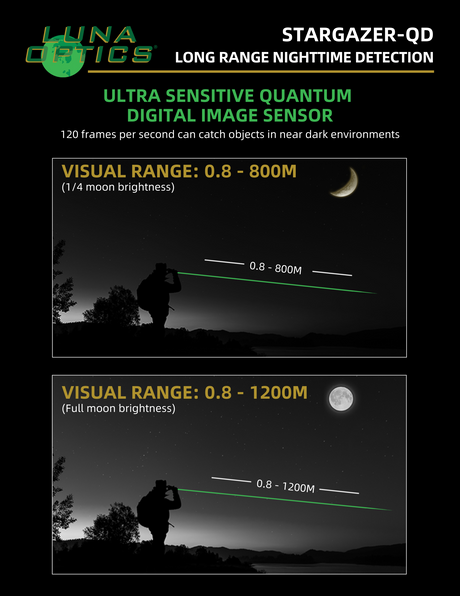
How far can they see in the dark?
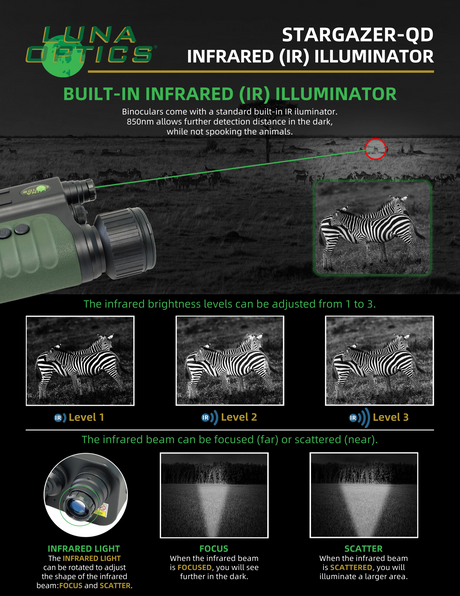
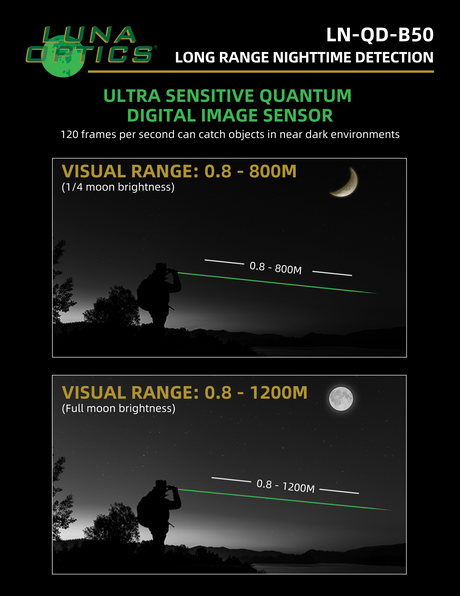
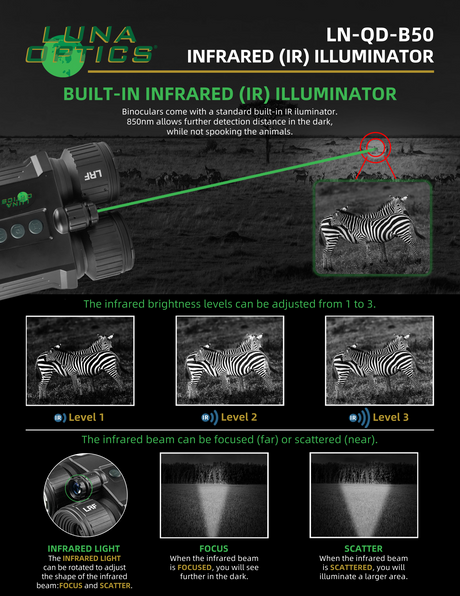
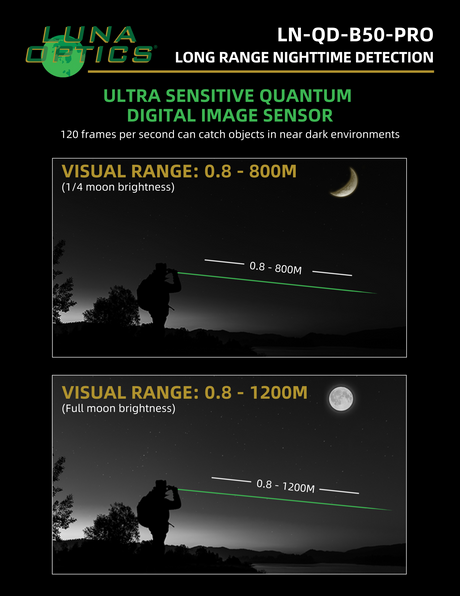
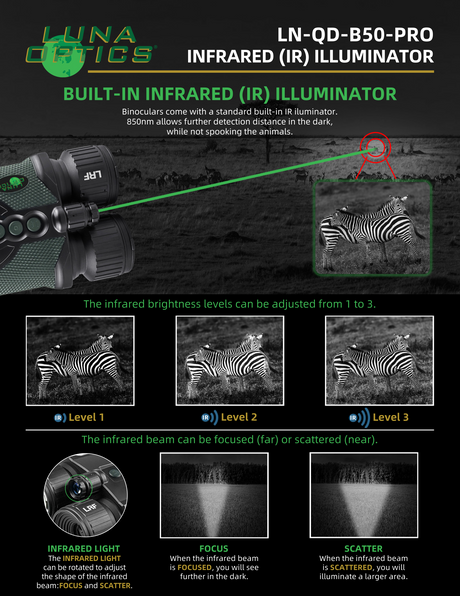
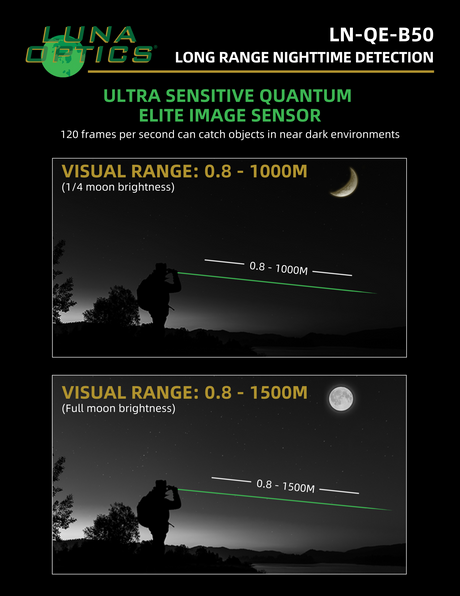
It depends on the infrared. With the built-in illuminator, Luna's manuals give its G3 monoculars 400 meters in complete darkness.
How long do the batteries last?
It varies by model and drops with the infrared on. With it off, Luna rates the Quantum Elite at 8.5 hours on four rechargeable 18650 batteries.
For handheld picks, read Best Night Vision Monoculars in 2026, and for every Luna device we carry, see Luna Optics.