
TL;DR: Quick Summary
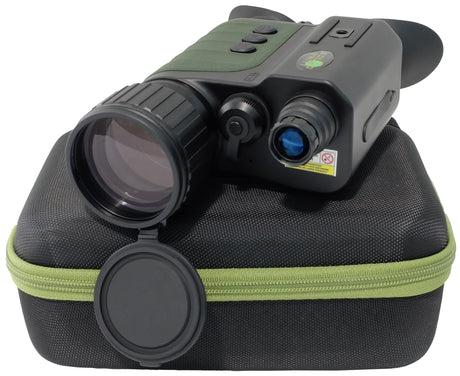
Digital night vision binoculars use CMOS sensors and IR illuminators to deliver clear imaging in total darkness, with the added ability to record video, snap photos, and work during the day. The Luna Optics Quantum Elite 6-36x50 is the best overall pick with its 4K sensor, dual IR wavelengths, and 8.5-hour battery life (MSRP $1,099.95). For a more affordable option with a built-in rangefinder, the Quantum Digital 6-36x50 delivers QHD resolution and 1,100-yard ranging at $949.95 MSRP. Budget-conscious buyers should look at the Stargazer-QD at $799.95 MSRP.
If you've been researching digital night vision binoculars, you've probably noticed the market has changed dramatically in the last few years. Traditional Gen 2 and Gen 3 image intensifier tubes, the green-tinted devices most people picture, are being challenged by a new generation of digital optics that can record 4K video, display in full color during the day, and operate in complete darkness for a fraction of the cost of military-grade tube systems.
This guide breaks down how digital night vision binoculars work, what specs actually matter, and which models deliver the best value across different budgets and use cases.
Table of Contents
Overview: What Are Digital Night Vision Binoculars?
Digital night vision binoculars replace the traditional phosphor-based image intensifier tube with a CMOS sensor, infrared illuminator, and high-resolution micro-display. The basic operating principle:
- The sensor captures light: including near-infrared wavelengths invisible to the human eye
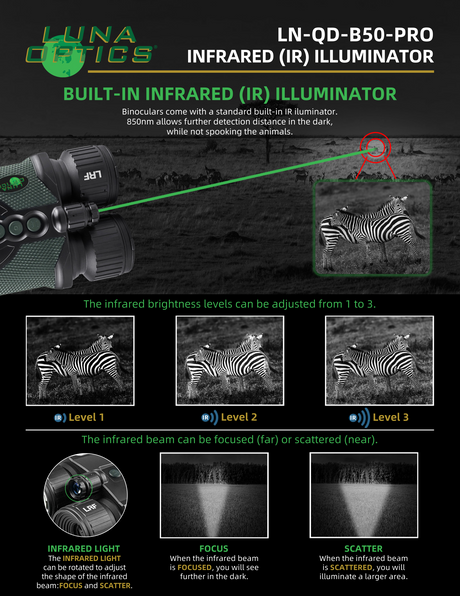
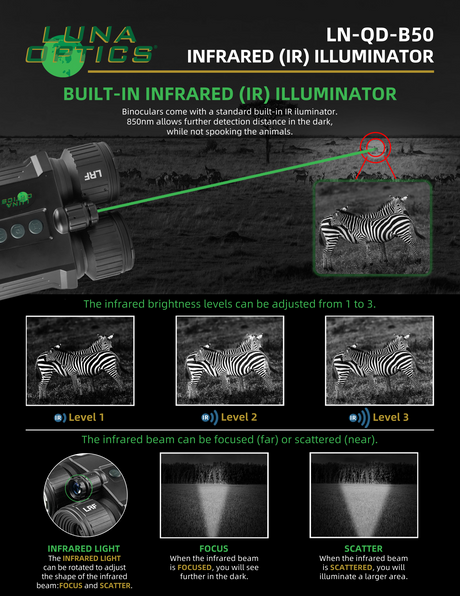
- The IR illuminator floods the scene with infrared light, providing active illumination in darkness
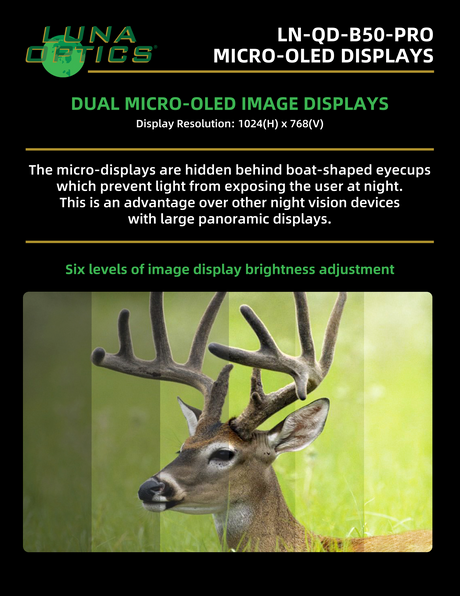
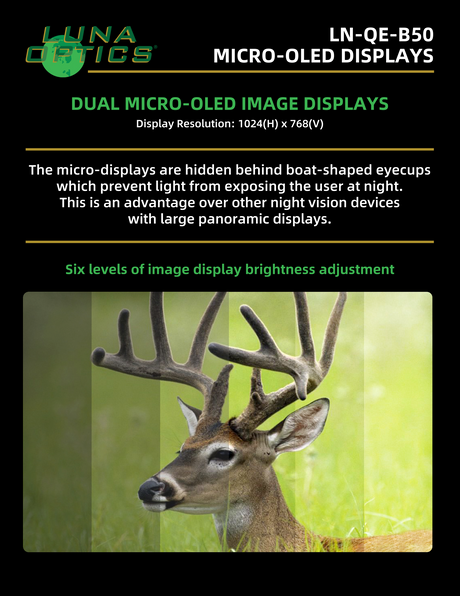
- The processor converts the signal into a viewable image on AMOLED micro-displays inside the eyepieces
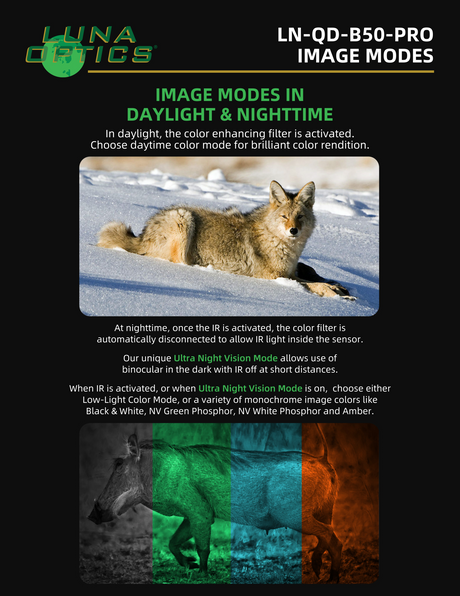
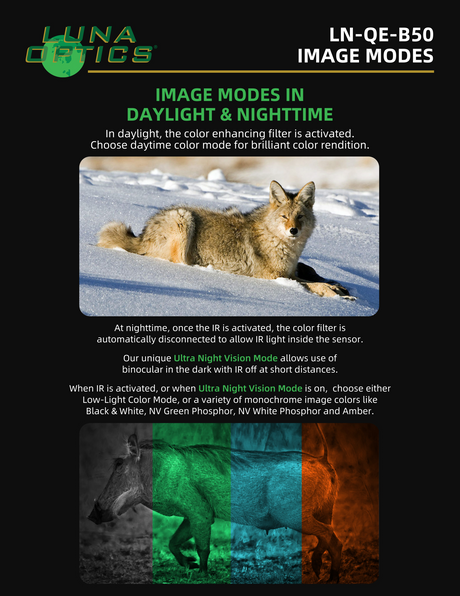
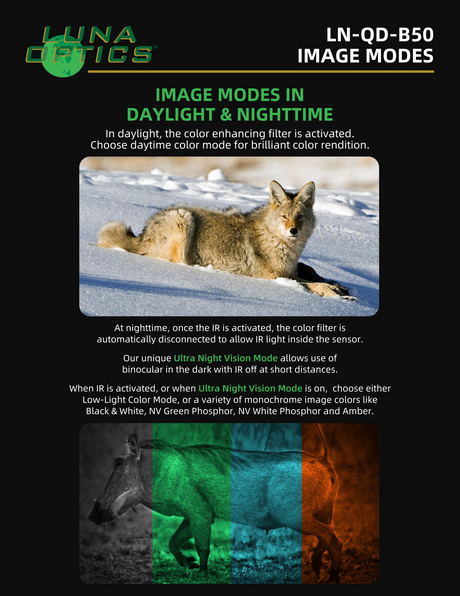
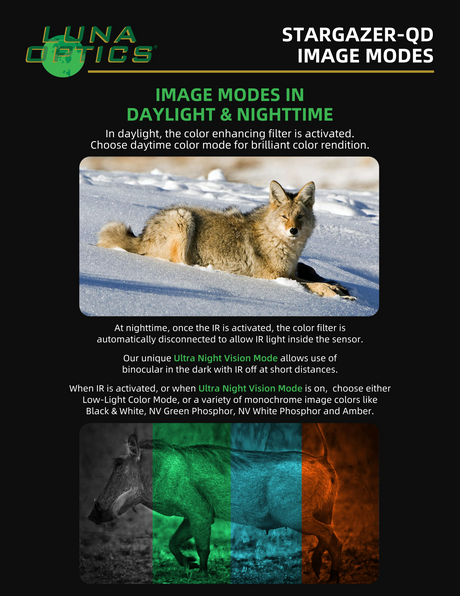
This architecture gives digital night vision several advantages over traditional tube-based devices. You can record video and stills directly to a memory card. You can switch between color modes: full daytime color, nighttime color, classic green phosphor, white phosphor, amber, or black-and-white, depending on your preference. And because CMOS sensors handle bright light without the damage risk that plagues image intensifiers, digital night vision binoculars work just as well during the day.
The trade-off? Traditional Gen 3 tubes still have the edge in raw sensitivity at extreme distances without active IR illumination. But for most practical applications: hunting, wildlife observation, property security, and stargazing, modern digital sensors have closed the gap significantly while adding capabilities that tube-based devices simply cannot match.
Our Top Picks
Best Overall: Luna Optics Quantum Elite 6-36x50

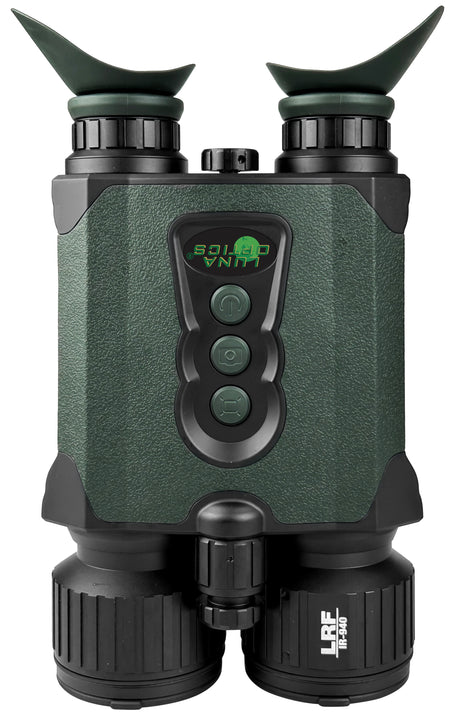
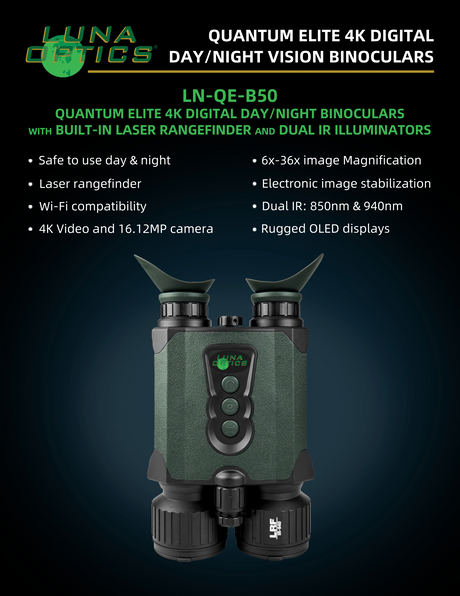
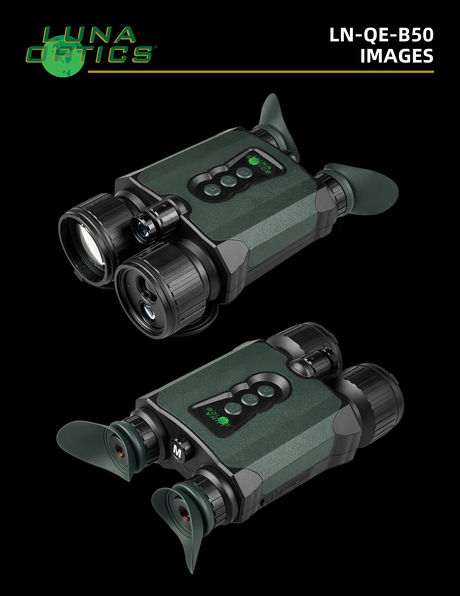
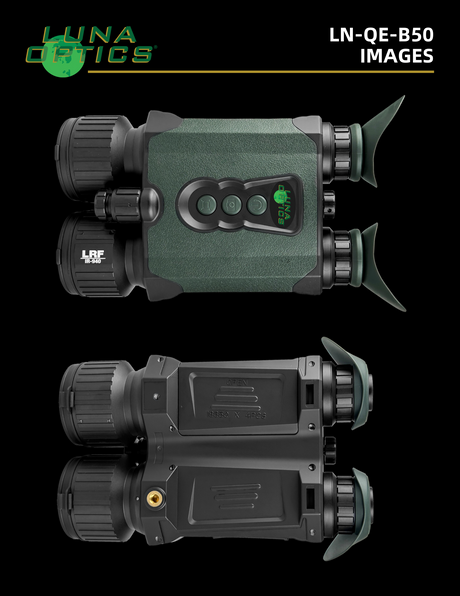
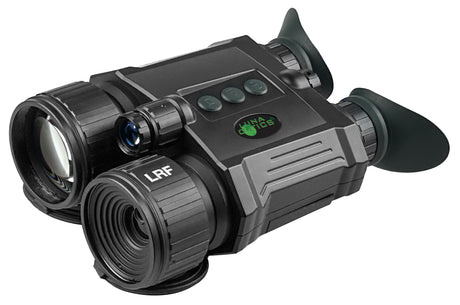
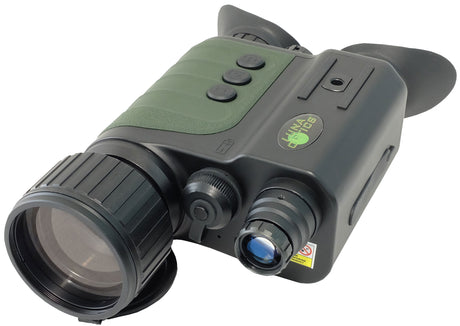
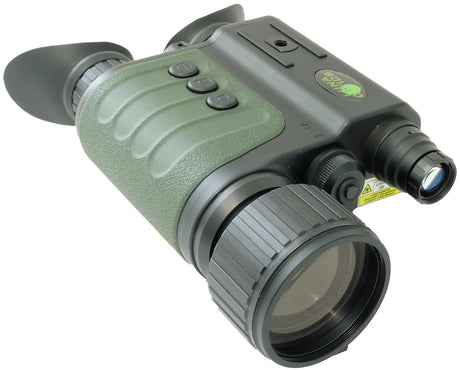
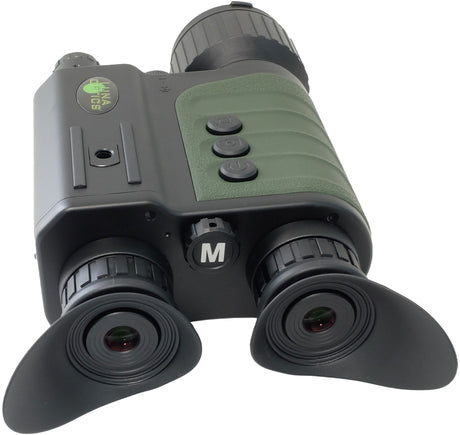
The Quantum Elite 6-36x50 is the flagship of Luna Optics' digital night vision lineup, and the only model in its price range to combine a 4K UHD sensor with dual-wavelength IR illumination.
What makes it stand out:
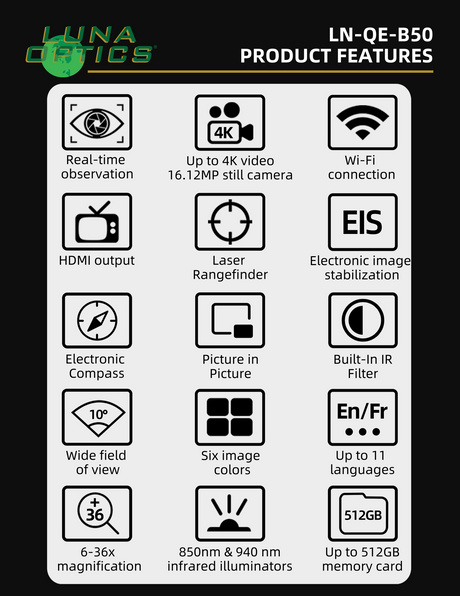
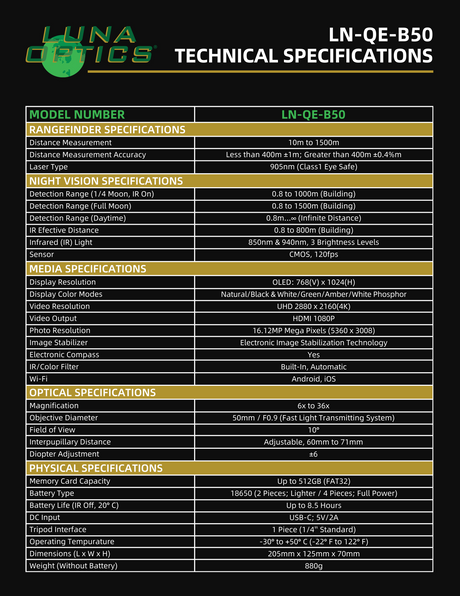
- 4K UHD sensor (2880 x 2160): The highest resolution in the lineup, delivering noticeably sharper detail at distance compared to QHD models
- Dual IR illuminator (850nm + 940nm): Switch between 850nm for maximum range and 940nm for covert operation (more on this distinction below)
- 8.5-hour battery life (IR off): Nearly 90% longer runtime than the Quantum Digital models, powered by rechargeable 18650 lithium batteries
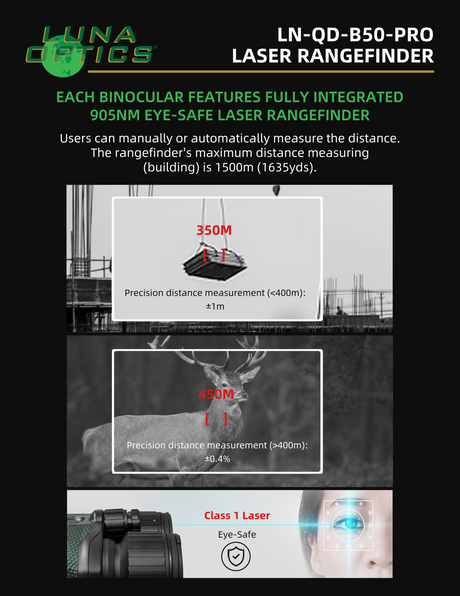
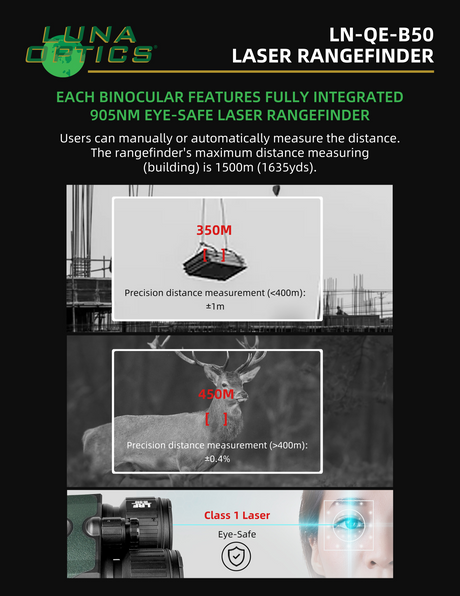
- 1,635-yard laser rangefinder: Integrated ranging for precise distance measurement to target
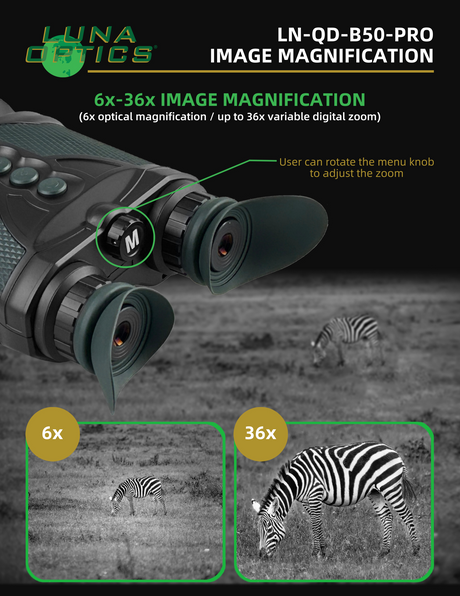
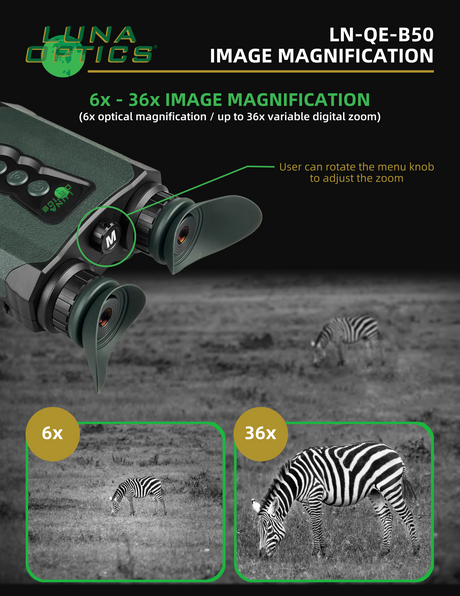
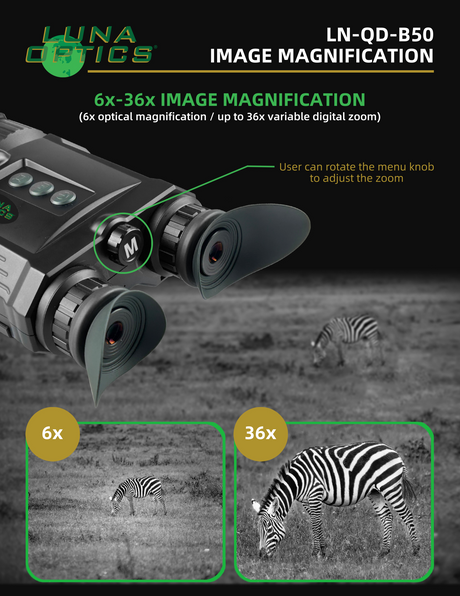
- Electronic image stabilization: Reduces hand shake at 6x optical magnification
- 4K video recording: Record at full 4K resolution, plus 2K, 1080p, and 720p options
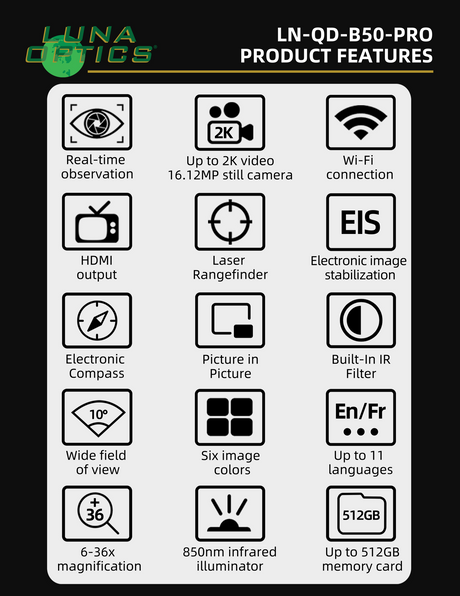
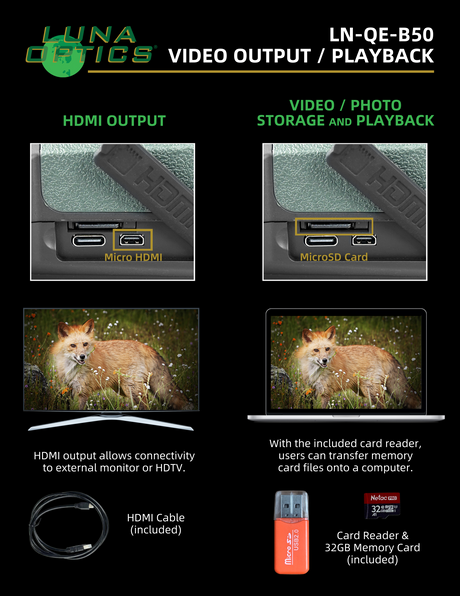
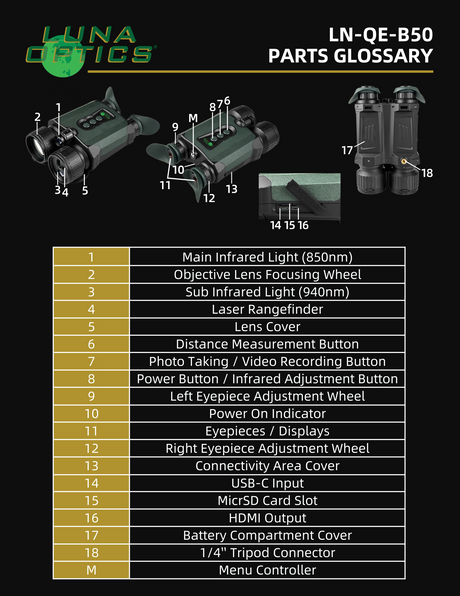
Key specs: 6-36x magnification, 50mm objective, 10° FOV at 6x, 16.1MP stills, Wi-Fi streaming to iOS/Android, micro-HDMI output, microSD up to 512GB. Weighs 880g. Operating temperature -22°F to 122°F.
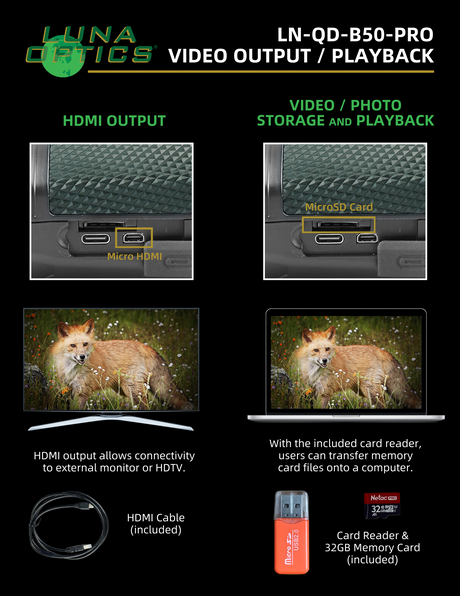
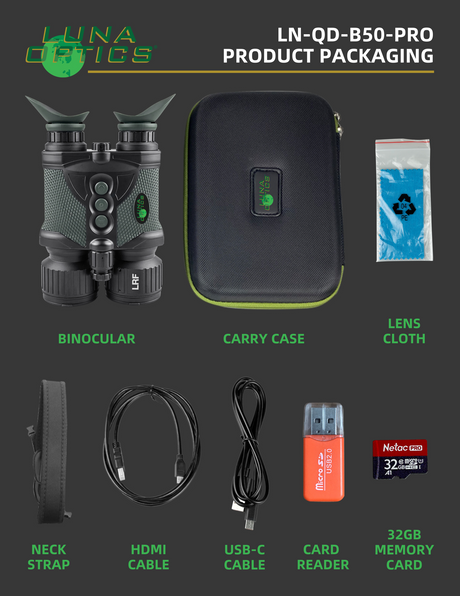
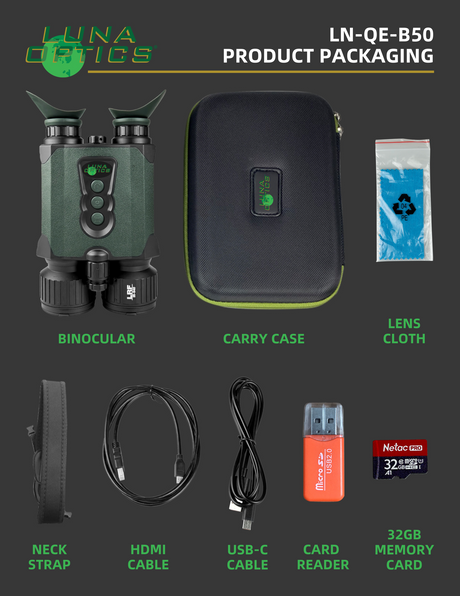
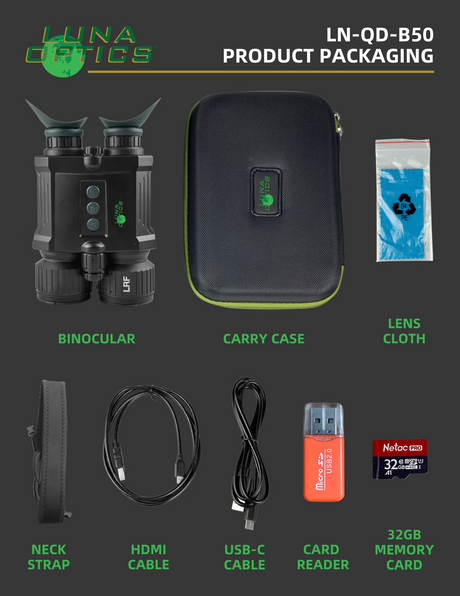
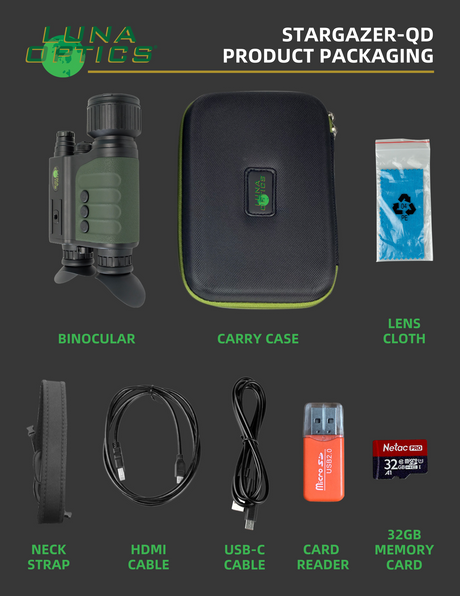
Includes: Deluxe case, padded neck strap, 32GB microSD card, USB-C cable, HDMI cable.
MSRP: $1,099.95. Check the current price on our product page.
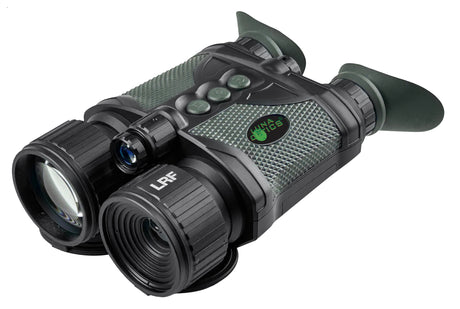
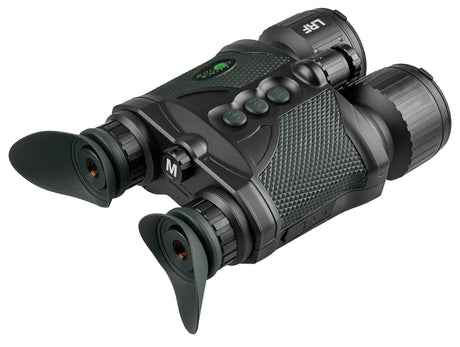
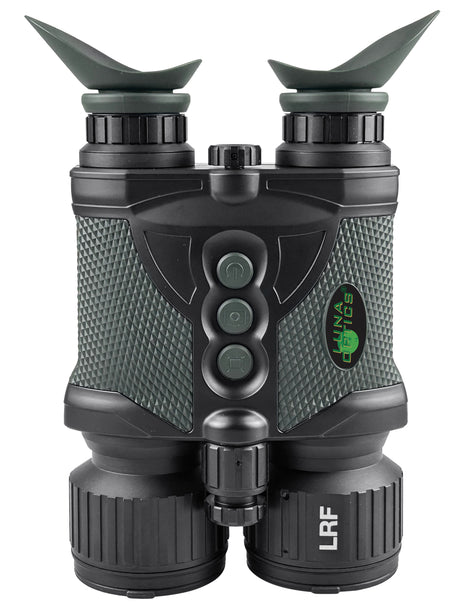
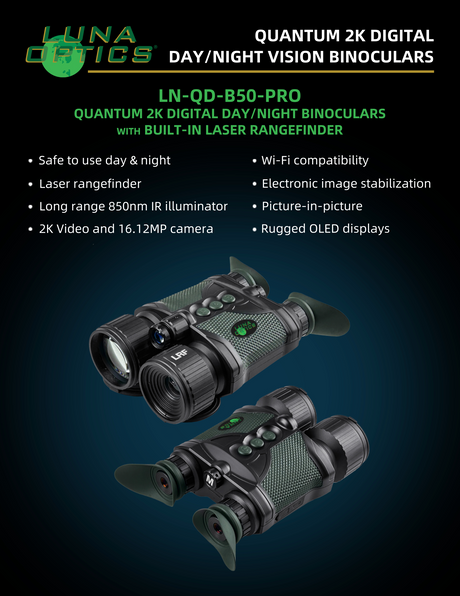
Best Value with Rangefinder: Luna Optics Quantum Digital 6-36x50

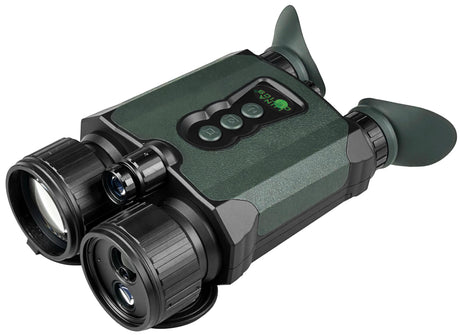
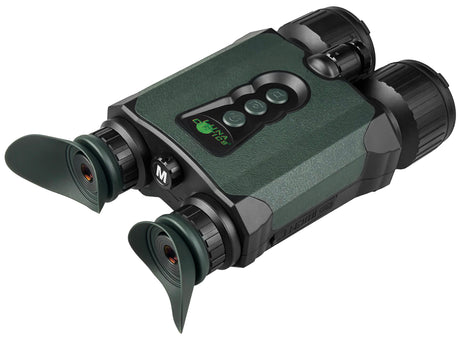
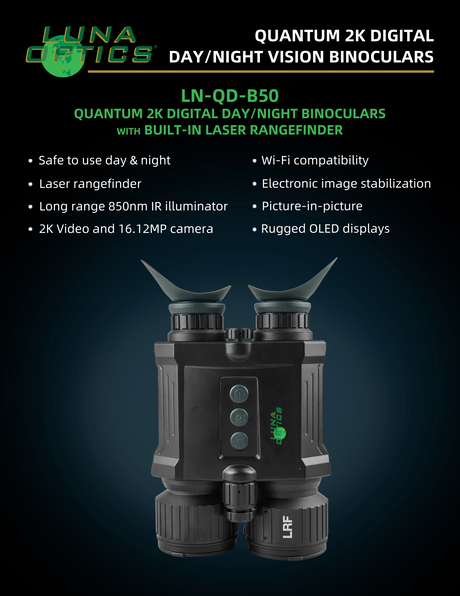
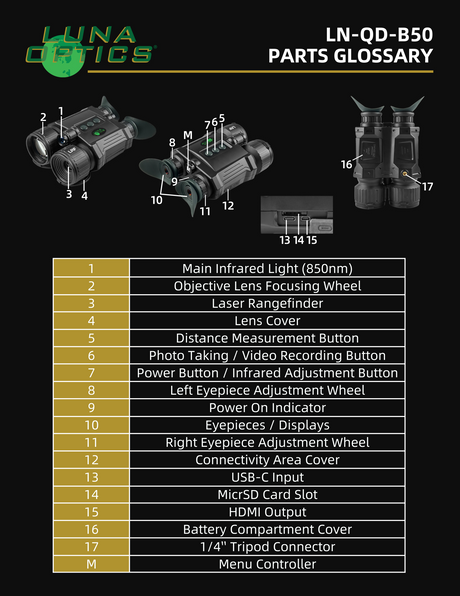
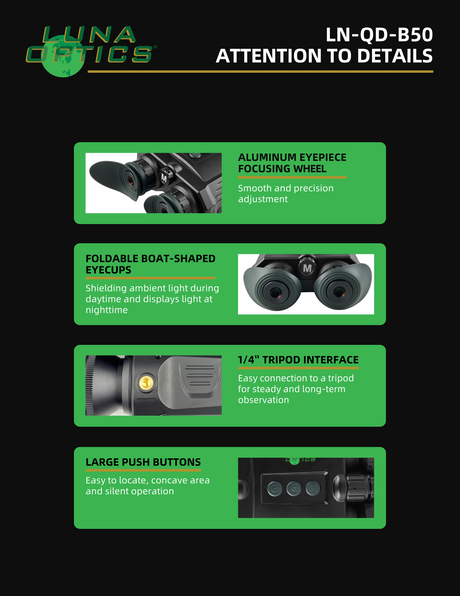
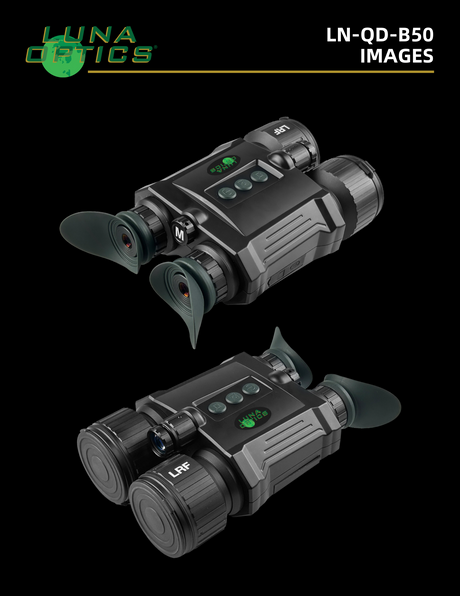
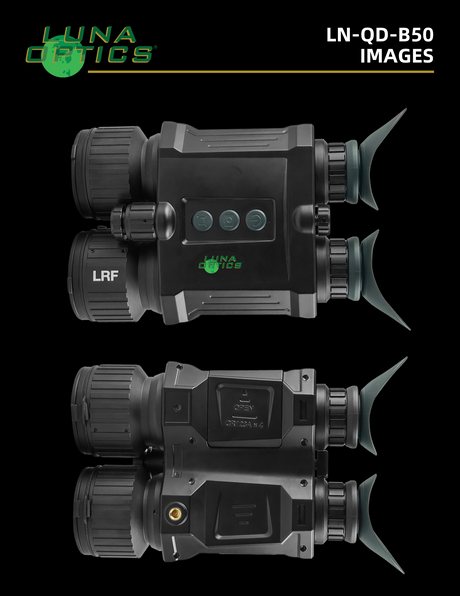
The Quantum Digital 6-36x50 hits a sweet spot for hunters and outdoor users who need a rangefinder but don't require the Elite's 4K sensor or dual IR illuminators.
What makes it stand out:
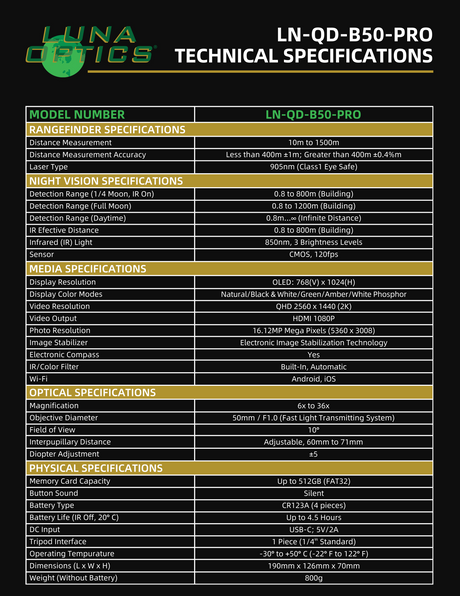
- QHD sensor (2560 x 1440): Still a high-resolution digital sensor with 16.1MP still images and QHD video recording
- 1,100-yard laser rangefinder: Plenty of range for most hunting scenarios
- Electronic image stabilization: Same EIS system as the Quantum Elite at 6x magnification
- $150 less than the Elite: A meaningful savings if 4K recording and dual IR aren't priorities
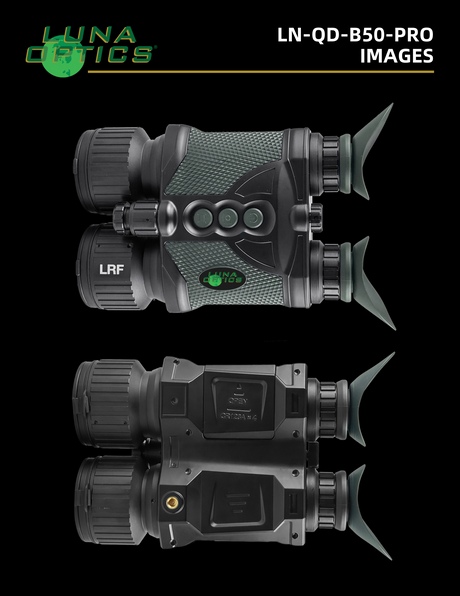
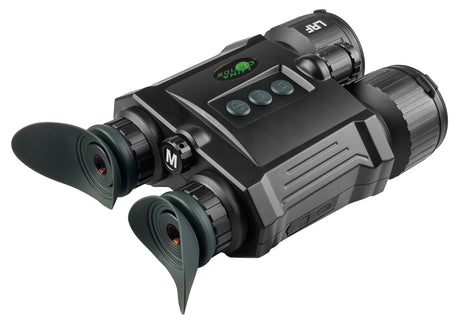
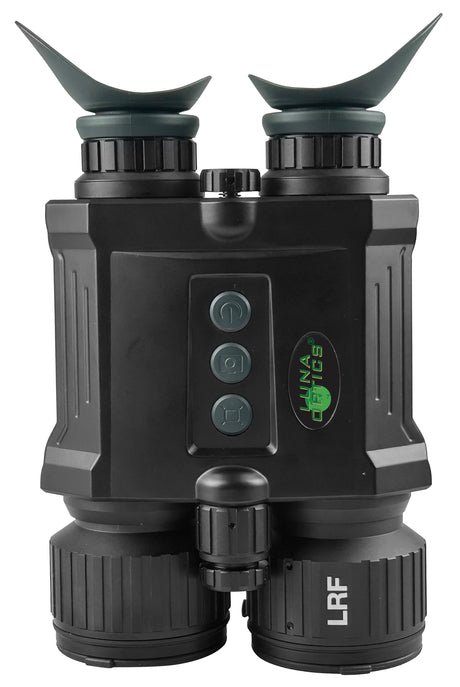
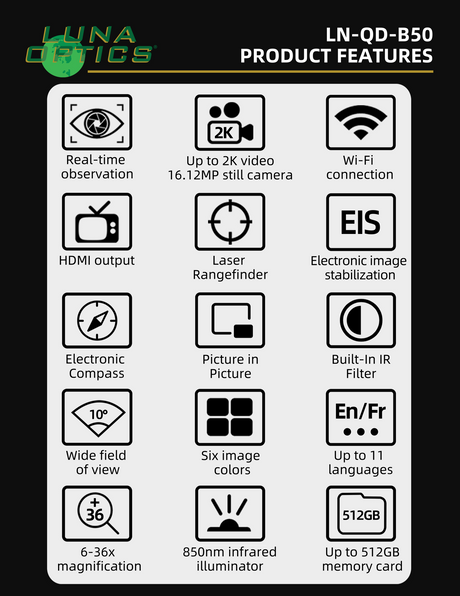
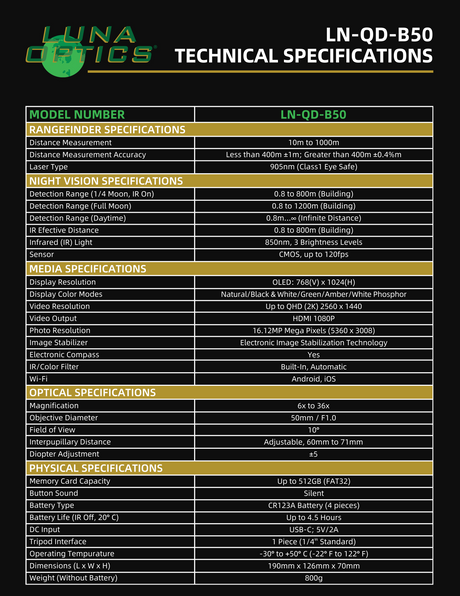
Key specs: 6-36x magnification, 50mm objective, 10° FOV at 6x, 4.5-hour battery life on CR123A batteries, 850nm IR illuminator, Wi-Fi, micro-HDMI output, microSD up to 512GB. Weighs 800g.
MSRP: $949.95. Also available as the Quantum Digital PRO at $999.95 MSRP with an extended 1,635-yard rangefinder. Same sensor, same optics; the differences are the ranging distance (1,635 vs 1,100 yards) and a 512GB microSD card in the box (vs 32GB). If you regularly need to range beyond 1,100 yards, the $50 MSRP upgrade to the PRO is worth it.
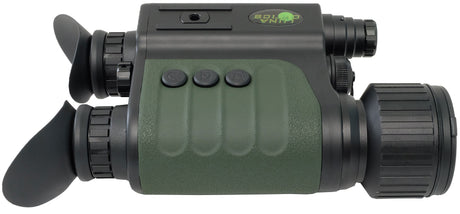
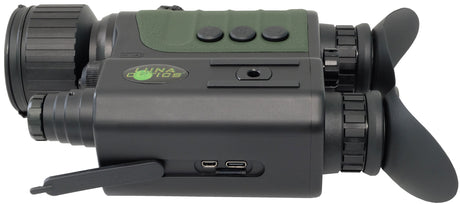
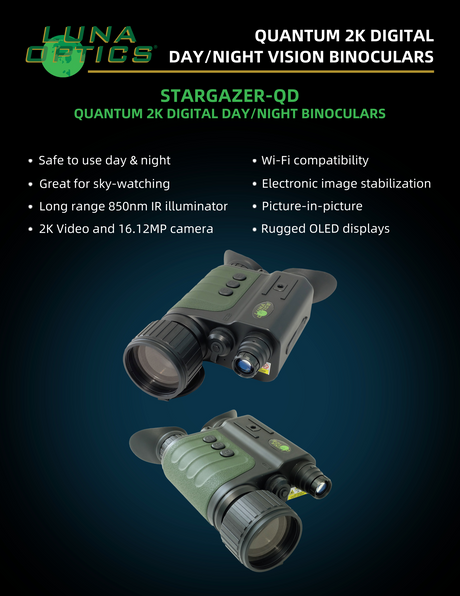
Best Budget Binocular: Luna Optics Stargazer-QD 6-36x50

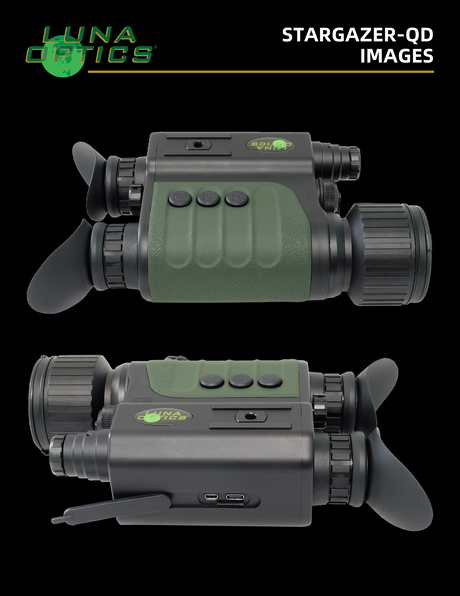
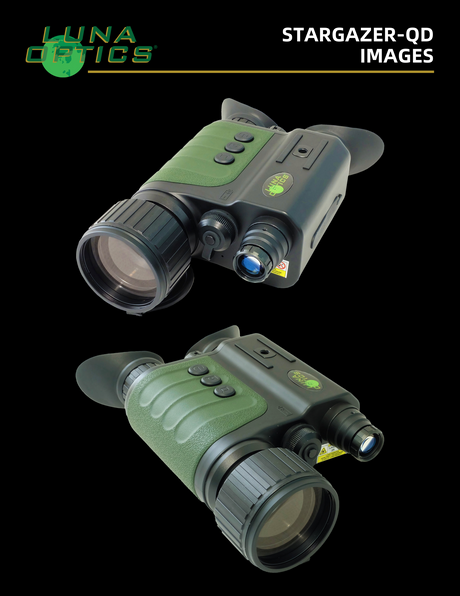
The Stargazer-QD strips away the laser rangefinder to bring digital night vision binoculars under $800 MSRP, making it the most accessible true binocular in the Luna Optics lineup.
What makes it stand out:
- Same QHD sensor as the Quantum Digital: You're not sacrificing image quality for the lower price
- No rangefinder = lower price: If you don't need integrated ranging (or already carry a standalone rangefinder), this saves $150 versus the standard Quantum Digital
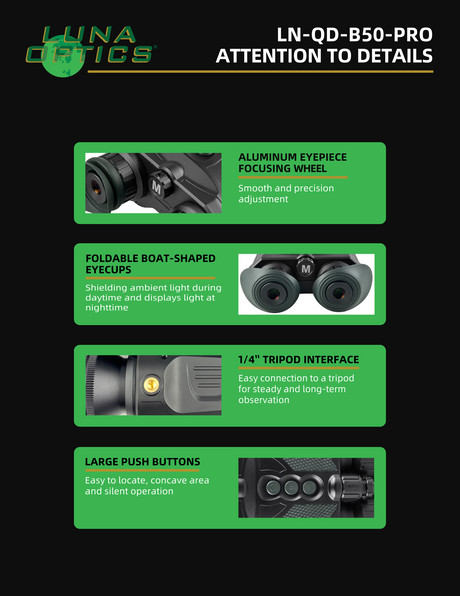
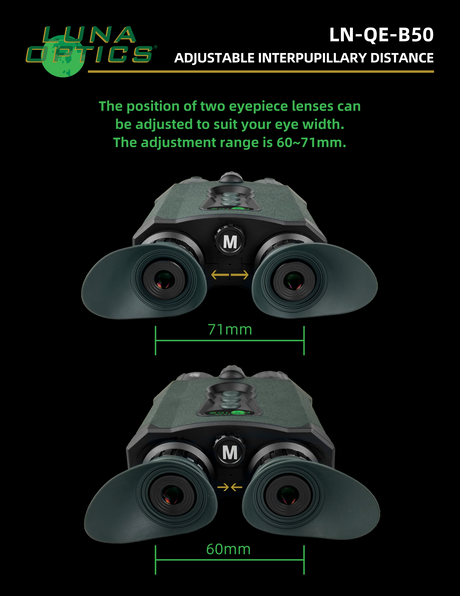
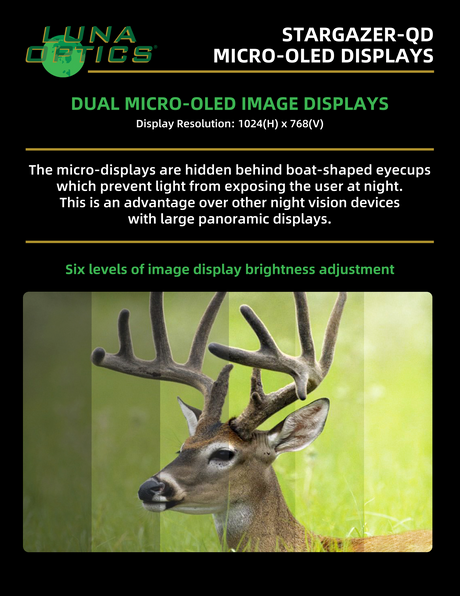
- True binocular viewing: Dual AMOLED displays for a natural two-eye experience with reduced eye fatigue during extended sessions
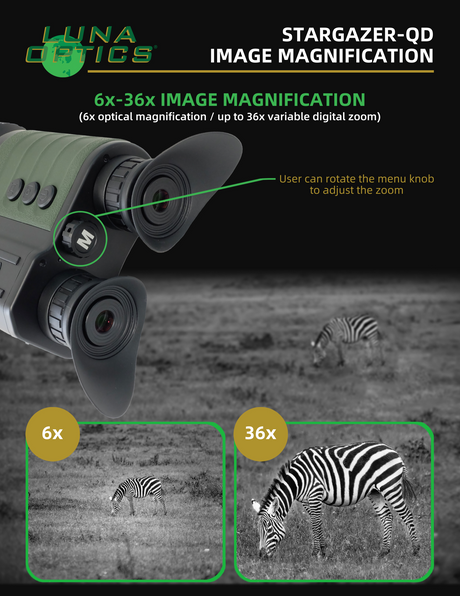
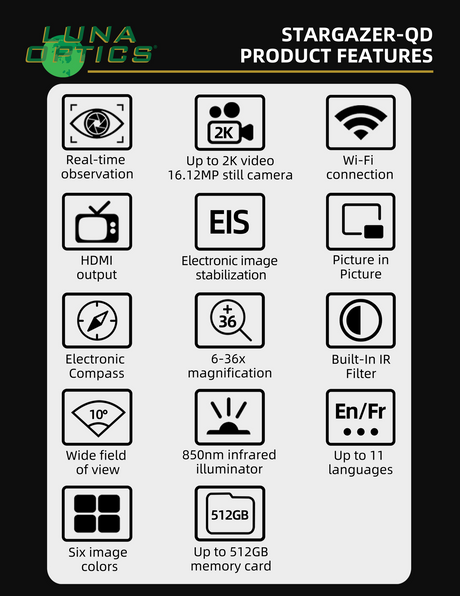
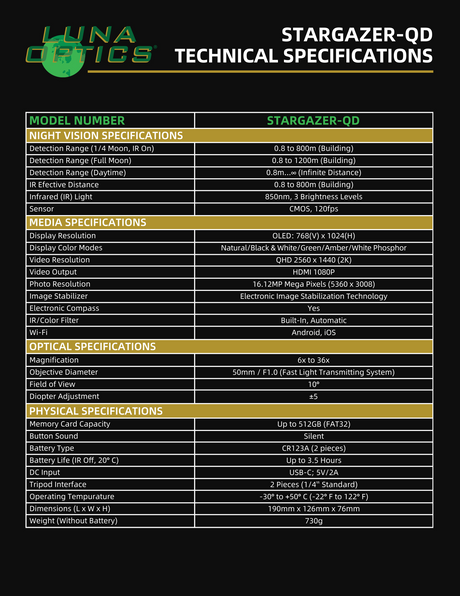
Key specs: 6-36x magnification, 50mm objective, 10° FOV at 6x, QHD sensor, 16.1MP stills, 3.5-hour battery life on CR123A batteries, Wi-Fi, micro-HDMI, microSD up to 512GB.
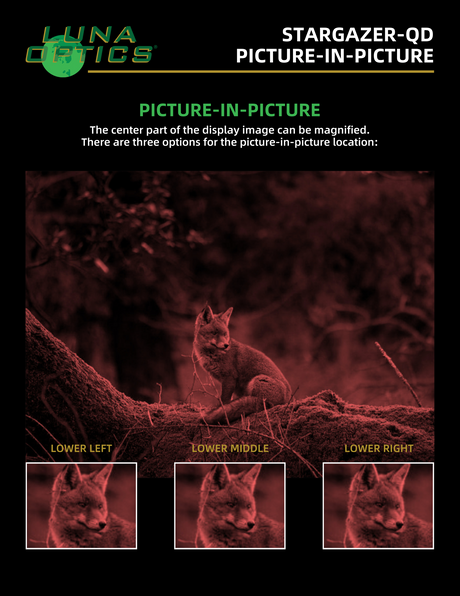
MSRP: $799.95. The entry point for Luna Optics' digital night vision binoculars. Ideal for stargazing, wildlife observation, and general nighttime use where precise distance ranging isn't required.
Looking for a lighter single-eye option? Luna Optics also makes Digital G3 monoculars starting at $599.95 MSRP with the same core digital night vision technology.
Premium Step-Up: Guide DN70M Thermal and 4K Night Vision Fusion

The Luna picks above are pure digital night vision: they amplify available light and lean on an infrared illuminator after dark. If your nights run past what IR can reach, or you hunt through fog and brush that defeats a light-based sensor, the Guide DN70M adds a true thermal channel alongside a 4K digital one in a single binocular. Thermal needs no reflected light at all, so it isolates a warm body against a cold background that a digital-only unit would miss.
What makes it stand out:
- Thermal plus 4K digital in one housing: a 256 x 192 uncooled thermal core (NETD under 30 mK) finds the heat signature, then the 70mm digital channel confirms what you are looking at and records it
- 1,300m (1,400 yd) thermal detection: pick out heat well past the IR-lit night range of a digital-only binocular
- Built-in 1,500m laser rangefinder: range the target the moment you detect it, with no separate unit to carry
- Daylight-safe and recording: like the Luna units, the digital channel works in full color by day and saves photo and video
Key specs: 4.5-21.6x magnification, 256 x 192 @ 12 micron thermal sensor, 70mm F1.8 digital objective, 1,300m thermal detection, 1,500m laser rangefinder, 0.49 inch AMOLED display, 5-hour battery, 914g.
MSRP: $1,799.00. The most affordable way into thermal and night vision fusion. For serious long-range work, the Guide TN650M steps up to a 640 x 512 thermal core (NETD under 18 mK) and 2,560m detection. Compare the full digital and fusion range in our night vision binoculars collection.
Digital Night Vision Binoculars Comparison
| Spec | Quantum Elite | Quantum Digital PRO | Quantum Digital | Stargazer-QD |
|---|---|---|---|---|
| MSRP | $1,099.95 | $999.95 | $949.95 | $799.95 |
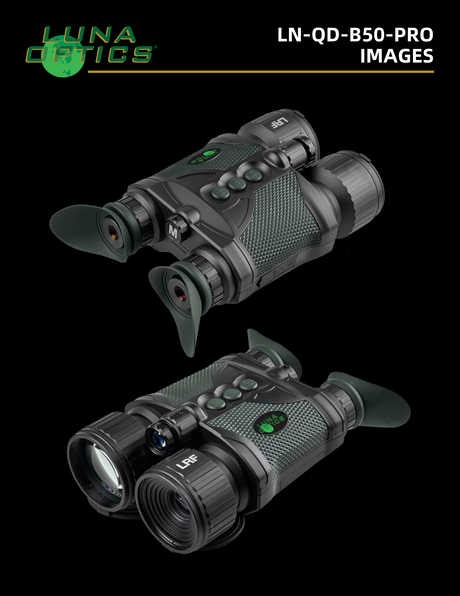
| SKU | LN-QE-B50 | LN-QD-B50-PRO | LN-QD-B50 | STARGAZER-QD |
| Sensor | UHD 4K (2880x2160) | QHD (2560x1440) | QHD (2560x1440) | QHD (2560x1440) |
| Light Sensitivity | 0.0005 lux | 0.0015 lux | 0.0015 lux | 0.0015 lux |
| Magnification | 6-36x | 6-36x | 6-36x | 6-36x |
| Objective | 50mm | 50mm | 50mm | 50mm |
| FOV at 6x | 10° | 10° | 10° | 10° |
| IR Illuminator | Dual: 850nm + 940nm | 850nm | 850nm | 850nm |
| IR Power | 1W Class-3R | 1W Class-3R | 1W Class-3R | 1W Class-3R |
| Nighttime Range | 1,100 yds (1,000m) | 654 yds (600m) | 654 yds (600m) | 654 yds (600m) |
| Rangefinder | 1,635 yds | 1,635 yds | 1,100 yds | None |
| Battery Life (IR off) | 8.5 hrs | 4.5 hrs | 4.5 hrs | 3.5 hrs |
| Battery Type | 18650 rechargeable | CR123A (x4) | CR123A (x4) | CR123A (x2) |
| Video | 4K / 2K / 1080p / 720p | QHD / FHD / HD | QHD / FHD / HD | QHD / FHD / HD |
| Still Photos | 16.1MP | 16.1MP | 16.1MP | 16.1MP |
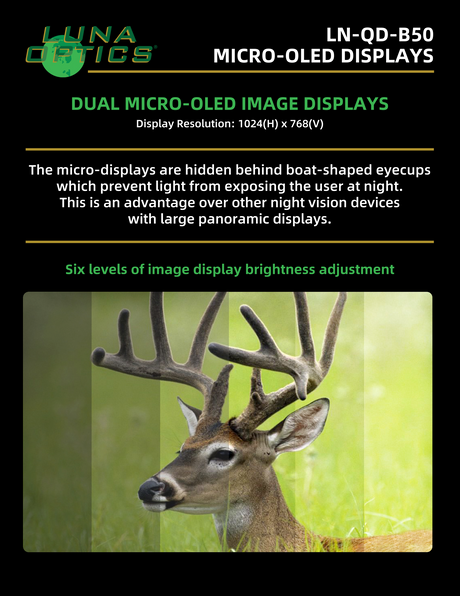
| Display | AMOLED 1024x768 | AMOLED 1024x768 | AMOLED 1024x768 | AMOLED 1024x768 |
| Included microSD | 32GB | 512GB | 32GB | 32GB |
| Max Storage | 512GB | 512GB | 512GB | 512GB |
| Weight | 880g | 800g | 800g | 730g |
| EIS | Yes (at 6x) | Yes (at 6x) | Yes (at 6x) | Yes (at 6x) |
| Wi-Fi | Yes | Yes | Yes | Yes |
| Warranty | 2-year limited | 2-year limited | 2-year limited | 2-year limited |
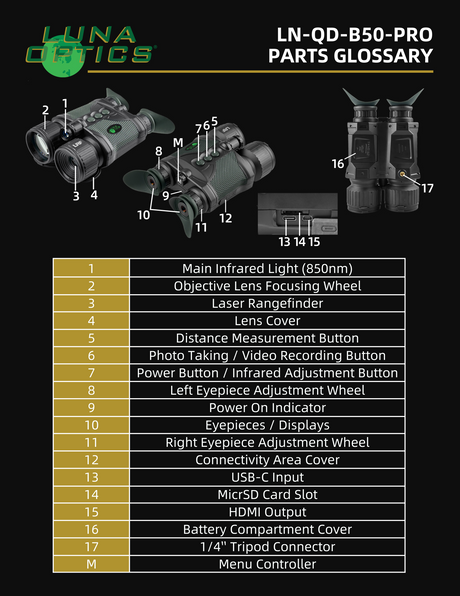
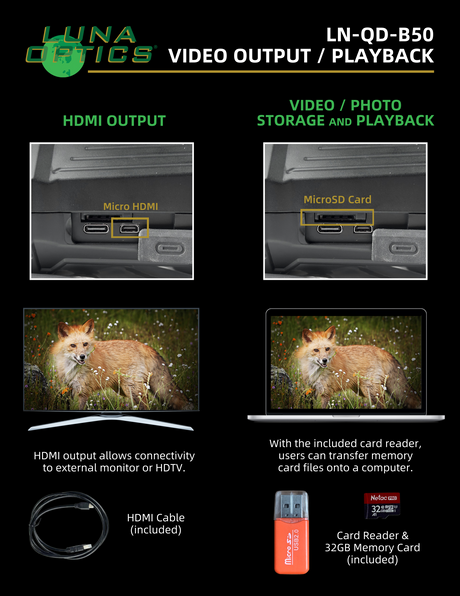
All models include USB-C external power, micro-HDMI video output, HDMI cable, and a 1/4"-20 tripod mount. Operating temperature: -22°F to 122°F (-30°C to 50°C).
How to Choose Digital Night Vision Binoculars
The comparison table above shows that Luna's binocular models share a common platform: same 6-36x magnification range, same 50mm objectives, same 1024x768 AMOLED displays, and the same 16.1MP stills and 512GB microSD ceiling. The meaningful differences come down to five decision points.
Sensor Resolution: UHD vs QHD
The Quantum Elite's UHD sensor (2880 x 2160) captures roughly 69% more pixels than the QHD models (2560 x 1440) and is rated to 0.0005 lux light sensitivity, three times more sensitive than the QHD binoculars (0.0015 lux). In practice, this means finer detail at longer distances, better clarity when using higher digital zoom levels, and a visible advantage in very low ambient light. If you regularly observe at ranges beyond 300 yards or want the sharpest possible recorded footage, the 4K sensor justifies the premium.
For most wildlife observation, property security, and hunting within typical engagement distances, QHD resolution is more than adequate. The 2560 x 1440 sensor still produces sharp, detailed images that are clearly superior to older-generation 1080p digital night vision devices.
IR Illuminator: 850nm vs 940nm
This is one of the most misunderstood specs in digital night vision. Here's the difference:
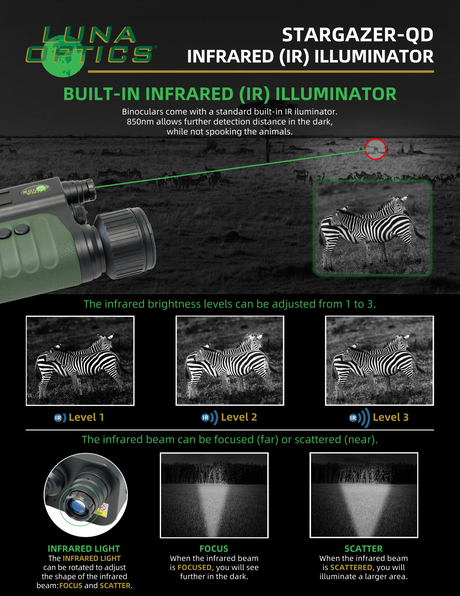
- 850nm: More efficient, longer range, slightly visible glow. If you look directly at the IR emitter, you'll see a faint red dot. At any distance, it's invisible to the subject you're observing. All four binocular models use a 1W Class-3R emitter.
- 940nm: Completely invisible, even when looking directly at the emitter. Shorter effective range than 850nm because digital sensors are less sensitive at this wavelength. Only available on the Quantum Elite.
When does 940nm matter? Covert surveillance and tactical applications where even the faint 850nm glow could theoretically be detected by another night vision device pointed at your position. For hunting, wildlife observation, and general use, 850nm is the better choice because of its superior range.
The Quantum Elite's dual-wavelength system gives you both options. You can switch between 850nm for maximum range and 940nm when stealth is the priority.
Battery Life and Power Options
Battery life varies significantly across the lineup (all figures rated with IR off, expect shorter runtimes with the IR illuminator active):
- Quantum Elite: 8.5 hours on rechargeable 18650 lithium batteries (2x or 4x cells). The rechargeable design means lower ongoing costs and no need to carry disposable batteries on multi-day trips.
- Quantum Digital / PRO: 4.5 hours on four CR123A batteries. Disposable CR123As are widely available but add up in cost over time.
- Stargazer-QD: 3.5 hours on two CR123A batteries.
All four models support external power via USB-C, so you can extend runtime with any standard power bank.
For extended field sessions, the Quantum Elite's combination of longer base battery life and rechargeable cells makes it the most practical choice.
Laser Rangefinder
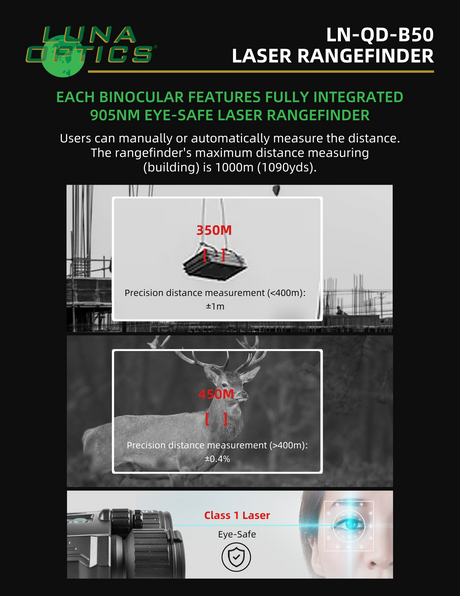
Three of the four binocular models include an integrated laser rangefinder:
- 1,635 yards: Quantum Elite and Quantum Digital PRO
- 1,100 yards: Quantum Digital
- None: Stargazer-QD
An integrated rangefinder eliminates the need to carry a separate device and lets you range targets while maintaining your night vision view. For hunters, this is often a deciding factor. The $50 MSRP difference between the standard Quantum Digital (1,100 yds) and the PRO (1,635 yds) is one of the best value upgrades in the lineup if you anticipate needing long-range distance readings.
If you already own a standalone rangefinder or primarily use night vision for observation rather than ranging, the Stargazer-QD saves $150 without compromising optics or sensor quality.
Recording and Storage
Every model in the lineup records video and 16.1MP still photographs to a microSD card (expandable up to 512GB). The key difference is video resolution:
- Quantum Elite: Records at 4K, 2K, 1080p, and 720p
- All other models: Record at QHD (30fps) and Full HD (60fps)
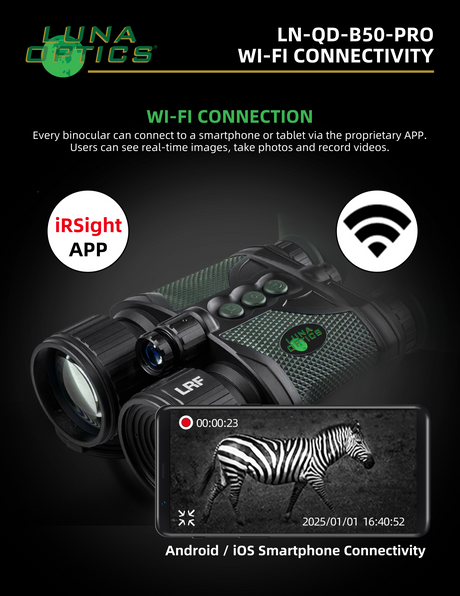
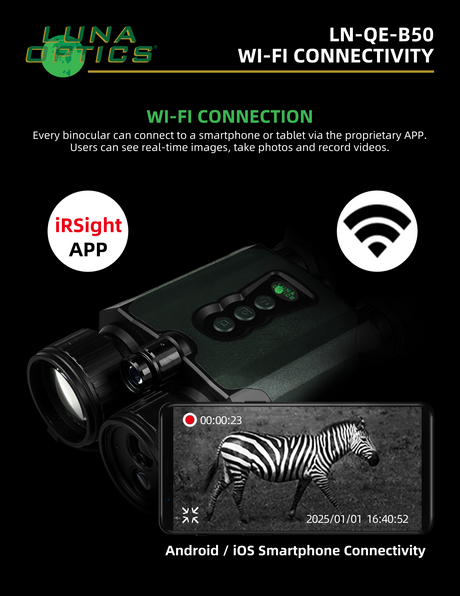
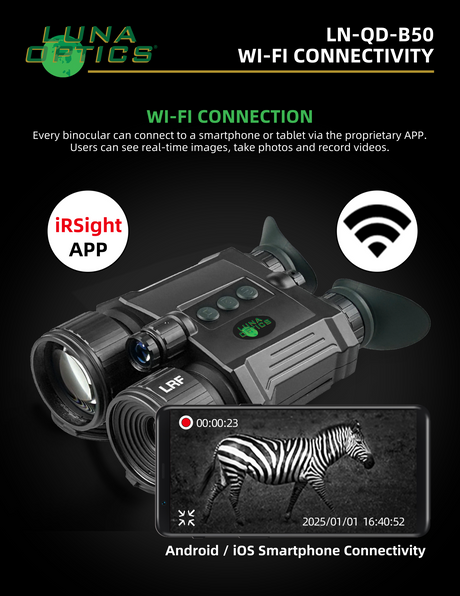
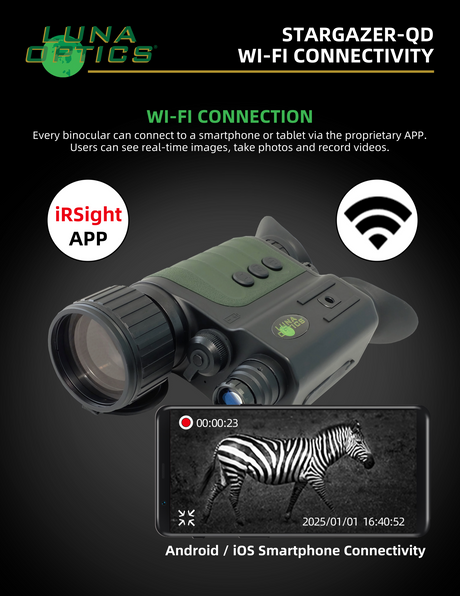
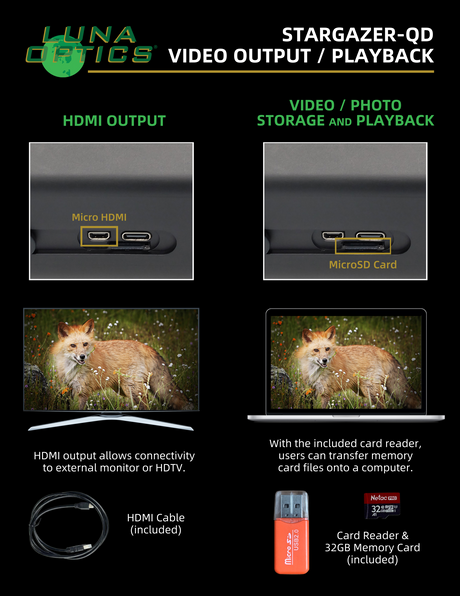
All models include Wi-Fi for live streaming to iOS and Android devices, plus micro-HDMI output for connecting to an external monitor. A microSD card is included in the box: 512GB with the Quantum Digital PRO, 32GB with all other models.
Digital vs Traditional Night Vision
The choice between digital and traditional (tube-based) night vision depends on your priorities:
| Factor | Digital Night Vision | Traditional (Gen 2/3) Tubes |
|---|---|---|
| Cost | $800-$1,100 | $2,000-$8,000+ |
| Daytime use | Full color, no damage risk | Can damage the tube permanently |
| Recording | Built-in video and photo | Requires external adapter |
| Power dependency | Yes, no power, no image | Yes, but amplifies available light without active IR |
| Extreme low light | Needs IR illumination in total darkness | Best Gen 3 tubes can amplify starlight alone |
| Color modes | Multiple (color, B&W, green, white phosphor, amber) | Fixed (green or white phosphor) |
| Detection range (passive) | Shorter without IR | Longer in ambient light conditions |
| Export restrictions | None (consumer electronics) | ITAR-controlled (Gen 3) |
| Durability | Standard electronics | Tubes are fragile and expensive to replace |
For most civilian applications: hunting, wildlife observation, property surveillance, stargazing, and outdoor recreation, digital night vision offers far more capability per dollar. Traditional Gen 3 tubes remain the choice for military and law enforcement applications where passive detection range (seeing without emitting any IR) is critical.
Frequently Asked Questions
Are digital night vision binoculars legal?
Yes. Digital night vision binoculars are legal to own and use in the United States without any special permits or licenses. Unlike Gen 3 image intensifier tubes, which are ITAR-controlled and restricted for export, digital night vision devices are classified as consumer electronics with no purchase restrictions.
However, some states restrict the use of night vision equipment for hunting. Check your state's game regulations before using digital night vision binoculars during hunting season. The devices themselves are legal to own everywhere; it's the application that may be regulated.
Can you use digital night vision binoculars for stargazing?
Digital night vision binoculars can reveal stars, planets, and even some deep-sky objects that are invisible to the naked eye. The CMOS sensors are sensitive enough to pick up faint celestial objects, and the wide 10° field of view at 6x makes it easy to scan large areas of the sky.
That said, these are not replacements for a dedicated telescope. You won't resolve planetary detail or capture deep-sky astrophotography. What they excel at is wide-field star sweeping, identifying constellations in light-polluted skies, and combining night sky observation with terrestrial use in a single outing. The Stargazer-QD was designed with this dual-purpose use case in mind.
How far can you see with digital night vision binoculars?
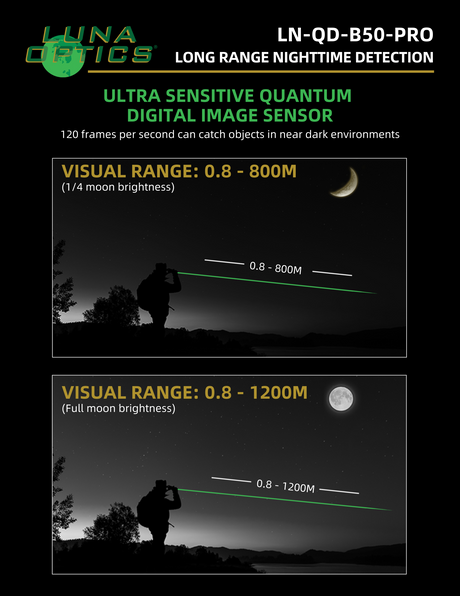
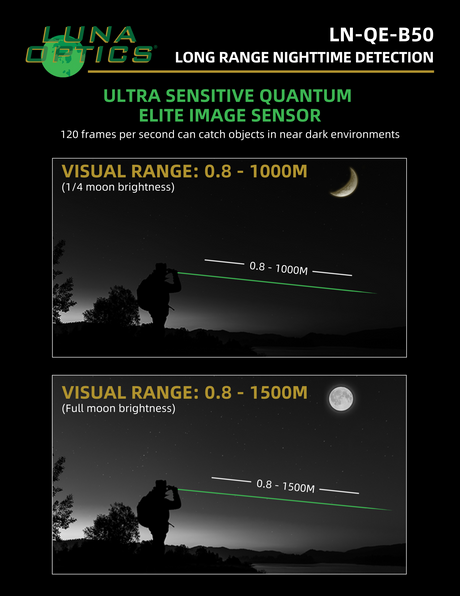
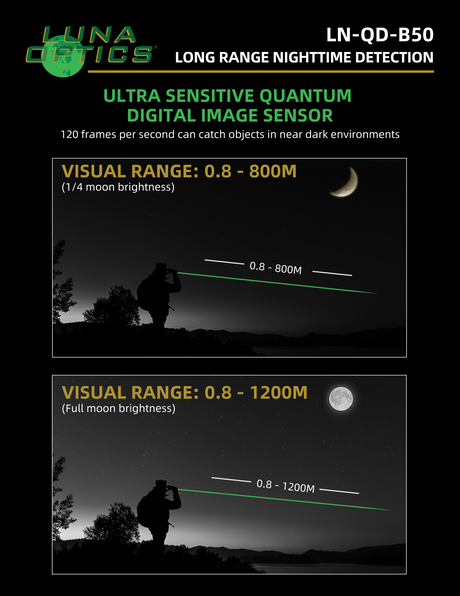
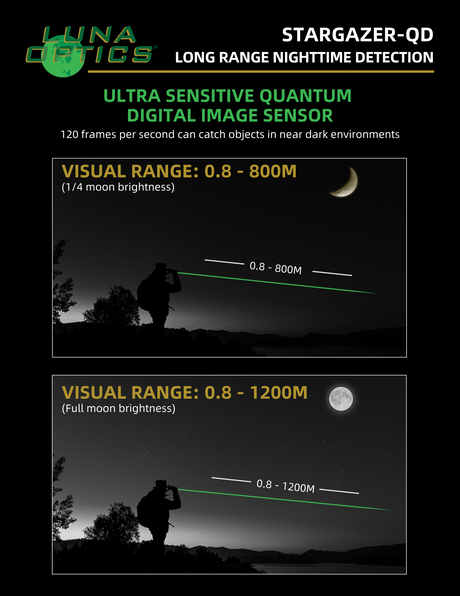
Detection range depends on the IR illuminator, ambient light conditions, and what you're trying to identify. With the IR illuminator active, Luna Optics rates the Quantum Elite at 1,100 yards (1,000m) nighttime visibility range. The three QHD binocular models are rated at 654 yards (600m).
During twilight or under moonlight, range increases significantly because the sensor can gather more ambient light without relying solely on the IR illuminator. During full daylight, these binoculars function like any conventional optical instrument with the added benefit of digital zoom up to 36x.
Do digital night vision binoculars work in complete darkness?
Yes. This is where the IR illuminator becomes essential. In a sealed room or on a moonless, overcast night, the built-in infrared LED floods the scene with light that's invisible to the naked eye but clearly visible to the CMOS sensor. The IR illuminator effectively provides its own light source, making the sensor independent of ambient conditions.
The 850nm illuminator provides better range in total darkness, while the 940nm option (Quantum Elite only) provides completely invisible illumination. Both deliver a clear, usable image even with zero ambient light.
Are these binoculars waterproof?
Luna Optics' digital night vision binoculars are designed for outdoor use in challenging conditions, with an operating temperature range of -22°F to 122°F (-30°C to 50°C). They are built to handle rain, humidity, and typical field conditions. Luna Optics does not publish specific IP ratings for these models, so avoid submerging them or exposing them to sustained heavy rain.
All Luna Optics products sold through AstroTelescopium are backed by a limited two-year warranty and ship from the warehouse with free insured FedEx Ground delivery.