



What a doublet shows
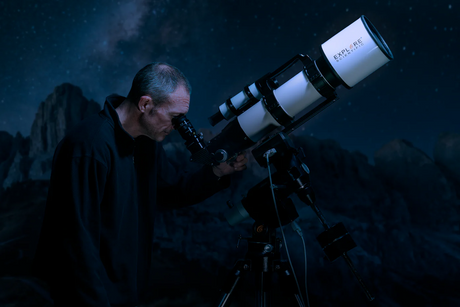
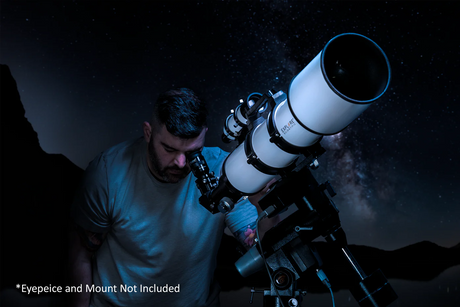
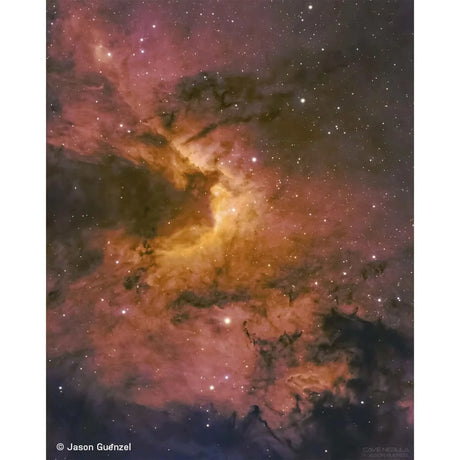
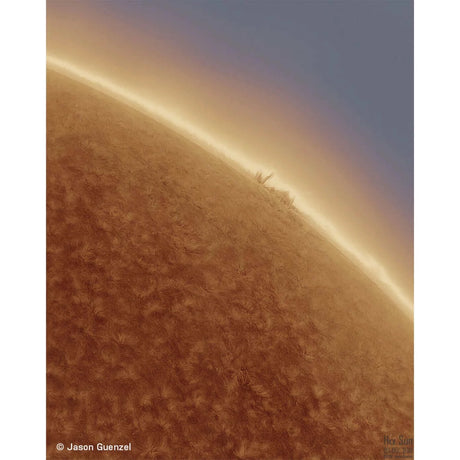
On the Moon, an AR102 at 100x and above shows a violet-blue fringe on the bright limb, while craters, rilles and the edges of the maria stay sharp. Jupiter and Saturn get a violet halo that slightly washes out the belt detail. On star clusters, nebulae and galaxies the color hardly shows: through the same eyepiece they look very much as they do in an ED triplet.
Choosing one
Aperture
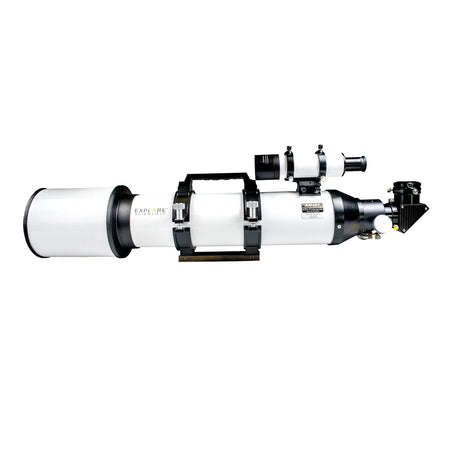
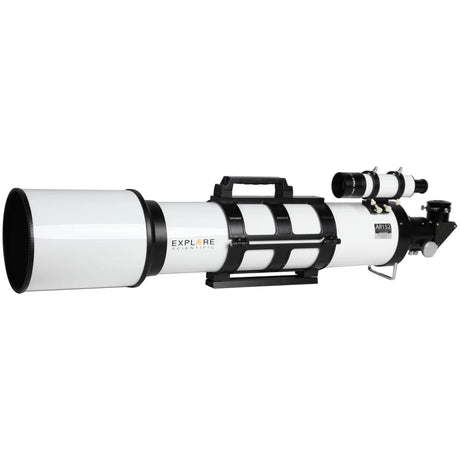
The AR line runs from 102 to 152 mm, all at f/6.5, so focal length grows with aperture, from 663 mm to 988 mm. Weight grows too, from 10.4 lb for the AR102 to 23 lb for the AR152, so check your mount's rating.
Tube or package
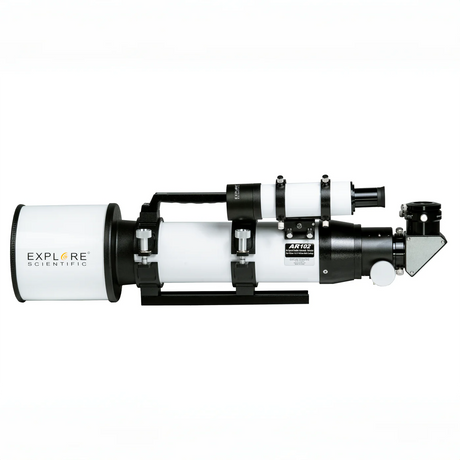
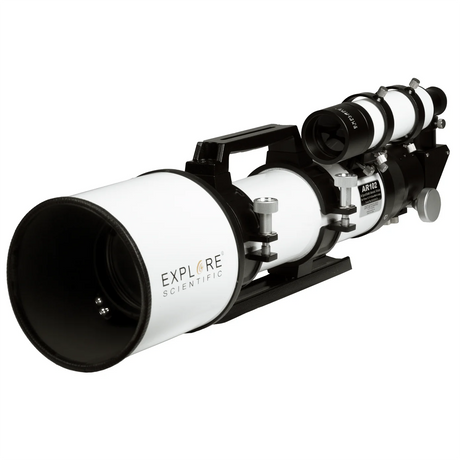
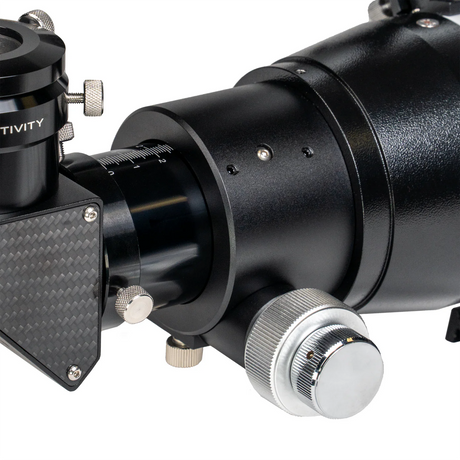
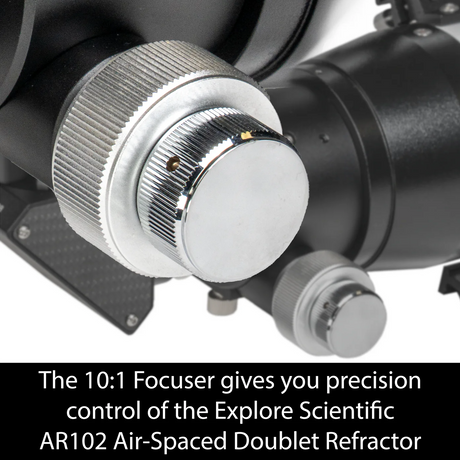
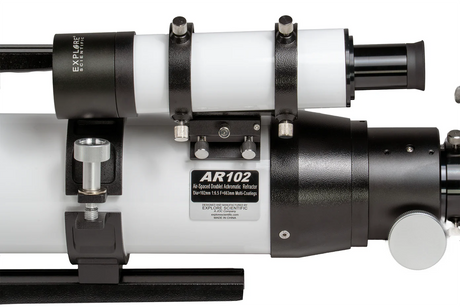
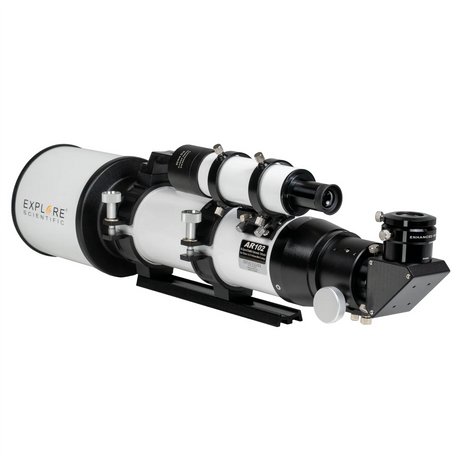
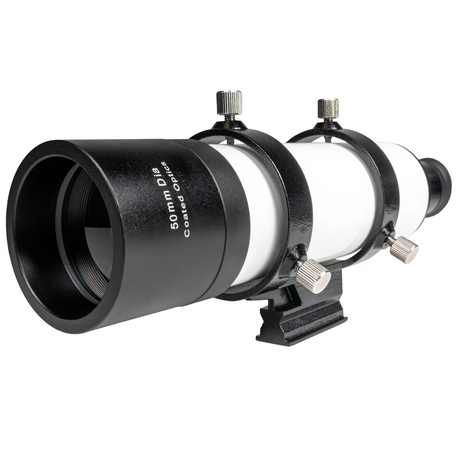
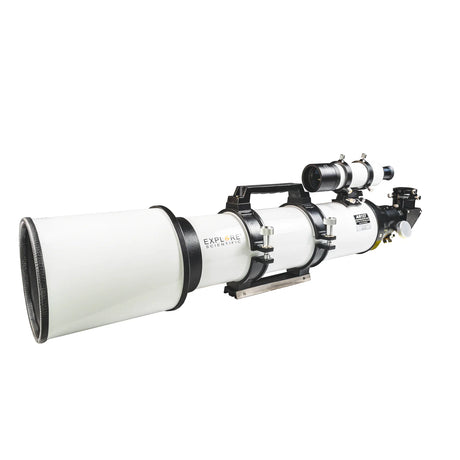
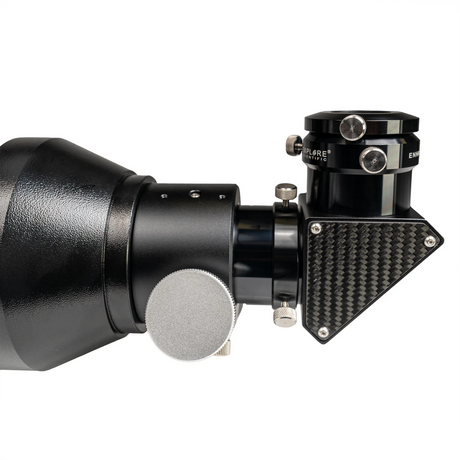
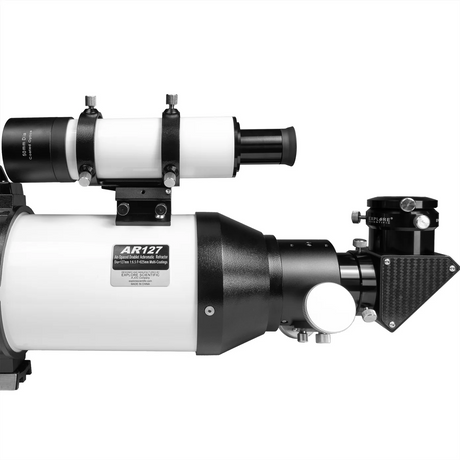
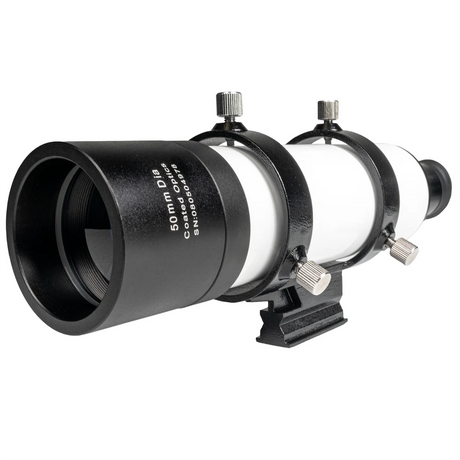
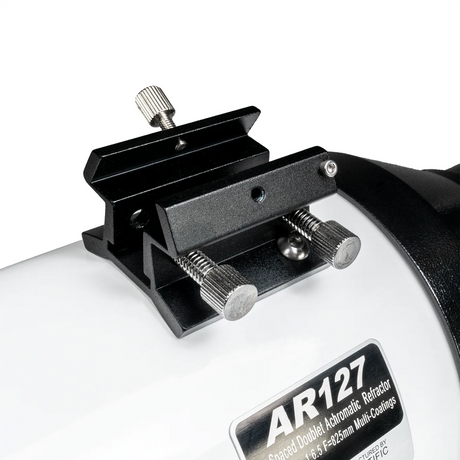
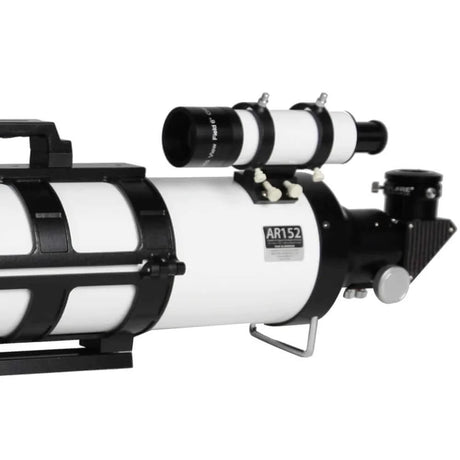
The AR refractors are tubes with a 2-inch Crayford focuser, a 2-inch dielectric diagonal, an 8x50 finder and a Vixen-style dovetail, ready for your mount and eyepieces. The standard FirstLight 80 comes complete on the Sidara Nano mount with a 25 mm eyepiece, a diagonal, a red-dot finder and a smartphone adapter, and a carbon fiber version comes with an over-the-lens solar filter.
Frequently Asked Questions
Achromat or APO?
An achromat for visual observing on a budget, an APO triplet for astrophotography and the cleanest views of bright targets. The color an achromat shows at the eyepiece becomes a real problem in stacked images.
Why f/6.5?
A fast focal ratio gives wide fields of view, at the cost of more visible color on bright targets than a slower doublet such as the f/8 FirstLight 80.
Can I photograph with one?
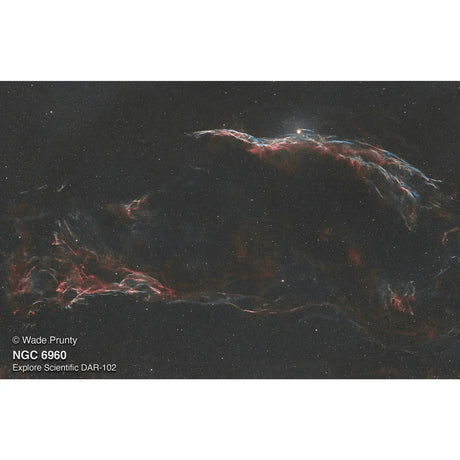
The Moon and planets, yes, with a phone at the eyepiece. For deep-sky imaging, an ED triplet is the better tool.
For three grades of 102 mm refractor compared, read AR102 vs ED102 vs ED102-FCD100, and for the triplets, browse our APO triplet refractors.