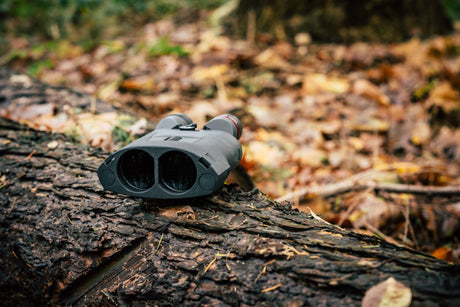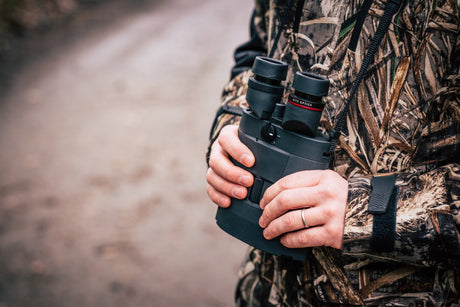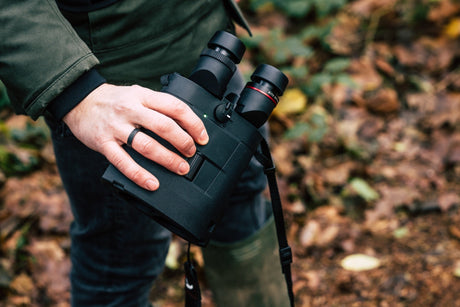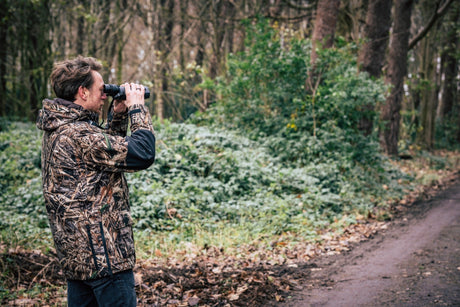

TL;DR — Quick Summary
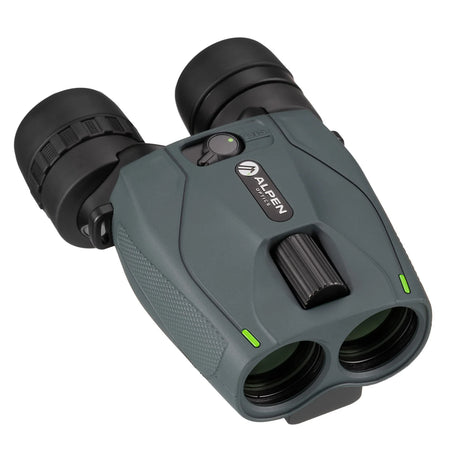
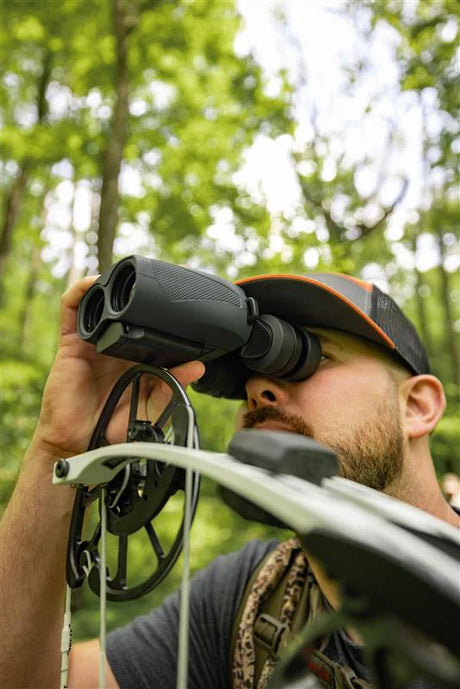
Stabilized binoculars are transformative at 12x magnification and above — the technology is proven, not a gimmick. For budget entry, the Alpen Apex Steady HD line starts at $999.99 MSRP with three magnification options. For premium performance, the Kite APC 14x50 ED ($1,950–$1,999 MSRP) is the sweet spot for birding and fieldwork, while the Kite APC 18x50 ED ($1,999–$2,050 MSRP) delivers maximum detail for astronomy and long-range observation. All prices reflect MSRP — check product pages for current dealer pricing.
Hold a pair of 18x binoculars to your eyes and try to read a license plate across a parking lot. You'll see the letters — somewhere in the blur. Your hands magnify every heartbeat, every breath, every gust of wind. At 18x, a half-degree of hand tremor becomes nine degrees of image movement. The detail is there. You just can't hold still enough to see it — and that's the exact problem stabilized binoculars solve.
Stabilized binoculars use built-in electronics that cancel hand shake in real time. Engage the stabilization and that jittering mess snaps into a crisp, locked image — as steady as if it were mounted on a tripod. The effect is immediate and, for most people, genuinely startling.
But they cost $800 to $2,050, weigh more than standard binoculars, and need batteries. So the real question isn't whether the technology works — it does, and it's been refined over decades. The question is whether it's worth the money for your use case — and if so, which model to buy.
Table of Contents
When Stabilization Makes a Real Difference
Not everyone needs image stabilization. The benefit depends almost entirely on magnification and how you use your binoculars.
The Magnification Threshold
- 7–8x: Comfortable for almost anyone handheld. Stabilization offers marginal benefit.
- 10x: Usable for most people, but those with shaky hands or on moving platforms will notice improvement.
- 12x: Hand shake visibly degrades the image. Stabilization provides a clear, immediate improvement.
- 14–16x: Essentially unusable handheld without stabilization or a tripod. With IS, these become perfectly practical.
- 18–20x: Absolutely requires stabilization or tripod. With IS, reviewers consistently describe these magnifications as "perfectly usable" handheld.
Individual variation matters, too. Age, caffeine intake, fitness, wind, and cold all affect hand steadiness. A fit 25-year-old may handhold 12x comfortably; a 60-year-old birder with essential tremor may struggle at 8x. Use the thresholds above as a starting point, not an absolute rule.
The takeaway: if you're using 10x or lower from a stable position, you probably don't need stabilization. At 12x and above — especially in the field — it transforms the experience.
Where It Matters Most
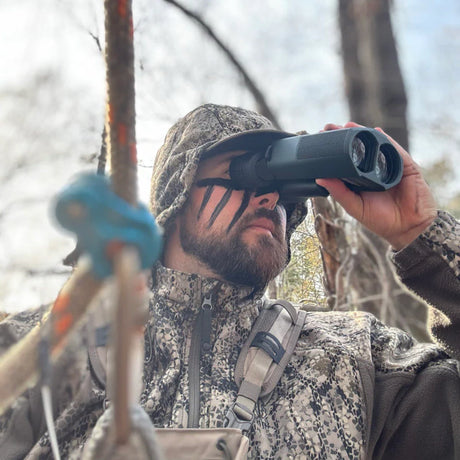
Birding at high magnification. Tracking a bird at 14x in wind is an exercise in frustration without IS. With it, the bird stays sharp even when your arms don't. The BirdForum consensus puts it plainly: "I find stabilised binoculars better than better optics hand held" — meaning a stabilized 14x outperforms a premium unstabilized 10x for real-world birding detail.
Marine use. Standard marine binoculars max out at 7x because boat motion makes higher magnifications unusable. Stabilization removes this ceiling. BoatUS Foundation testing found that at distances beyond 600 feet, conventional 7x50 binoculars failed while IS units "were just beginning to hit their stride."
Astronomy. Handheld stargazing at 14–18x reveals star clusters, nebulae, and lunar detail that 10x simply cannot reach. The Canon 18x50 IS is widely described on CloudyNights as "a superb astronomy tool" specifically because stabilization makes high-power handheld observation viable.
Hunting and long-range observation. Glassing a hillside at dawn with stabilized 14x means no wobble, no drift, and no tripod to set up.
Who Doesn't Need Them
If you mostly observe from a porch, blind, or fixed lookout at 8–10x, standard binoculars are fine. If your sessions are short and you have steady hands, the weight and cost of IS don't justify themselves. And if you're on a tight budget, a good unstabilized 10x42 plus a lightweight tripod will outperform a cheap IS binocular every time.
Our Picks: Best Stabilized Binoculars
We've organized these picks by buyer need. Each serves a different use case — start with what matters most to you.
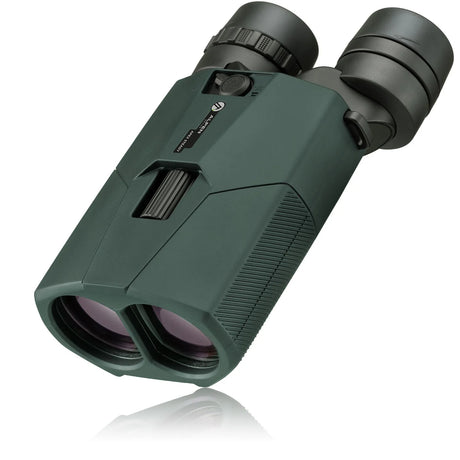
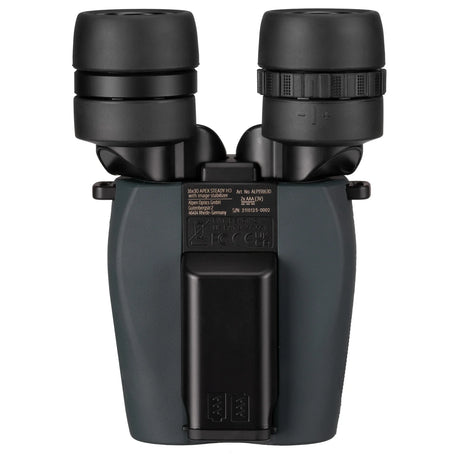
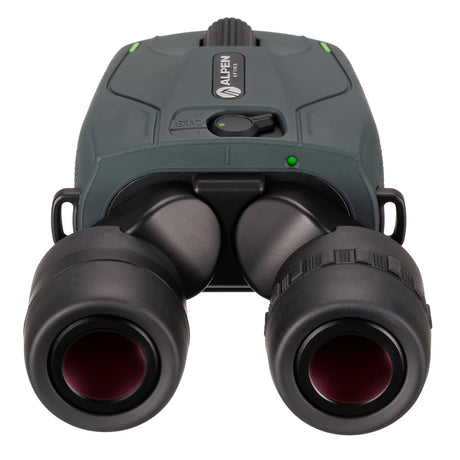
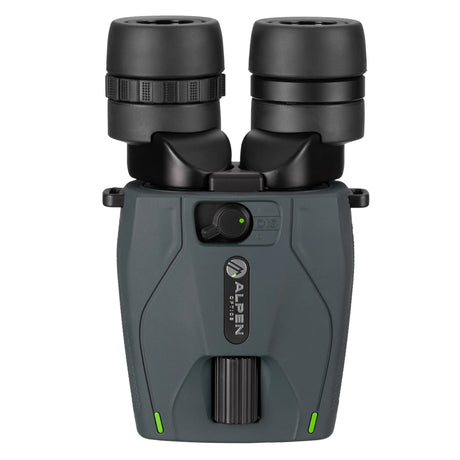
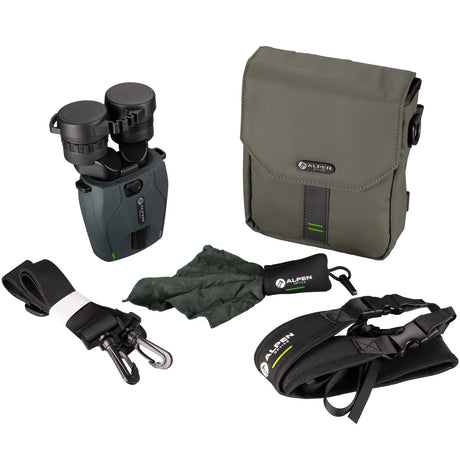
Best Value: Alpen Apex Steady HD Line

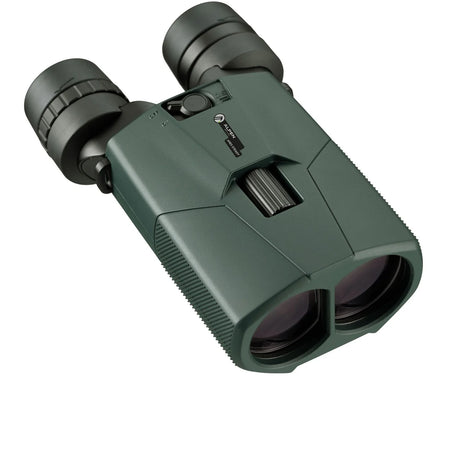
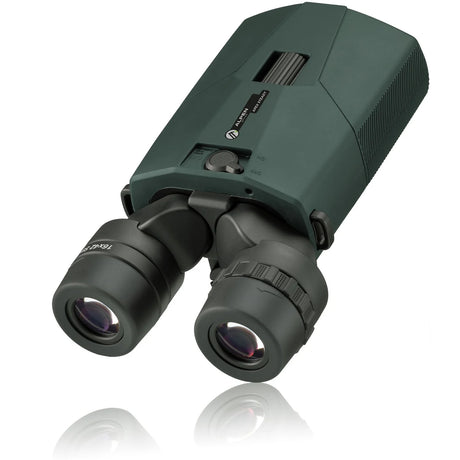
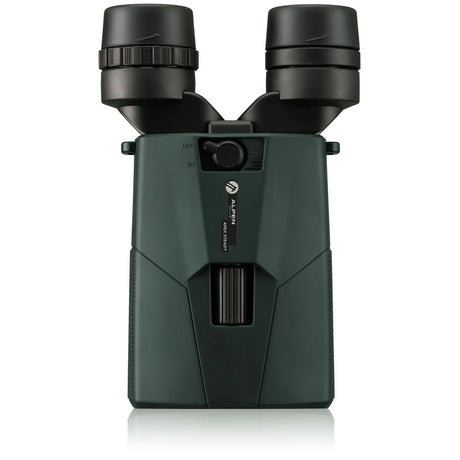
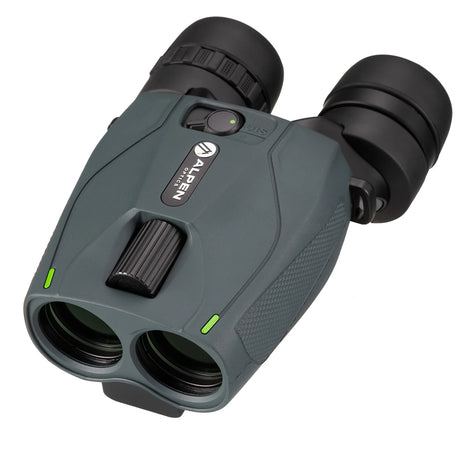
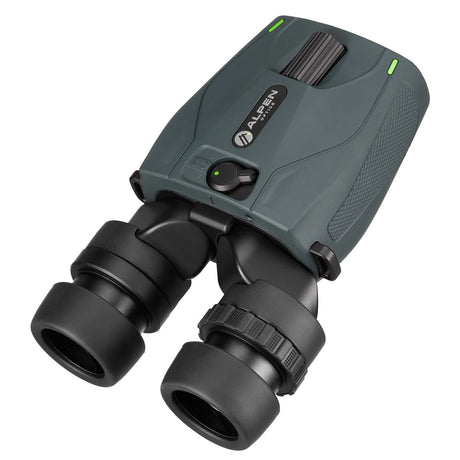
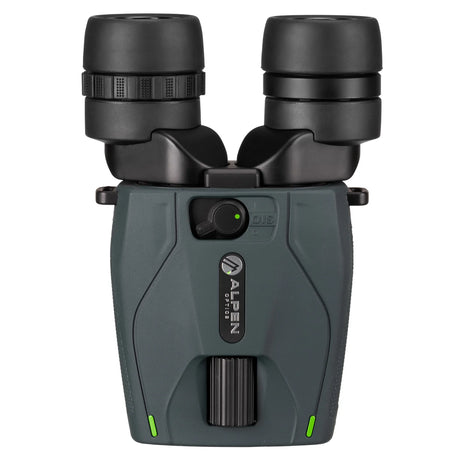
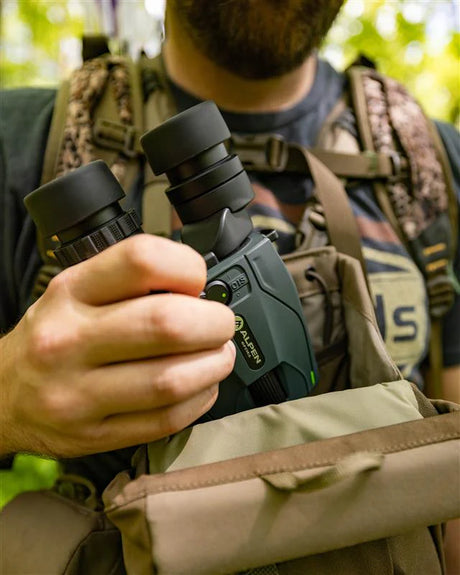
The Alpen Apex Steady HD line is the most affordable way into stabilized binoculars. Three models cover distinct magnification tiers on a shared platform — BaK-4 roof prisms, HD glass with PXA/UBX/LPE coatings, IPX4 water resistance, nitrogen-filled, and 30-hour battery life across the board. All three offer dual stabilization modes: a Balance mode for tracking moving targets and a Detail mode for locking onto stationary subjects.
Alpen Apex Steady 16x30 HD (MSRP $999.99) — The entry point. At 580g, it's the lightest stabilized binocular in our lineup and packs easily for day hikes. The 30mm aperture keeps the profile compact, though it limits twilight performance (1.9mm exit pupil). Eye relief of 16mm works for most eyeglass wearers. Runs on two AAA batteries. Best for: daylight birding, hiking, and hunters who prioritize weight.
Alpen Apex Steady 14x42 HD (MSRP $1,124.99) — The best balance of aperture and magnification in the Alpen range. The 42mm objective gives you a 3mm exit pupil — enough for usable twilight views — with 14x that's genuinely transformative for handheld use. At 644g, it's still remarkably light for a stabilized binocular. Eye relief of 14mm is tight for eyeglasses. Runs on two AA batteries. Best for: birders and hunters who want IS capability without the size and cost of a 50mm pair.
Alpen Apex Steady 20x42 HD (MSRP $1,249.99) — Maximum magnification under $1,300. The 20x pushes into handheld territory that would be impossible without stabilization, resolving distant detail that even a high-end unstabilized 10x physically cannot. The 2.1mm exit pupil limits this to daylight and bright twilight. Eye relief of 15mm is borderline for glasses. Runs on two AA batteries. Best for: long-range observation, surveillance, and observers who already own lower-power glass.
Trade-offs vs. Kite: The Alpen line saves $700–$1,000, but gives up IPX7 waterproofing (IPX4 is splash-resistant only), Kite's auto-sleep feature, the larger 50mm aperture, and ED glass. Eye relief ranges from 14–16mm — usable for most eyeglass wearers, but tighter than the Kite APC 14x50's generous 18mm.
Best All-Around for Birding and Fieldwork: Kite APC 14x50 ED

MSRP $1,950 (AA) / $1,999 (Li-Ion)
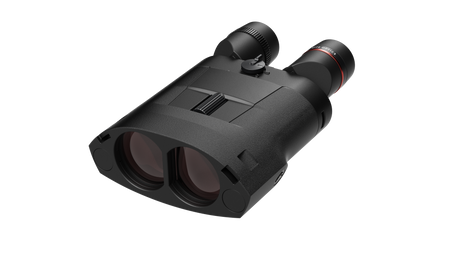
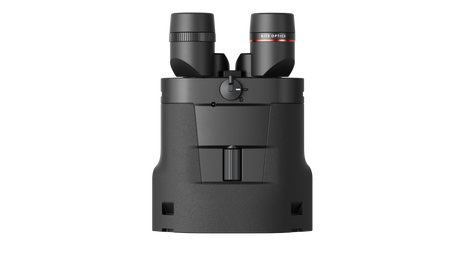
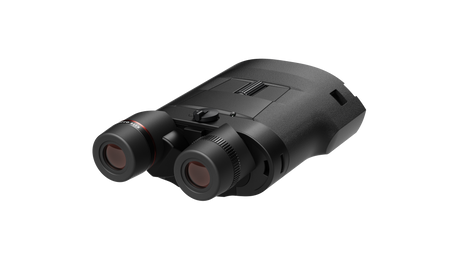
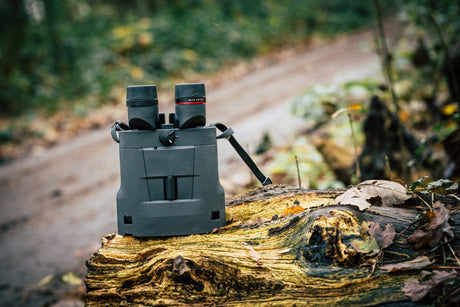
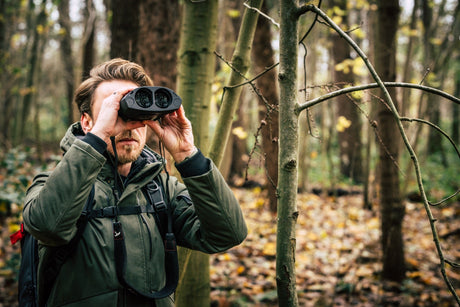
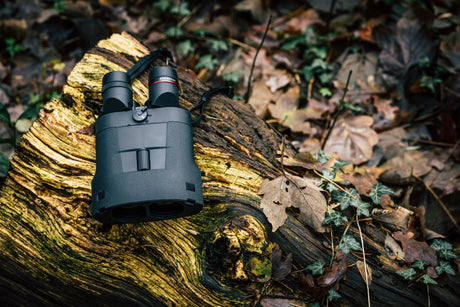
The Kite APC 14x50 ED is the stabilized binocular we recommend to most buyers. At 14x, it delivers the magnification jump that makes IS transformative — detail on distant subjects that 10x physically cannot resolve — while maintaining a 3.5mm exit pupil that performs in twilight.
Kite's APC (Active Prism Control) system positions Schmidt-Pechan roof prisms in a gimbal suspension, driven by accelerometers and Kite's KT 3.0 software. Unlike reactive systems that respond to shake after it occurs, the APC actively calculates and positions the prisms — producing faster, smoother correction with a ±2° correction angle.
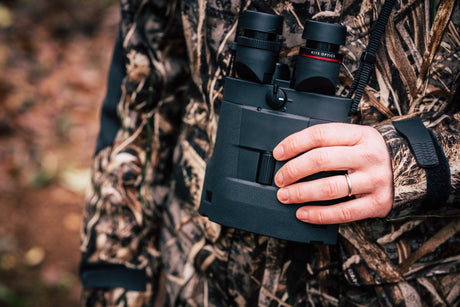
Key specs: 18mm eye relief (generous for eyeglasses), IPX7 waterproof (submersible to 1 meter), ED glass with MHR Advance+ coatings, 195 ft FOV at 1,000 yards, 5.5m close focus, 1,009g.
AA vs. Li-Ion: The AA version ($1,950 MSRP) runs 38 hours on two AAs — longer than the Li-Ion's 30 hours — and costs $49 less. The Li-Ion version ($1,999 MSRP) charges via USB-C, eliminating spare batteries entirely. Both versions feature auto-sleep: when the binoculars hang pointing down on your neck strap, stabilization sleeps. Raise them to your eyes and it wakes instantly. In practice, one charge can last months of typical weekend use.
Warranty: 30 years on optics, 5 years on electronics — the strongest in the stabilized binocular market.
Best for Astronomy and Maximum Detail: Kite APC 18x50 ED
MSRP $1,999 (AA) / $2,050 (Li-Ion)
Same APC platform as the 14x50, same ED glass, same IPX7 build — but the Kite APC 18x50 ED pushes to 18x. This is the binocular for observers who want to push handheld viewing to its practical limit.
At 18x, you're resolving individual stars in clusters, seeing lunar craters, and picking out details that don't exist at lower magnifications. The trade-off is a tighter 2.77mm exit pupil (dimmer in low light) and 15.5mm eye relief (workable for eyeglasses, but not as generous as the 14x50's 18mm).
If you already own a good pair of 8–10x binoculars, the 18x50 makes an excellent complement — covering the high-magnification range without a tripod while your standard pair handles wide-field work.
How They Compare
| Feature | Alpen 16x30 HD | Alpen 14x42 HD | Alpen 20x42 HD | Kite APC 14x50 ED | Kite APC 18x50 ED |
|---|---|---|---|---|---|
| MSRP | $999.99 | $1,124.99 | $1,249.99 | $1,950 / $1,999 | $1,999 / $2,050 |
| Magnification | 16x | 14x | 20x | 14x | 18x |
| Objective | 30mm | 42mm | 42mm | 50mm | 50mm |
| Exit Pupil | 1.9mm | 3.0mm | 2.1mm | 3.5mm | 2.8mm |
| Eye Relief | 16mm | 14mm | 15mm | 18mm | 15.5mm |
| FOV at 1,000 yd | 210 ft | 210 ft | 174 ft | 195 ft | 195 ft |
| Close Focus | 3.5m | 4m | 4m | 5.5m | 5.5m |
| Weight | 580g | 644g | 644g | 1,009g | 1,009g |
| Battery Life | 30 hrs | 30 hrs | 30 hrs | 30–38 hrs | 30–38 hrs |
| Waterproofing | IPX4 | IPX4 | IPX4 | IPX7 | IPX7 |
| Warranty | Limited Lifetime* | Limited Lifetime* | Limited Lifetime* | 30yr / 5yr | 30yr / 5yr |
Kite pricing shown as AA / Li-Ion MSRP. Battery life: Kite AA = 38 hrs, Li-Ion = 30 hrs. \Alpen Limited Lifetime Warranty requires product registration within 60 days of purchase. All prices are MSRP — check product pages for current dealer pricing.*
How the Competition Compares
The stabilized binoculars market has expanded significantly. Here's how the major brands stack up — and why understanding their differences helps you choose.
Canon is the household name in image stabilization. Their VAP (Vari-Angle Prism) system uses a fluid-filled prism between two glass plates to counteract shake, and they offer the widest model range — from the compact 8x20 IS (~$500) to the 18x50 IS All Weather (~$1,650). Canon dominates the sub-$1,000 price tier and has decades of refinement behind their technology.
The limitations: Canon's correction angle tops out at approximately ±0.7° — adequate for handheld on solid ground, but inadequate for boats or vehicles. Most Canon IS models are not waterproof (only the 15x50 and 18x50 are weather-sealed, and neither is rated for submersion). And battery life in cold weather is the elephant in the room — Canon's 10x42L IS WP ran just 10 minutes on alkaline batteries at -10°C. Lithium batteries extend this to 3.5 hours, but the gap versus Kite's 30–38 hours remains dramatic.
Fujinon takes the opposite approach with a dual-gimbaled prism system driven by piezo gyro sensors. Their TS-X 1440 offers ±5–6° of correction — the widest of any consumer IS binocular — making it the gold standard for heavy marine use. In January 2025, Fujinon launched the TS-L series (16x40 and 20x40) with USB-C charging, 30-hour battery life, IPX7 waterproofing, and ED glass at $1,200–$1,300. Early reviews describe the TS-L 2040 as optically competitive with the Canon 18x50 IS in a lighter 850g package.
Sig Sauer targets hunters with the ZULU6 HDX line. The 16x42 HDX (~$1,200) has a loyal following in western US hunting communities for glassing at distance. Their newer HDX Pro line ($1,500–$1,700) adds 50mm objectives and OmniScan auto-mode switching, though early reception has been mixed — some users report the standard HDX outperforms the Pro optically.
Nikon re-entered the market in November 2024 with the ultra-compact STABILIZED 10x25 and 12x25 (~$640–$650). At just 395–405g, these bring IS to the compact travel category — though they're not competing with the 14–18x models discussed above.
Zeiss offers the unique 20x60 T* S — purely mechanical stabilization using a gimbal-mounted spring joint with magnetic damping. No batteries, no electronics. It's also roughly $10,000 and weighs over 1.7kg.
Stabilization Technology at a Glance
| Feature | Canon (VAP) | Fujinon (Gimbal) | Kite (APC) | Alpen (Gimbal) |
|---|---|---|---|---|
| Correction Angle | ±0.7° | ±3° to ±6° | ±2° | — |
| Prism Type | Porro | Porro | Roof | Roof |
| Waterproof | Some models | Standard | IPX7 | IPX4 |
| Battery Life (typical) | 2.5–9 hrs | 18–30 hrs | 30–38 hrs | 30 hrs |
| Weight (flagship) | 1,180g (18×50) | 850g (TS-L 2040) | 1,009g (14×50) | 644g (14×42) |
| Price Range | $500–$1,650 | $650–$1,500 | $1,850–$2,050 | $800–$1,250 |
| Warranty | 1 year | 1 year | 30yr / 5yr | Limited Lifetime* |
A note on correction angle: Larger numbers aren't always better in practice. The Kite APC at ±2° was judged by multiple independent reviewers as providing stabilization comparable to the Canon 18x50 at ±0.7°, because the APC system responds faster and more smoothly. Correction angle matters most on boats — if you need heavy-sea stability, Fujinon's ±5–6° is unmatched.
What to Look For When Buying Stabilized Binoculars
Magnification
12–14x is the sweet spot for most buyers. Below 12x, the stabilization benefit is marginal. At 14x, it's genuinely transformative. At 18x+, you're in specialized territory — excellent for astronomy and long-range observation, but the narrower exit pupil limits low-light performance.
Waterproofing
If you'll use binoculars outdoors in weather — and you will — insist on IPX7 or better. IPX4 (Alpen) handles light rain and splashes. IPX7 (Kite) survives full submersion to 1 meter for 30 minutes. Many Canon models have no water protection at all.
Battery Life and Cold Weather
This is the most underrated buying factor. Check the manufacturer's cold-weather rating, not just the room-temperature number.
| Brand/Model | Battery | Life at 25°C | Life at -10°C |
|---|---|---|---|
| Canon 12x36 IS III | 2× AA alkaline | 9 hours | 1 hour |
| Canon 10x42L IS WP* | 2× AA alkaline | 2.5 hours | 10 minutes |
| Canon 10x42L IS WP* | 2× AA lithium | 8 hours | 3.5 hours |
| Fujinon TS-X 1440 | 4× AA alkaline | 18 hours | — |
| Fujinon TS-L 2040 | USB-C rechargeable | 30 hours | — |
| Alpen Apex Steady HD | 2× AA/AAA | 30 hours | — |
| Kite APC 50 (AA) | 2× AA | 38 hours | — |
| Kite APC 50 (Li-Ion) | USB-C rechargeable | 30 hours | — |
Canon 10x42L IS WP is discontinued. The Canon 15x50 IS and 18x50 IS (still in production) have similar cold-weather performance. Fujinon, Alpen, and Kite do not publish cold-weather battery ratings. The Kite APC is rated for operation to -20°C.
If your batteries die mid-session, IS binoculars still function as normal unstabilized optics — you're just carrying extra weight.
Eye Relief
15mm minimum if you wear glasses. The Kite APC 14x50's 18mm is the most generous in the stabilized binocular market. The Alpen 14x42's 14mm is tight for most eyeglass wearers — try before you buy.
Weight
IS binoculars are 30–50% heavier than standard equivalents. The Alpen 16x30 at 580g and the Fujinon TS-L at 850g are the lightest full-featured options. The Kite APC at 1,009g is heavier but still lighter than Canon's 18x50 at 1,180g. For all-day carry, every gram matters. For stationary use, weight is secondary.
Activation Method
Canon and Fujinon require a button press to engage stabilization. The Kite APC activates automatically when you raise the binoculars and sleeps when you lower them — no button needed, no forgetting to turn it on. The Alpen Apex Steady uses a switch to toggle between stabilization modes.
Close Focus
IS binoculars cannot focus as close as standard models. The Alpen Apex Steady focuses down to 3.5–4 meters; the Kite APC 50 focuses to 5.5 meters. Most unstabilized 10x42 binoculars focus to 1.5–2.5 meters. If you watch feeders at close range, an IS pair won't replace your standard binoculars for close-range work.
Warranty
Ranges from 1 year (Canon, Fujinon) to 30 years optics / 5 years electronics (Kite). For a $1,000+ purchase, this matters — especially because the stabilization mechanism is the component most likely to need service over a decade of use.
Stabilized Binoculars vs. Premium Glass
This is the real $1,500+ question. At that price, you're choosing between two fundamentally different approaches:
- Option A: A stabilized 14x50 like the Kite APC 14x50 ED ($1,950 MSRP) — 14x magnification with electronic stabilization, IPX7 waterproof, 30–38 hour battery life.
- Option B: A premium unstabilized 10x42 like a Swarovski EL or Zeiss Victory SF ($2,000–$2,800) — class-leading glass, razor-sharp edge-to-edge, lighter weight, no batteries.
The Swarovski will show you a wider, sharper, brighter image at 10x. But the stabilized Kite at 14x will show you more detail on distant subjects — because the extra magnification, once the shake is removed, resolves features the 10x physically cannot.
Forum users who've compared both approaches consistently report the same thing: for subjects beyond 100 meters, stabilized high magnification wins. The premium glass advantage in color fidelity and edge sharpness is real, but it can't compensate for 40% more resolving power on distant targets.
The honest answer: if you prioritize wide-field beauty and all-day comfort, buy the premium 10x. If you prioritize distant detail and don't mind carrying an extra 200–300 grams, the stabilized option delivers more usable information per dollar.
Stabilized Binoculars vs. a Tripod
A decent binocular tripod costs $80–$150. Stabilized binoculars cost $800–$2,050. Why not just use a tripod?
Tripods win when: You're stationary for long sessions — a permanent bird blind, a stargazing site, a whale-watching overlook. A tripod gives you zero shake at zero battery cost, and you can mount any binocular or spotting scope on it.
Stabilized binoculars win when: You're moving. Birding a trail. Scanning from a boat. Reacting to something unexpected. A tripod adds 5–10 minutes of setup time per stop and is useless in motion. IS binoculars are ready the instant you raise them — no legs to extend, no head to level, no pack weight to justify.
The practical reality: most people who own a tripod don't use it consistently. It stays in the car or at home because the friction of setup kills spontaneity. If your best sightings happen when you're already walking, IS binoculars will get used. The tripod might not.
Frequently Asked Questions
What magnification is best for stabilized binoculars?
14x is the sweet spot for most users — high enough that stabilization is transformative, low enough for a usable field of view and reasonable exit pupil for lower light. The Kite APC 14x50 has a 3.5mm exit pupil (decent for twilight) and 18mm eye relief (comfortable for eyeglass wearers). If you already own good 8–10x binoculars, an 18x stabilized pair makes an excellent complement rather than a replacement.
Do stabilized binoculars work for astronomy?
Yes — they're one of the best-kept secrets in amateur astronomy. At 14–18x, stabilized binoculars show lunar craters, star clusters, and nebulae that rival what you'd see through large mounted binoculars. The key advantage over a telescope: no setup time, no alignment, and instant use when a clear sky appears.
Can a tripod replace stabilized binoculars?
For stationary observing, yes. For anything involving movement — birding a trail, scanning from a boat, reacting to wildlife — no. The practical advantage of IS binoculars is that they eliminate the setup friction that keeps tripods in the car.
Are Canon IS binoculars waterproof?
Most are not. Only the 15x50 IS All Weather and 18x50 IS All Weather are weather-sealed in Canon's current lineup — and neither is rated for submersion. The remaining models (12x36 IS III, 14x32 IS, 8x20 IS, 10x20 IS) have no water protection. If you need waterproofing, look at Fujinon (waterproof across their stabilized line) or the Kite APC line (IPX7 across the board).
How long do batteries actually last?
It depends entirely on the brand. Canon's larger models last 2.5 hours on alkaline AAs at room temperature and as little as 10 minutes in freezing conditions. Fujinon's TS-L models run 30 hours with USB-C charging. The Kite APC 50 runs 30–38 hours continuously, and its auto-sleep feature extends real-world use dramatically. The Alpen Apex Steady line runs 30 hours across all models. Always carry spare batteries with Canon models.
Are stabilized binoculars worth it for birding?
If you bird at 12x or higher — especially in open terrain, from boats, or in windy conditions — yes, unequivocally. The ability to resolve field marks at 14–18x without a tripod changes what you can identify and how quickly. If you bird casually at 8–10x from hides or your backyard, standard binoculars are fine.
Bottom line: are they worth the price?
Yes, if you use binoculars at 12x or higher, observe from moving platforms, have shaky hands, or want tripod-quality stability without the tripod. The technology genuinely works, and modern options have solved the historical weaknesses (poor battery life, no waterproofing, bulk).
No, if you're comfortable at 8–10x, observe from stable positions, or don't use binoculars frequently enough to justify the cost. A good unstabilized 10x42 plus a lightweight tripod will serve you well at a fraction of the price.
For everyone in between: try a pair before committing. The difference is one of those things that's hard to appreciate until you experience it — and once you do, most people don't go back.
Related Guides
Kite Optics Binoculars: Lynx HD+ vs APC Stabilized — Compare every Kite binocular: Lynx HD+ and APC Stabilized with specs, pricing, and use-case picks.